
You punch in the gate code, wait for the keypad to respond, and pull into a narrow aisle lined with roll-up doors. It’s still early, but you’re already behind — digging through a dark unit with no power, loading tools you couldn’t charge overnight, hoping no one blocks you in before you’re done. It works, technically. But it doesn’t feel like a business setup.
This post walks through why most contractors outgrow self-storage, what a contractor bay rental actually provides, and how to evaluate when the switch makes sense.
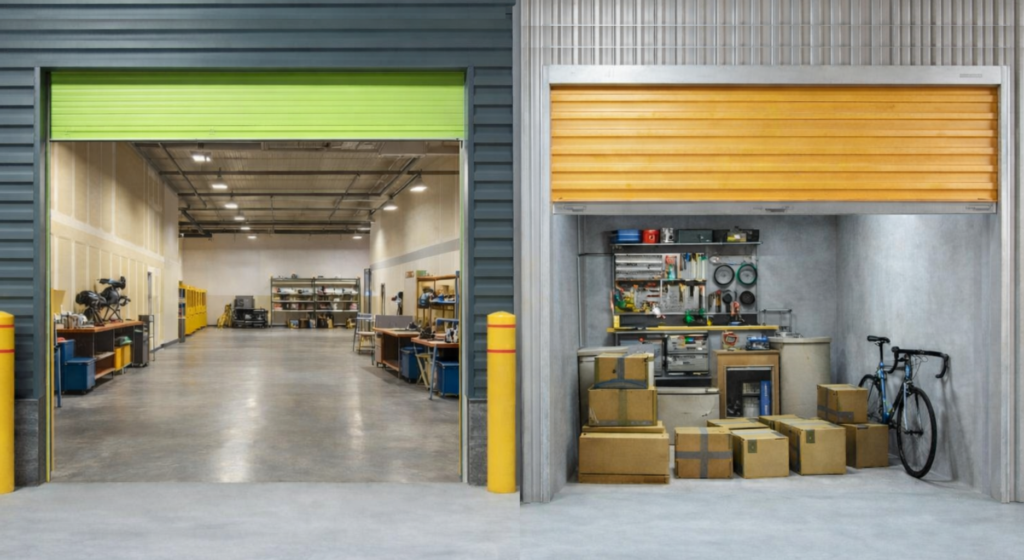
- Store items you rarely access
- No work permitted on-site
- No electrical service
- Gate hours, not 24/7
- Not zoned for business use
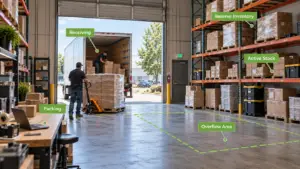
- Load, work, and receive daily
- Commercial work permitted
- 100–200 amp electrical
- 24/7 direct vehicle access
- Commercially zoned premises
Why Contractors Keep Outgrowing Self-Storage
Self-storage can work at the very start — when your needs are truly passive. But it wasn’t designed for daily business operations, and three structural limitations show up fast.
You Can’t Legally Work There
Most self-storage lease agreements explicitly prohibit active business use — running power tools, receiving supplier deliveries, or performing any work on the premises. It’s also a zoning issue: self-storage properties are typically not zoned for commercial activity. If a supplier or employee is injured at your storage unit, your commercial liability insurance may not respond because the location isn’t a licensed business premises. That’s a real gap, not a technicality.
There’s No Electrical Access for Tools or Vehicles
Standard self-storage units provide no electrical service. For trades, the daily impact is concrete: no overnight charging for battery-powered tools, no power for air compressors or pressure washers, no diagnostics equipment, no EV or work van charging. Dedicated contractor storage space in a flex warehouse typically provides 100-amp or higher electrical service per unit — the minimum for running tools and charging reliably.
Drive-Up Access Has Real Limits
Drive-up access exists at most storage facilities, but it’s built for moving boxes — not dispatching a crew. Gate hours at many facilities cap at roughly 6 a.m. to 10 p.m. Aisles are often too narrow for large trucks and trailers. There’s no delivery zone for suppliers and no room to stage materials. These aren’t edge cases — they’re structural features of a product that wasn’t designed for what you’re trying to do with it.
What Is a Contractor Bay?
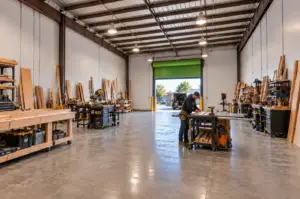
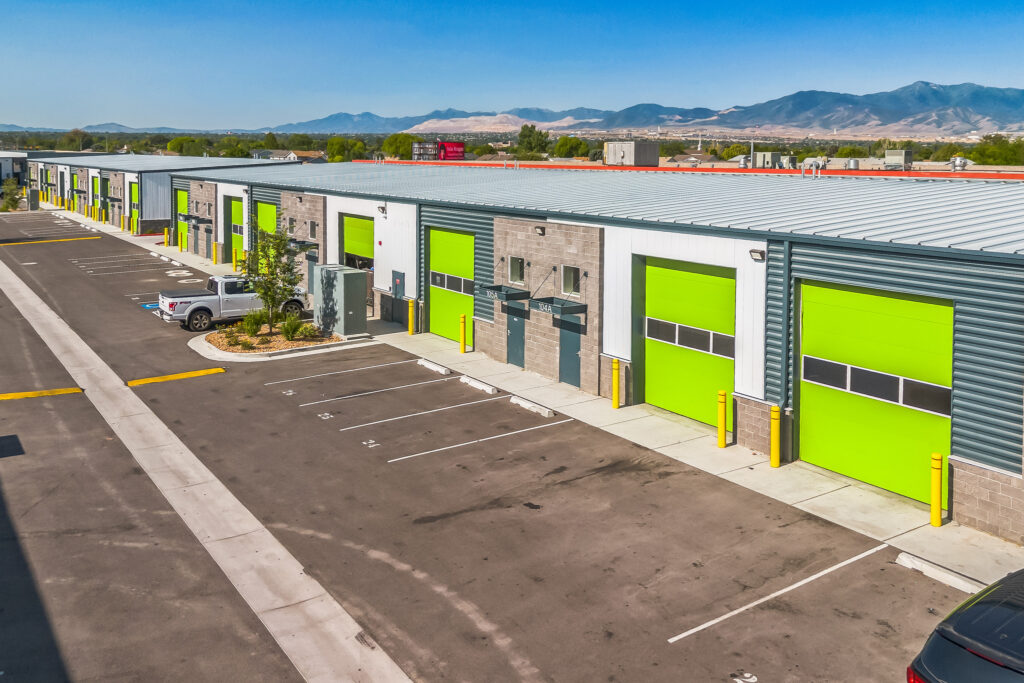
A contractor bay is a private, drive-up industrial unit inside a flex warehouse space or light industrial building, pre-zoned for active commercial use, with direct vehicle access and dedicated electrical service. Unlike self-storage, it’s a licensed business premises — which means you can work there, receive deliveries there, and register your business there. That’s the functional difference, and it’s not a small one.
Side-by-Side: Contractor Bay vs. Self-Storage
The table below uses specific criteria — not vague comparisons. If self-storage has a hard limitation, it’s named directly.
| Criteria | Self-Storage | Contractor Bay |
|---|---|---|
| Active work permitted | No — lease prohibition at most facilities | Yes — commercially zoned, hands-on work allowed |
| Commercial business address | No — storage use only | Yes — licensed business premises |
| Electrical service | None in most units | 100–200 amp per unit, standard |
| Drive-up access | Yes, but facility gate hours apply | Yes — 24/7 direct vehicle access |
| Supplier deliveries | Restricted or prohibited | Permitted — compliant delivery address |
| Oversized vehicle access | Limited — aisle width varies by facility | Wide bay access for trucks and trailers |
| Hazardous material storage | Restricted by lease terms | Permitted within local fire code |
| Insurance compatibility | May void commercial liability coverage | Supports standard contractor insurance |
| Lease flexibility | Month-to-month common | Flexible terms available; varies by property |
| Cost range | $100–$300 / mo typical | $300–$900+ / mo depending on size and market |
When Self-Storage Still Works for a Contractor
Self-storage isn’t a bad product — it’s the wrong product for active operations. There are still legitimate use cases:
- You only need overflow storage with no daily work requirement
- Your tools don’t need charging or regular access
- You’re storing low-value or seasonal materials you access a few times a year
Signs It’s Time to Make the Switch
The decision rarely happens all at once. It shows up in specific operational moments.
- You’ve been turned away from a job because you don’t have a valid commercial address for your contractor’s license.
- You’re losing time every morning at the storage facility — gate codes, facility hours, tight aisles, blocked units.
- A tool battery died overnight because you had nowhere to charge it.
- A supplier won’t deliver materials to your storage unit.
- You can’t stage work or run a crew out of your current setup — no room for a safety briefing, no space to prep a job.
What to Look for in a Contractor Bay
Not all contractor bay options are equal. Verify these five criteria before signing anything.
Confirm the bay fits your largest vehicle or trailer. Most work trucks need a minimum 10-ft clearance — 12 ft is better. Measure before you commit.
100-amp service is the minimum for tools and charging. Ask specifically — some properties advertise electrical access but only deliver shared low-capacity circuits.
Early starts and late returns are part of the job. Confirm there are no gate restrictions that lock you out before 6 a.m. or after 10 p.m.
Confirm the property is zoned light industrial or commercial and permits business address registration. Ask the property manager directly — it’s a yes-or-no question with real licensing implications.
Month-to-month is worth a slight premium if your business is in growth mode. Match the lease term to your current stage, not your optimistic forecast.
WorkBay Contractor Bays
WorkBay operates private contractor bay rental units across Texas, Arizona, Utah, and Florida — built for the operational needs this post describes. Each unit includes 24/7 drive-up access, commercial zoning that supports business address registration, and 100-amp electrical service as standard. Flexible leasing is available. Review full unit features and amenities here.
To see available units by market, visit our locations page.

Find contractor storage space that works for your business.
Browse available contractor bays across Texas, Arizona, Utah, and Florida.
See Available Units Near You →Frequently Asked Questions
Can contractors use self-storage for their business?
Yes, technically — but with significant operational and legal limitations. Most self-storage leases explicitly prohibit active business use: running tools, receiving supplier deliveries, or conducting any work on the premises. These properties are also typically not zoned for commercial activity, which creates a liability gap if an employee or supplier is injured on-site. For overflow storage of low-value materials with no daily work requirement, self-storage may be adequate. For active contractor storage space needs — tool charging, daily loading, supplier deliveries, or crew staging — a commercially zoned contractor bay is the appropriate product.
What is a contractor bay?
A contractor bay is a private, drive-up industrial unit in a flex or light industrial building, zoned for active commercial use, with dedicated electrical service and 24/7 vehicle access. It’s a licensed business premises — which means you can legally work there, receive deliveries, and register your contractor’s license to the address. For a full breakdown, see our contractor bay glossary entry.
How much does a contractor bay cost?
Contractor bay rental rates typically range from $300 to $900+ per month. Self-storage runs $100–$300 per month for a comparable footprint. The price difference reflects a capability difference, not just a size difference: a contractor bay includes commercial zoning, dedicated electrical service, 24/7 access, and a licensed business address — none of which self-storage provides. For current pricing by market, visit our locations page.
Passive storage only.
No electrical, no business use.
Active operations.
Electrical, zoning, 24/7 access included.
Do I need a commercial address as a contractor?
In most states, yes. Many contractor license applications require a registered business address that meets zoning requirements — a residential garage or self-storage unit typically does not qualify. A commercial address also matters for insurance: commercial liability policies often require the business to operate from a licensed premises. Supplier accounts and delivery relationships depend on it too. A contractor bay provides a compliant address for licensing, insurance, and deliveries. For more detail, see the SBA business location guide.
Where can I find a contractor bay rental near me?
Contractor bay availability varies by market. Workbay operates private contractor bay rental units in Texas (Dallas–Fort Worth and Houston), Arizona, Utah, and Florida. Each location offers drive-up bays with 24/7 access, 100-amp electrical service, and commercial zoning that supports business address registration. To see available units, sizes, and current availability by market, visit our locations page.