
Spring sounds like good news for e-commerce sellers. More orders, new product lines, warmer weather driving demand. But if you’re already stacking boxes in your hallway, spring just means the problem is about to get bigger. Ecommerce storage expansion becomes urgent fast. Sellers who plan ahead don’t lose fulfillment days to a chaotic move.
Most sellers hit a storage ceiling somewhere between $10K and $50K in annual revenue. At that stage, home storage can’t keep up, but a traditional warehouse lease isn’t justified yet. It’s a frustrating gap. The options that worked six months ago stop working, but the next step isn’t always obvious.
This guide covers your expansion options, how to compare them honestly, and what to look for if you decide it’s time to move into commercial space.
Why Spring Is the Right Time to Expand
Spring isn’t just a busy season. It’s a pressure point. Three things tend to happen at once: post-Q1 inventory rebuilds, new spring SKUs arrive, and demand spikes for Mother’s Day, graduation season, and Memorial Day create a concentrated window of high-volume fulfillment.
Many sellers see order volume climb 20–40% compared to February. If your space is already tight in March, you’ll be underwater by May. The mistake isn’t waiting to see if it gets busy. It’s waiting until it’s already busy to make a move. Transitioning storage mid-peak disrupts fulfillment. Getting ahead of it, even by a few weeks, keeps operations clean.
Signs You’ve Outgrown Your Current Setup
These aren’t hypotheticals. If more than two of these are true, your storage situation is already costing you time and money:
- You spend more than 30 minutes a day just locating and picking inventory
- You’ve declined a supplier order because you didn’t have room to receive it
- A family member has asked you to reclaim the garage, spare bedroom, or living room
- Your shipping carrier can’t do pickup at your location because of loading access
- You’re renting a second self-storage unit, or seriously thinking about it
- Your packaging and labeling process is slowed by a lack of dedicated workspace
Your E-Commerce Storage Expansion Options
There’s no single right answer. The best option depends on your order volume, inventory size, and how actively you need to work in the space. Here’s an honest breakdown of each.
Option 1: Add a Self-Storage Unit
Self-storage is inexpensive and easy to rent, but most facilities explicitly prohibit commercial operations inside their units. That means no packing orders, no commercial deliveries or carrier pickups, and no equipment running. It works when inventory just needs to sit somewhere. Not when it needs to move.
Option 2: Convert More Home Space
Repurposing a garage or spare bedroom costs nothing upfront, but comes with real limits. Residential zoning often restricts commercial inventory storage, and homeowner’s or renter’s insurance typically doesn’t cover business inventory. HOA rules may prohibit it entirely.
Option 3: Move to a Flex Warehouse Unit
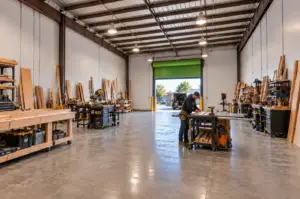
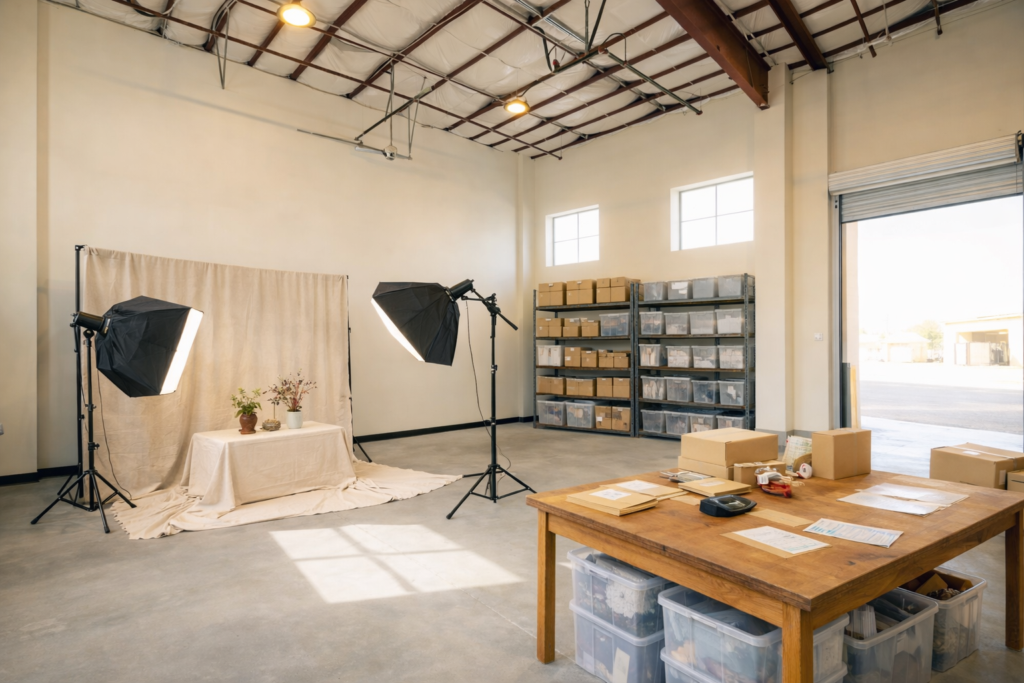
Of the four options here, a flex warehouse unit is the only one built for active daily fulfillment rather than passive storage. The roll-up drive-up door means carriers pull directly to your unit, with no stairs or elevators. Commercial zoning makes your operations legal and insurable. Power supports label printers, heat guns, and packaging lines.
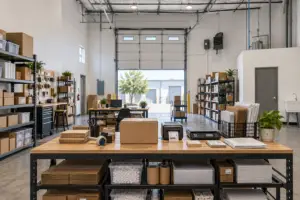
Most solo sellers start with 500–800 sq ft. A 500 sq ft unit holds 200–400 shipping boxes plus a packing station; 1,000 sq ft supports a small team. Month-to-month terms replace the 3–5 year commitment of traditional industrial leases.
Option 4: Third-Party Logistics (3PL)
A 3PL takes fulfillment off your plate entirely, but storage fees, per-pick fees, and shipping markups add up quickly. Most providers have volume minimums that make them impractical below a certain threshold. It solves scale, but removes control.
Quick Comparison
| Option | Drive-Up Access | Commercial Ops | Flex Lease | Equipment Power |
|---|---|---|---|---|
| Self-Storage | ✗ | ✗ | ✓ | ✗ |
| Home Space | ✗ | ✗ | ✓ | ✓ |
| Flex Warehouse | ✓ | ✓ | ✓ | ✓ |
| 3PL | ✓ | ✓ | Varies | N/A |
What to Look for in a Warehouse Unit for E-Commerce
If e-commerce storage expansion has brought you to the point of evaluating commercial space, these are the five criteria that matter most.
-
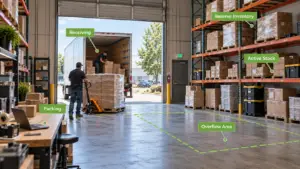
Drive-Up Roll-Up DoorCarrier pickup at the unit door, pallet delivery without a loading dock, loading without stairs or elevators. Units without drive-up access add hours of handling every week.
-
Right-Sized Unit (500–1,000 sq ft)500–800 sq ft covers shelving, a packing station, and room to move. A unit closer to 1,000 sq ft supports a larger SKU catalog or small team. See what to look for in a unit.
-
Month-to-Month LeaseNo multi-year commitment. Scale up as your volume grows or vacate if needs change, without penalties or complex renegotiations.
-
Reliable Power AccessLabel printers, heat sealers, tape dispensers, lighting. Confirm outlet availability and amp capacity before signing.
-
Commercial ZoningPermits active business operations, commercial deliveries, and business insurance. Self-storage and residential space do not.
How to Make the Move Without Disrupting Orders
The goal is to transition storage without a gap in fulfillment. A few simple steps make the difference between a clean move and a chaotic one.
Plan the move during a slow week. Pull your order history and identify your lowest-volume window, typically the week after a promotional push or in early January. Avoid moving during a peak period, even if the unit is ready.
Set up shelving before the inventory arrives. Label your shelves by SKU category before the first box comes in. An organized unit means your picking workflow is functional from day one instead of week three.
Run both locations briefly. Keep your old storage accessible for 3–5 days while the new unit gets settled. This reduces the risk of a “where did we move that?” moment during an active fulfillment day.
Update your ship-from addresses everywhere. That includes your Shopify warehouse location, Amazon ship-from settings, Etsy profiles, and any freight or carrier contacts who handle scheduled pickups. Missing one can delay an entire day of shipments.
Photograph your new setup. If the new space has better lighting or a cleaner background, take updated product photos while you’re already in setup mode. It’s a low-effort win that often gets skipped.
How WorkBay Supports E-Commerce Sellers
WorkBay provides private small warehouse units built for e-commerce storage expansion and other small operational businesses. Here’s what’s included:
- Private units from 500–2,500 sq ft across Utah, Arizona, Texas, and Florida
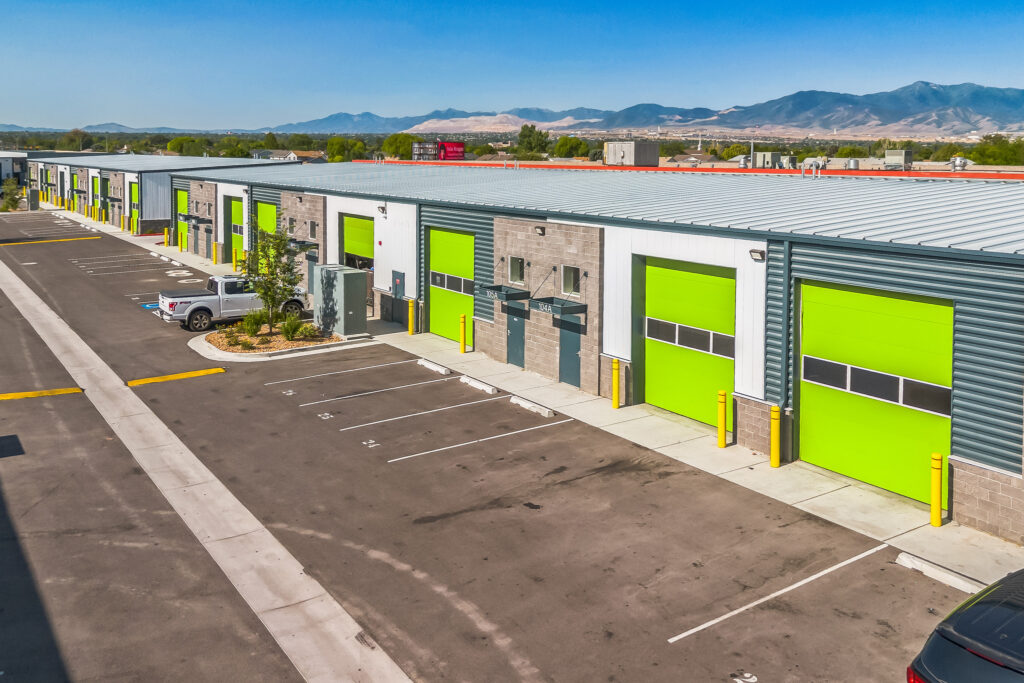
- Drive-up roll-up doors, high-power electrical, and pre-zoned light industrial use, so you can legally operate, insure, and receive freight at your unit
- Month-to-month leases with no long-term commitment, so you can scale up or vacate as your business changes
- Tenant base includes e-commerce sellers, contractors, makers, and mobile service businesses.See who uses WorkBay.
Ready to Find a Unit Near You?
See Available Units →Frequently Asked Questions
When is the best time to expand e-commerce storage?
March through April is the ideal window. Inventory levels rise as sellers prepare for Mother’s Day, graduation season, and early summer demand. If storage is already tight in Q1, waiting until May typically results in fulfillment delays. Moving during a slower fulfillment week minimizes order disruption.
How much warehouse space does an e-commerce business need?
Most growing solo e-commerce sellers start with 500 to 800 sq ft, enough for full inventory, a packing station, and outbound shipping staging. Sellers with a small team or high SKU count typically need 1,000 to 1,500 sq ft. Starting slightly larger than you think you need is worthwhile. It’s harder to reorganize a full unit than to grow into one.
What’s the difference between a storage unit and a warehouse for e-commerce?
A storage unit permits passive storage only. You cannot legally conduct business operations, receive commercial deliveries, or use power equipment inside. A warehouse unit, or flex warehouse bay, is zoned for light industrial use, allowing active picking, packing, shipping, and equipment use.
How do I expand e-commerce storage without a long-term lease commitment?
Flex warehouse providers like WorkBay offer month-to-month leases with no multi-year commitment. You can secure a unit, scale up to a larger bay as your business grows, or vacate if your needs change, without the penalty structure of a traditional industrial lease.