
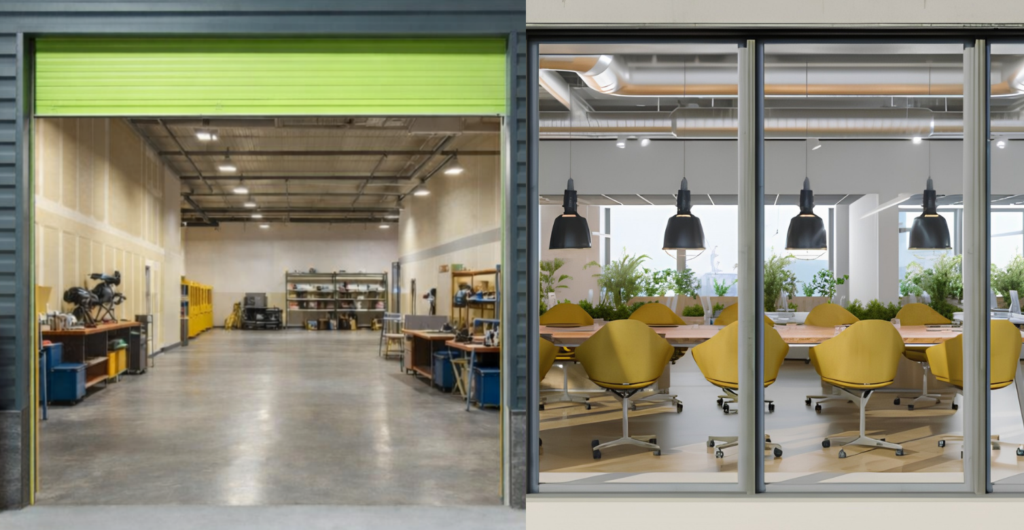
Warehouse space and coworking are both flexible alternatives to traditional leases — but they solve very different problems. If your work is mostly desk based, coworking may fit. If your work involves inventory, tools, shipping, or equipment, warehouse space is usually the more practical choice. This guide breaks down the real differences so you can choose without guessing.
Warehouse vs Coworking Space: What Is the Difference?
| Feature | Warehouse Space | Coworking Space |
|---|---|---|
| Primary Use | Storage, inventory, and active operations | Desk work, meetings, remote office |
| Best For | E-commerce, contractors, product businesses | Freelancers, remote workers, consultants |
| Storage | Built for inventory and equipment | Light personal storage at most |
| Drive-Up Access | Common in warehouse and flex formats | Not a standard feature |
| Equipment Use | Tools, packing stations, operational workflows | Laptops, calls, and meetings |
| Lease Flexibility | Flexible terms available at many locations | Flexible memberships are common |
The biggest difference is not company size. It is the physical nature of the work.
What Is a Warehouse Space?
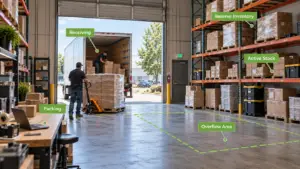
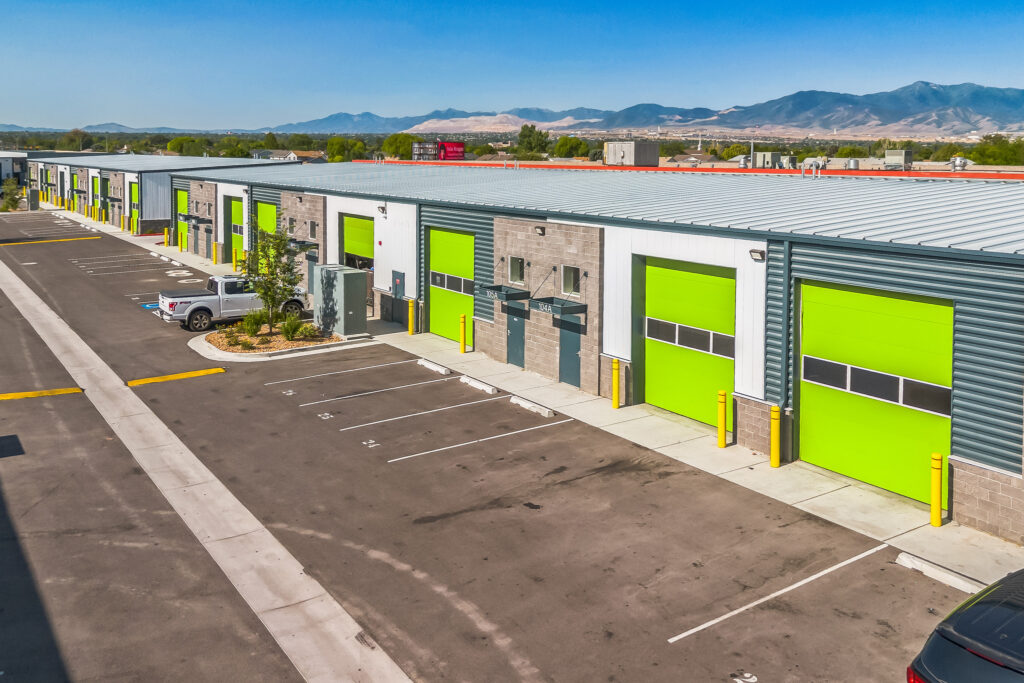
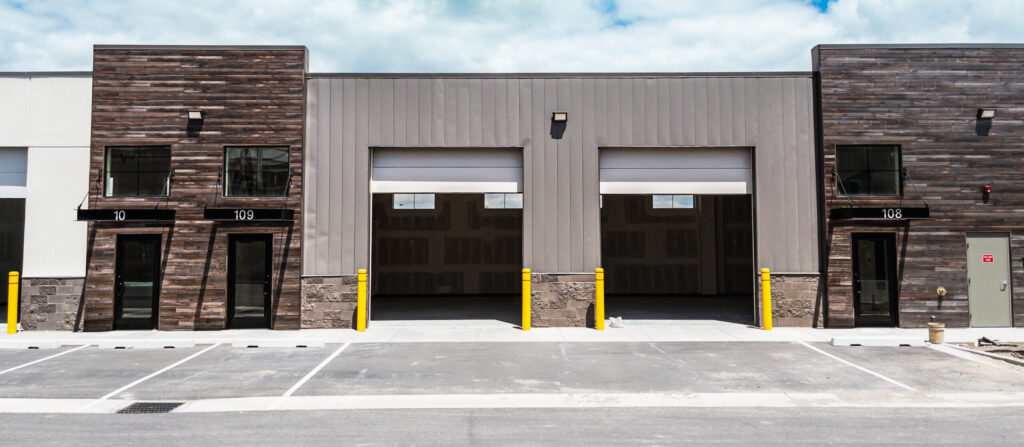
A flex warehouse space is a private industrial unit designed for active commercial use. These buildings are built around storage, staging, equipment, and day to day operational room. Most include drive-in door access, dedicated loading areas, and a floor plan you can configure around how you actually work.
For a product business, contractor, or e-commerce seller, that operational infrastructure is not a nice to have. It is the baseline. You cannot pack orders in a hot desk, and you cannot stage tools for a job site in a meeting room.
What Is Coworking Space?
A coworking space is a shared office environment built for desk based work. Providers typically offer hot desks, dedicated desks, open plan workspace, shared amenities, and flexible booking or membership options. It is a strong fit for people who need a professional place to work, meet, and plug in without taking on a conventional office lease.
Coworking works well when your tools are a laptop and a phone. It does not work when your tools weigh 400 pounds and need to be loaded into a truck by 7 AM.
Key Differences Between Warehouse and Coworking

When Coworking Space Makes Sense
Coworking is the right choice when the business is fully desk based and does not depend on physical operations. Use cases where it fits:
- Freelancers, consultants, and remote employees who need a productive daily work environment
- Early stage software or digital teams that need office infrastructure without a long term commitment
- Professionals who need occasional meeting space and a business mailing address
- Any business where the entire operation fits in a backpack
When a Warehouse Is the Better Choice
A warehouse becomes the better choice when the business depends on physical movement, storage, or fulfillment.
Warehouse Space Works For
- →E-commerce sellers managing inventory and packing
- →Contractors needing tool and material storage
- →Product based businesses with supplier deliveries
- →Service businesses with equipment storage needs
Coworking Works For
- →Consultants and freelancers working from a laptop
- →Remote teams needing a shared professional space
- →Startups without physical inventory or equipment
- →Anyone whose entire business runs through a screen
If your business involves inventory, tools, or physical fulfillment, flex warehouse units are the more practical fit. The format is built around operations, not desk work.
Can You Use Both?
Sometimes yes. For some businesses, the smartest setup is warehouse space for operations and either coworking or a home office for admin, calls, and meetings.
A contractor may manage bids and scheduling from home but keep tools and materials in a drive-up bay. An e-commerce seller may run fulfillment from a small warehouse and only use meeting space when needed. The right answer depends on the workflow, not on which label sounds more flexible.
How to Choose the Right Workspace
How to Choose
Answer These 5 Questions
- 1 Do you store physical inventory that you need regular access to?
- 2 Do you ship products and need regular carrier pickup or deliveries?
- 3 Do you use tools or equipment that need power or dedicated floor space?
- 4 Does your business require commercially appropriate zoning?
- 5 Do you expect your physical footprint to grow as the business grows?
If you answered yes to two or more, a warehouse unit is probably the right fit. If your work is mostly screen based with no operational footprint, coworking may serve you well.
What Is Included
Amenities That Matter
Mail Receiving
Professional address for deliveries and shipments.
24/7 Access
Enter your workspace anytime, any day.
Onsite Manager
Someone is always here to help when things come up.
Fast Move-In
Move-in ready units. Get your keys in days, not months.
Business WiFi
Business grade Wi-Fi included with every unit.
Garbage Pickup
No more trips to the dump. We handle waste pickup.
Security Cameras
Peace of mind while you are away.
Maintained Property
Well-maintained grounds and buildings included.
Frequently Asked Questions
Coworking can work for a purely digital e-commerce business, but it is usually not a good fit for a seller who stores and ships physical products. Inventory, packing, carrier pickup, and repeated shipment handling align much more naturally with warehouse space.
Yes, if the business is primarily desk based. Coworking is well suited to consulting, marketing, software, and similar work that needs workspace and meeting space rather than storage or active fulfillment operations.
It depends on the nature of the business. For product businesses, contractors, e-commerce sellers, and service companies with tools or equipment, warehouse space is usually the better fit. For screen based professional services, coworking or an office space is often sufficient.
WorkBay offers units from 500 to 2,500 sq ft. For most contractors and e-commerce sellers just getting started, a 500 to 800 sq ft unit covers tools, inventory, and a small work area. Larger volumes or multiple crew members may need 1,200 sq ft or more.
Some businesses do, but not all. Many small businesses can handle both functions inside a well organized private bay with a desk or small office area. If you have both operational needs and regular client facing work, pairing a warehouse with coworking access can make sense.