
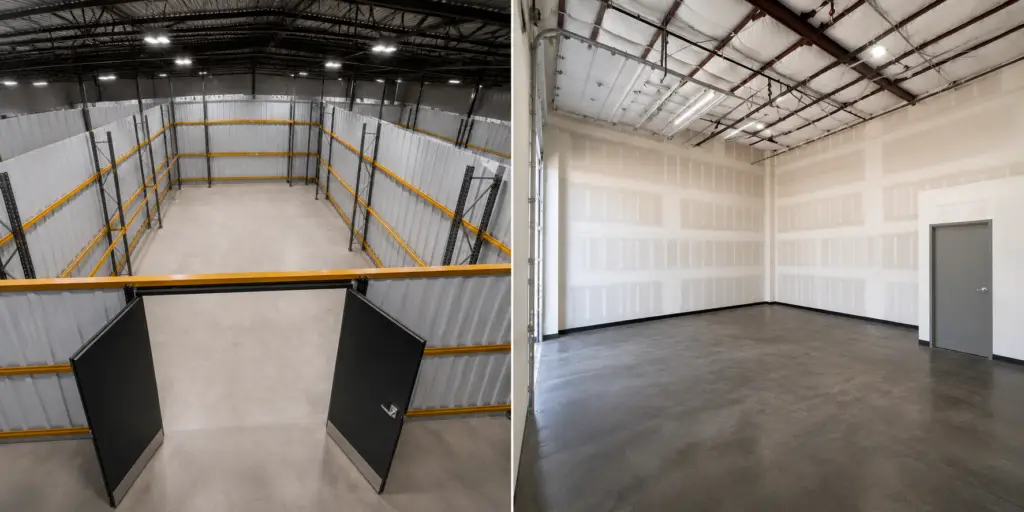
One is your own bay, with a door you control. One is a corner of a shared warehouse, with other businesses moving around you. Same square footage on paper. In practice, two very different ways to run a business.
Both can work. The right choice depends on what you need the space to do. If you mostly need storage, shared warehouse space may be enough. If the space is where the work happens, a private warehouse may be the better fit.
This post covers the warehouse to warehouse comparison only. If you are weighing a warehouse against an office style setup instead, start with warehouse vs coworking space. Here, we are comparing two warehouse models so you can pick the right one before you sign.
What Each Model Actually Is
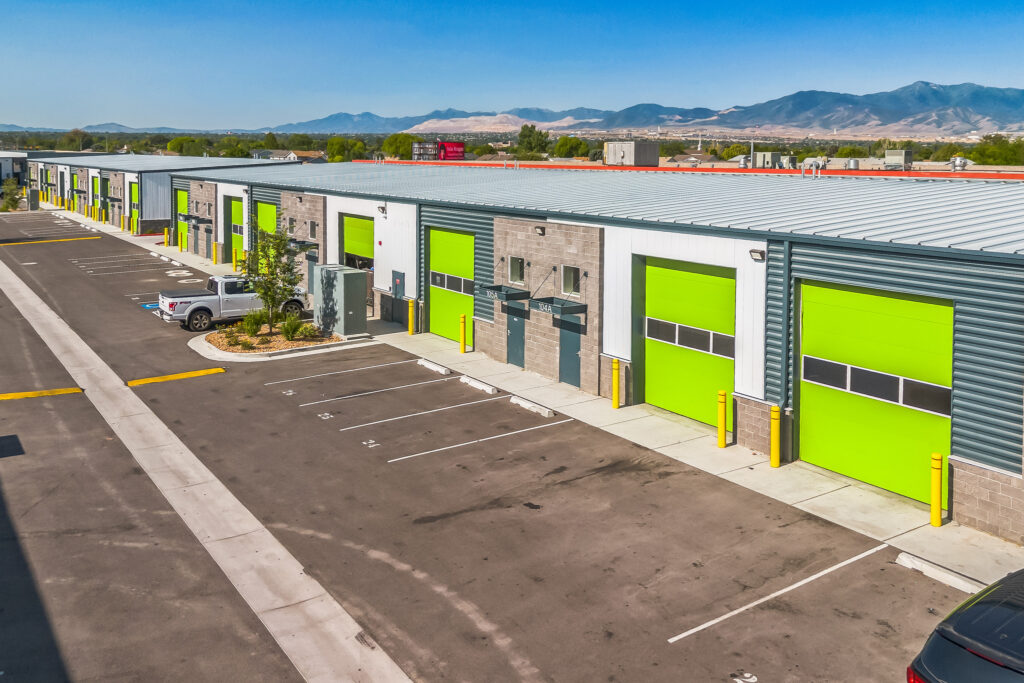
A private warehouse is an enclosed space for one business. You get your own dedicated space, your own door, and your own access. Instead of working around other tenants inside the same building, you set the space up around your tools, inventory, equipment, packing stations, workbenches, or customer facing needs.
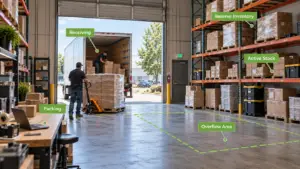
A shared warehouse is different. In a shared warehouse space, multiple businesses use the same larger facility. You may have a dedicated storage area, racks, cages, pallets, or a marked off section, but the building’s key features are shared. That can include docks, aisles, common areas, restrooms, equipment, receiving areas, and sometimes staff or fulfillment support.
For some businesses, that setup is useful. If you only need inventory stored and moved on a predictable schedule, shared infrastructure can make sense. You may not need your own bay, your own entrance, or room to leave tools and materials exactly where you want them.
But if you are actively working in the space every day, the shared model can start to feel limiting. Other businesses may be moving through the same area. Dock access may need coordination. Noise, dust, fumes, workflow, appearance, and customer access may not be fully in your control.
The decision is not just about square footage. It is about how much control the business needs over the space.
When a Shared Warehouse Makes Sense
A shared warehouse can be the right call when the space is mostly for storage, not daily work.
If your business receives inventory, stores it, and ships it out on a predictable schedule, you may not need a private bay. You may only need room for pallets, shelves, or labeled inventory. In that case, sharing a larger facility may give you access to warehouse features without taking on a space you do not fully use.
Shared warehouse space can also work when your schedule is simple. If you know exactly when shipments arrive, when pickups happen, and when you need access, shared docks or shared equipment may not slow you down. The trade off is that you are fitting your business into a shared system.
It can also make sense for a business that is still early. If you are holding a small amount of inventory, not meeting customers onsite, and not doing hands on production in the space, a shared warehouse may be enough for now.
The key is honesty. A shared warehouse is usually strongest when the space supports the business from a distance. It stores, stages, or moves goods. It is not the place where tools stay set up, where products are made, where customers walk in, or where a team needs a consistent daily workflow.
The same business, two buildings.
Toggle between a shared warehouse and a private bay. Watch where your business actually lives in each one.
When a Private Bay Is the Right Call
A private bay is the better call when the warehouse is not just where things sit. It is where the work happens.
That can mean a carpenter setting up saws, shelving, clamps, and material racks. It can mean an HVAC business organizing equipment, parts, tools, and service vehicles. It can mean a food business preparing, packing, and staging orders. It can mean a repair shop, detailer, photographer, fabricator, e-commerce seller, or trades business that needs more than storage.
Private warehouse space is about control. You can arrange the space around the work instead of rearranging the work around a shared space.
That matters in small ways every day. You can keep your bench where it belongs. You can label shelves the way your team actually uses them. You can create a receiving area, a packing area, a clean area, or a customer facing corner. You can build a rhythm that does not depend on whether another business is using the same aisle or dock.
WorkBay spaces are built for businesses that need that kind of daily use. Many locations include features such as roll-up doors, drive up access, high ceilings, business Wi Fi where available, mailing address options, security features, onsite support, and maintained properties. Availability varies by location and unit, so the right next step is always to check the specific park. You can review current WorkBay amenities to see what may be included.
The value of a private bay shows up clearly in real WorkBay stories. The throughline in each one is the same: the business needed to shape the space around the work.
What a Private Bay Makes Possible
The thread through each story is the same: the business needed to shape the space around the work.

Sugar Rush by MB
A home kitchen could not keep up with the orders for desserts, breads, and custom cakes. A private bay gave Mireya room for both production and a setup that matched how the business actually ran.
Read the story
Boxing Roots
After 22 years teaching boxing, Alex needed more than open floor space. He needed a place that felt like the brand and supported private sessions, then scaled from a smaller unit into a larger one as it grew.
Read the story
Saucy Bofa
A food prep business needed open layout, delivery access, and room for cold storage, prep, and packaging, with custom upgrades for electrical, plumbing, and a floor drain in the same space.
Read the storyIf You Are Not Sure Yet
Some businesses sit between the two models. Maybe you mostly store inventory today, but you are starting to pack orders yourself. Maybe you work out of a garage, but the tools are taking over the house. Maybe customers do not visit yet, but you want that option later. Maybe one person can work around a shared setup, but a second person would make it crowded fast.
If that is you, run through these before you sign anything. The more you answer yes to, the more a private bay is worth the look.
Questions to ask yourself before you sign
- Do you work in the space, or do you only store things there?
- Do you need tools, tables, racks, or equipment to stay set up?
- Do customers, employees, vendors, or delivery drivers need to visit?
- Do you need to control how the space looks?
- Would a shared schedule slow down your day?
- Could you grow in the same place, or would you have to move again?
If the space only needs to hold inventory, shared warehouse space may be enough. If the space needs to support production, packaging, repair, prep, customer visits, or daily trade work, a private warehouse gives you more control from the start.
What to Do Next
If shared warehouse space fits your model, the best next step is local research. Search for providers in your area and ask how access works: what parts of the facility are shared, whether dock time is scheduled, what hours you can enter, what you can leave set up, and how deliveries are handled. Those answers tell you fast whether a shared setup fits the way you work.
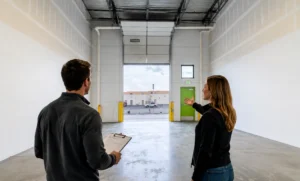
If a private bay sounds like the right fit, the next step is a tour. No forms, no sales pitch. Just a look at the space so you can decide whether the layout, access, location, and features match the way your business works.
Start with the WorkBay park finder and choose the location closest to you.
See the Space That Fits the Way You Work
If a private bay sounds like the right fit, the next step is a tour. No forms, no sales pitch. Just a look at the space.
A private warehouse is a dedicated unit for one business. You get your own enclosed space, your own door, and your own access, so you can set the space up around your tools, inventory, and workflow instead of working around other tenants.
When the space is mostly for storage rather than daily work, when your schedule is predictable, or when you are early and holding a small amount of inventory without customer visits or hands on production. The shared model works best when the space supports the business from a distance.
When the warehouse is where the work happens: production, packaging, repair, fabrication, prep, or customer facing setups. If you need control over layout, access, appearance, and daily workflow, a private bay gives you that from the start.