
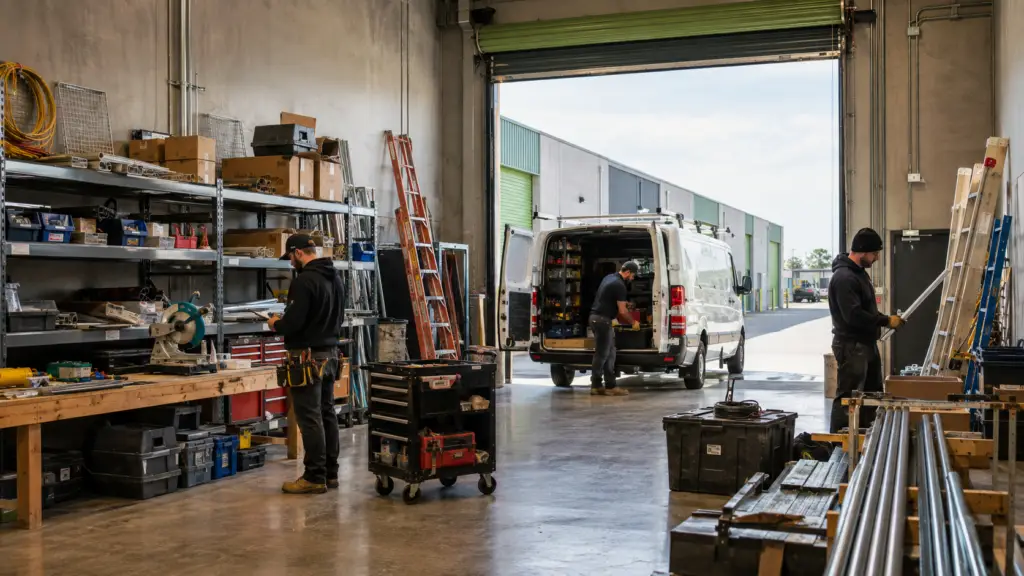
There’s a lot of attention on new construction right now. But some of the biggest opportunities for contractors are already standing.
Half of the commercial buildings in this country went up before 1982. That’s the median year of construction in the most recent federal building survey, which means millions of properties are now well past the 40 year mark and still in daily use.
For plumbers, HVAC companies, electricians, roofers, and general contractors, that’s the whole story. Buildings don’t stop needing work when construction wraps up. They need more of it.
Most U.S. commercial buildings are decades old, and aging buildings need continuous HVAC, electrical, plumbing, roofing, and maintenance work. That creates steady, recurring demand for the skilled trades that doesn’t depend on new construction. For contractors growing with that demand, the next constraint is usually operational: somewhere to store tools, stage materials, and load crews out every morning.
Older HVAC equipment reaches the end of its life. Electrical systems run out of capacity. Plumbing corrodes, roofs fail, tenants remodel, and owners install controls and equipment that didn’t exist when the building was drawn up. Every one of those jobs goes to a trade.
America’s Commercial Buildings Are Getting Older
The U.S. Energy Information Administration counted roughly 5.9 million commercial buildings in its 2018 Commercial Buildings Energy Consumption Survey. Three quarters of them were built before 2000, and the median building was already 36 years old when the survey was taken.
A commercial building rarely gets replaced just because it’s old. It gets repaired, then renovated, then upgraded again a decade later. That cycle is what keeps contractors busy.
The same survey asked owners what they’d renovated since 2000, and the answers show how much work an aging building generates.
Commercial building renovations reported since 2000
Approximate counts, U.S. Energy Information Administration, 2018 Commercial Buildings Energy Consumption Survey
Those projects land on different trades, but they point at one trend. Keeping an old building running is an ongoing job, not a one time fix.
HVAC: Older Equipment Has to Go Eventually
Heating and cooling is usually the most obvious source of work in an older property. Equipment wears down, efficiency drops, refrigerant standards change, and replacement parts get harder to track down.
Owners also have a money reason to act early. An aging system can quietly drive up operating costs for years before it actually quits.
The Bureau of Labor Statistics projects employment for heating, air conditioning, and refrigeration mechanics and installers will grow 11% from 2025 through 2035, compared with about 3% for all occupations, with roughly 40,600 openings each year.
For an HVAC contractor, the work goes well past swapping rooftop units. Ductwork, ventilation, controls, refrigeration, preventive maintenance, and full system redesigns all come up as tenants change how a building gets used.
Electrical Demand Is Growing Too
Think about what was plugged into a commercial building in 1990 versus what’s plugged in today. Servers, security systems, EV chargers, automation, LED lighting, smart controls, and production equipment all draw power that nobody planned for.
That means electricians aren’t just fixing things. They’re modernizing infrastructure that was designed for a different era.
BLS projects electrician employment will grow 9% between 2025 and 2035, with about 72,700 openings each year. Demand includes installing and replacing power systems in buildings, as well as connecting growing sources of power generation such as solar and wind.
Plumbing Never Becomes Maintenance Free
Plumbing ages right along with the building around it. Valves fail, pipes corrode, fixtures go out of date, and water heaters reach the end of their service lives. Meanwhile businesses keep remodeling bathrooms, break rooms, and production areas.
The Bureau of Labor Statistics says demand for plumbers will come from both new construction and the need to maintain and repair plumbing systems in existing buildings. BLS projects about 44,000 openings per year for plumbers, pipefitters, and steamfitters from 2024 through 2034.
Projected employment outlook, 2024 to 2034
| Trade | Growth | Openings per year |
|---|---|---|
| Electricians | 9% | 81,000 |
| HVAC and refrigeration mechanics | 8% | 40,100 |
| Plumbers, pipefitters, steamfitters | 4% | 44,000 |
| General maintenance and repair workers | 4% | 159,800 |
| All occupations, for comparison | 3% | n/a |
Source: U.S. Bureau of Labor Statistics, Occupational Outlook Handbook.
The Opportunity Goes Beyond the Big Three
A building that’s 40 years old can generate projects across nearly every trade. There are roofs to replace and concrete to repair. Interiors get remodeled, fire protection gets modernized, and lighting gets swapped out. Doors, windows, insulation, and security systems all come due. Spaces get reconfigured every time a new tenant signs.
BLS expects general maintenance and repair workers to see roughly 159,800 openings a year from 2024 through 2034, and it specifically notes that older structures generally require more maintenance.
Aging buildings don’t create one project. They create a repeat customer.
More Work Creates a Different Problem
Winning more jobs is good. Running a business that’s suddenly handling more jobs gets complicated fast.
A contractor who once carried everything in one truck ends up with multiple vehicles, larger material orders, spare equipment, replacement parts, and a crew loading out every morning. Deliveries show up while everyone’s on a job site. Materials for next week need somewhere to sit.
At that point, the garage or driveway that worked fine two years ago starts slowing the whole operation down. The problem shifts from finding work to being ready to handle it.
Material orders arrive faster than you can find somewhere to put them
Crews spend the first hour of the day hunting for tools across two vehicles
You’re turning down jobs because there’s nowhere to stage the work
Build a Better Setup
As a trade business grows, staying organized becomes just as important as doing the work itself.
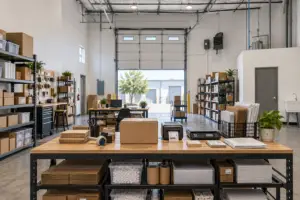
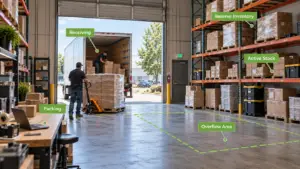
Keeping commonly used parts on hand cuts down on trips to the supply house. Staging materials the night before helps crews get out the door faster in the morning. And having one place to store and return tools makes it easier to keep track of equipment and keep everything in working order.
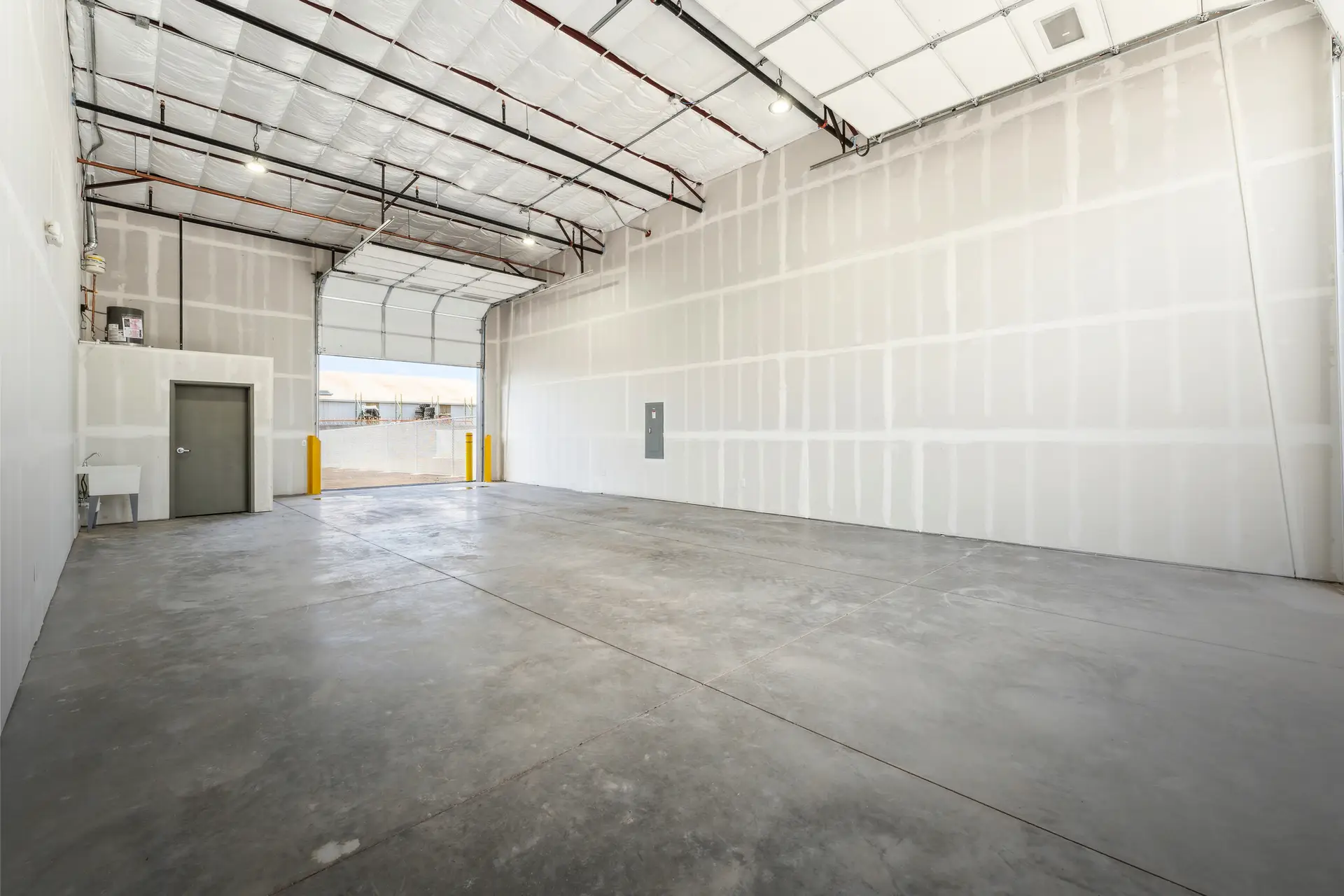
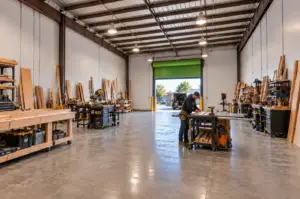
Tools stay on the wall instead of rattling around a truck bed. Lumber sits on racking where you can see what’s left. The saw station stays set up between jobs, and the roll up door means you back right in to load out.
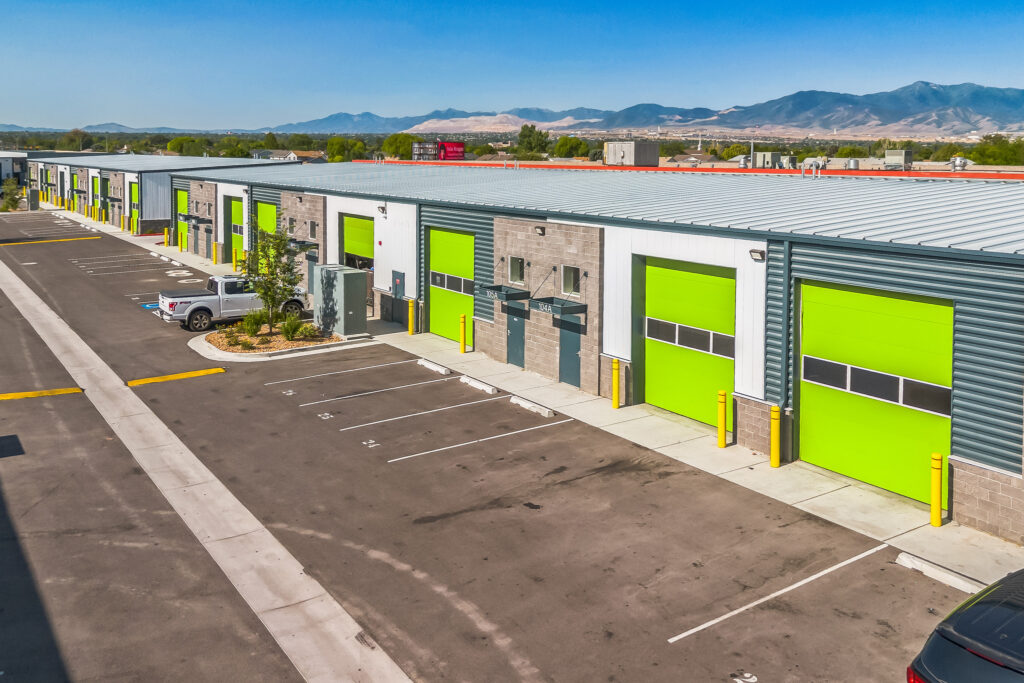
WorkBay provides private commercial bays built for businesses that make, fix, build, store, and move physical things. Most parks include drive up access, large roll up doors, high ceilings, and 24/7 access, though amenities vary by location.
That gives a contractor room to store tools and materials, stage upcoming projects, load vehicles, and run the operational side of the business from one place instead of three.
Room to store, stage, and work
Private commercial bays for contractors and trade businesses in Texas, Florida, Utah, and Arizona.
Find a WorkBay Near YouThe Buildings Are Already There. The Work Isn’t Going Away.
A lot of America’s commercial buildings have been around for decades, and they still need constant work. HVAC systems get replaced. Electrical and plumbing systems get upgraded. Roofs wear out. New tenants move in and spaces get reworked.
At the same time, BLS projects tens of thousands of openings each year across the major trades. That demand isn’t just coming from new construction. It’s also coming from the buildings that are already here and need to keep running.
If your business is growing along with that demand, make sure you have the space to support it. Find a WorkBay near you and book a tour when you’re ready.