
Where the Demand Is Concentrated
Electricians are one of the clearest examples. The Bureau of Labor Statistics projects electrician employment to grow 9 percent from 2025 to 2035, compared with about 3 percent across all occupations. BLS expects roughly 72,700 openings for electricians each year over the decade.
Some of those openings will come from experienced electricians retiring or leaving the trade. Demand is also growing as more power infrastructure is built and upgraded. BLS specifically points to solar and wind projects, data centers, rising electricity demand tied to AI, and upgrades to the power grid. Associated Builders and Contractors also reports that roughly one in five electricians is over 55.
HVAC is growing even faster. BLS now projects employment for heating, air conditioning, and refrigeration mechanics and installers to grow 11 percent through 2035, with about 40,600 openings each year. New construction is part of that demand, but so is the ongoing work of repairing, replacing, and upgrading HVAC systems in existing buildings.
Plumbing is also projected to grow faster than the average across all occupations. BLS expects employment for plumbers, pipefitters, and steamfitters to increase 7 percent through 2035, with about 42,000 openings each year.
| Trade | Projected employment growth | Average openings per year |
|---|---|---|
| Electricians | 9% | about 72,000 |
| HVAC and refrigeration technicians | 11% | about 40,600 |
| Plumbers, pipefitters, and steamfitters | 7% | about 42,000 |
| All occupations, for comparison | 3% | not applicable |
The Trades Stay Busy Even When Building Slows
Skilled trades don’t depend entirely on new construction.
Older buildings still need plumbing repairs. HVAC systems break down. Electrical panels need to be replaced or upgraded. Equipment needs maintenance. Businesses remodel, expand, and reconfigure existing spaces.
That work continues even when construction slows. For plumbers, electricians, HVAC technicians, mechanics, and other trades, a large part of the job is keeping the buildings and equipment that already exist working.
When Labor Is Tight, Efficiency Matters More
Most conversations about the labor shortage focus on hiring. But when you can’t hire as quickly as you’d like, the time your current employees lose matters more too.
If you have five people doing work that could keep seven busy, you don’t want one of them spending an hour looking for materials. You don’t want your most experienced technician driving back across town because a part was left behind. And you don’t want the whole crew spending the first half hour of the morning loading a truck that could have been ready the night before.
None of those problems seems huge on its own. But over a week, a month, or a year, they add up.
The fewer skilled people you have, the more important it becomes to keep their time focused on the work only they can do.
- Tools have a home, so nobody wastes time hunting for them
- Common materials stay stocked instead of getting bought twice
- Tomorrow’s job gets staged before the crew shows up
- Deliveries have somewhere to go other than a driveway
- Equipment gets serviced between jobs
- Trucks load straight from the workspace
Growth Exposes the Limits of the Garage
A lot of trade businesses start out of the house because it works.
There’s one truck in the driveway, tools fit on shelves in the garage, and materials can be tucked into a corner. For a one- or two-person business, that may be all the space you need.
Then another truck gets added. Materials start arriving by the pallet. Ladders, pipe, equipment, and parts take up more room. Employees start meeting at the house in the morning. Trailers become overflow storage because there isn’t anywhere else to put things.
Eventually, running the business out of the garage starts creating more work.
You need room to stage upcoming jobs, receive deliveries, organize tools, park work vehicles, and give employees a consistent place to meet without turning your home into the shop.
That’s usually the point when having dedicated workspace starts to make sense.
What a Trade Ready Space Should Do
Contractors don’t need a fancy office. They need a space that makes the workday easier.
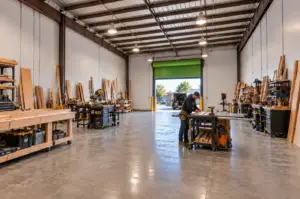
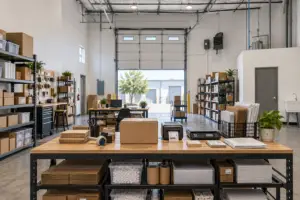
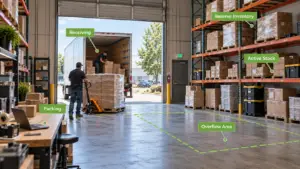
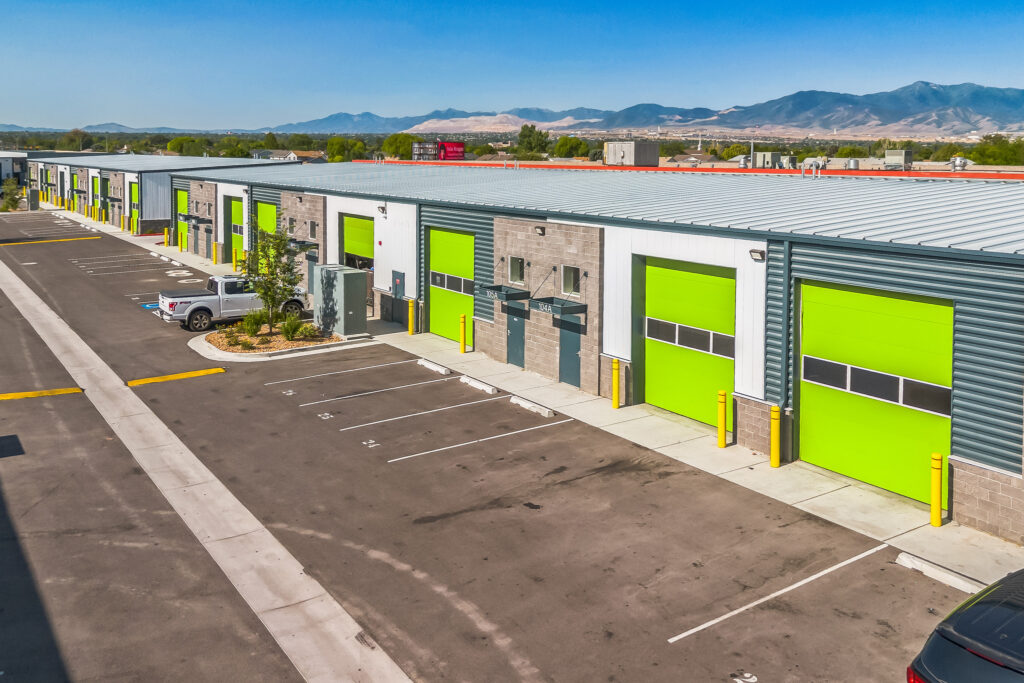
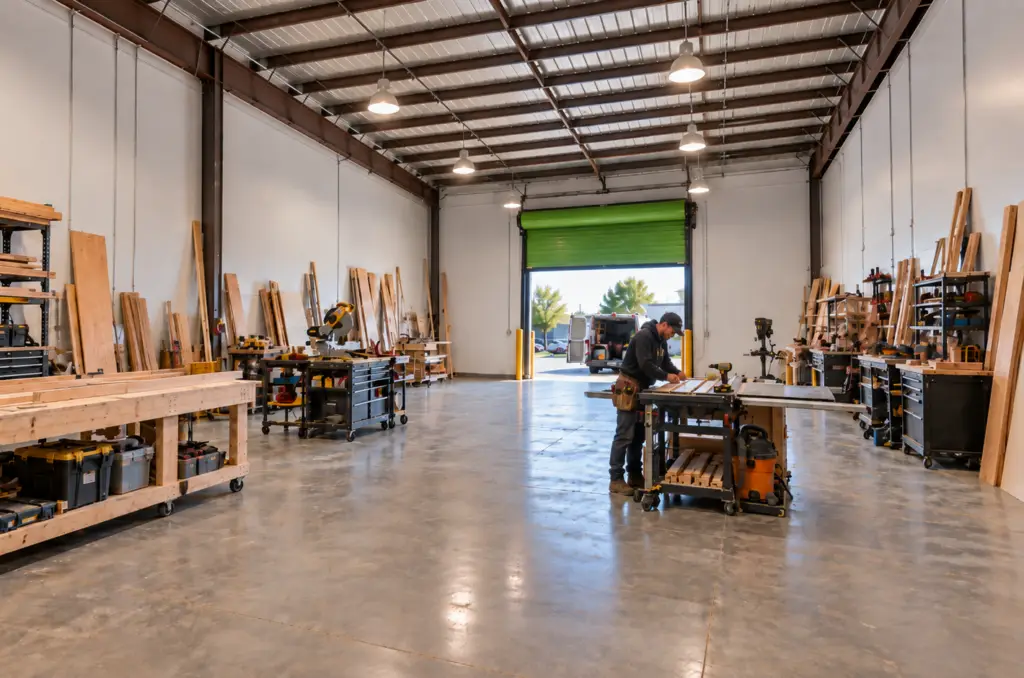
That usually means being able to pull a truck up to the space, move equipment through a roll-up door, organize tools and materials, receive deliveries, and stage work for the next day.
WorkBay spaces are used by plumbers, electricians, HVAC companies, welders, fabricators, general contractors, and other businesses that need more than a traditional office or storage unit.
Instead of keeping tools in one place, materials in another, and equipment in a trailer, you can keep more of the business together in one workspace.
Features and amenities vary by park.
What the Skilled Trades Shortage Means for Small Contractors
The skilled labor shortage makes running a trade business harder. Good employees are difficult to find, experienced workers are retiring, and labor costs continue to put pressure on contractors.
But the demand for the work itself is still there.
Homes and businesses still need electricians. HVAC systems still need to be repaired. Plumbing still breaks. Equipment still needs maintenance. Construction projects still need skilled people who know how to build, install, fix, and fabricate.
For small contractors, that makes it even more important to use the people they already have well.
Keep the tools organized. Get tomorrow’s materials ready before the crew arrives. Cut down on unnecessary trips back to the shop. Give employees one place to load trucks, find equipment, receive deliveries, and get ready for the next job.
And when the business starts running out of room, solve that problem before it starts slowing everyone down.
For more ideas, read our guide to organizing tools across the shop, truck, and job site.