
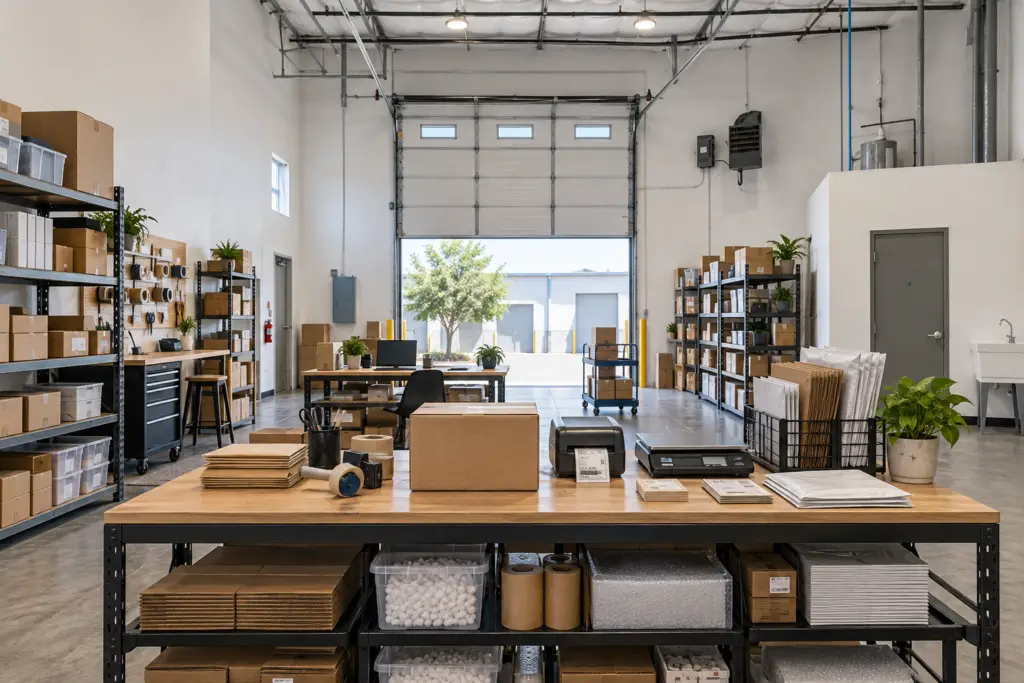
Packing ten orders from your kitchen table is pretty manageable. Packing a hundred is different. Inventory is arriving, returns are coming back, shipping supplies need to be restocked, and new orders are already piling up before you’ve finished the ones in front of you.
At that point, the problem usually isn’t a lack of inventory space. It’s that your packing setup can’t keep up with the way your business operates anymore. Sometimes reorganizing the space you already have is enough. As order volume grows, though, you may eventually need dedicated ecommerce warehouse space where inventory, packing, and shipping can each have their own place.
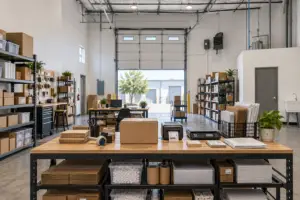
A good layout gives each step of fulfillment its own place. Products move from storage to packing, where they’re checked, boxed, weighed, and labeled, then move straight into an outbound area to wait for shipping. The goal is simple: reduce the number of steps between picking an order and getting it out the door.
For most growing ecommerce businesses packing in house, the layout that works is a straight line. Inventory feeds picking, picking feeds packing, packing feeds labeling, and labeling feeds outbound staging. The direction product moves matters more than how many square feet you have.
What Is the Best Packing Station Layout?
The exact dimensions depend on what you sell, but the direction product moves through the bay matters more than how much square footage you have. Think of the packing station as the center of that flow rather than an extra table wedged into whatever floor space was left over.
The five areas every order passes through
You don’t need five rooms. In a small bay, each one can be a section of shelving, a table, or a taped off patch of floor.
1. Map Out Your Order Fulfillment Process
Before you add another rack, table, or label printer, follow one typical order from start to finish. Where is the product stored? How far does someone have to walk to pick it? Where do boxes, tape, and shipping supplies sit? Where is the label printed? Once the order is packed, where does it go?
Walking through the process makes it easier to spot the extra steps that have become part of the routine. The same basic pick-and-pack process happens in larger warehouses too. They just have more space, more people, and usually more defined areas for each step.
2. Put Your Packing Station Between Storage and Shipping
Keep the packing station close enough to inventory that no one has to cross the bay for every order, but also close enough to the outbound area that finished boxes can be staged quickly. At the same time, leave enough space between the station and the roll up door so incoming deliveries don’t interrupt packing. You should also be able to move around the station comfortably without squeezing between shelving, boxes, or equipment.
In a smaller space, that usually means keeping inventory along the back or one side of the bay, placing the packing station near the center, and staging finished orders closer to the door. A few extra steps may not seem like much, but they add up when you’re repeating the same process all day.
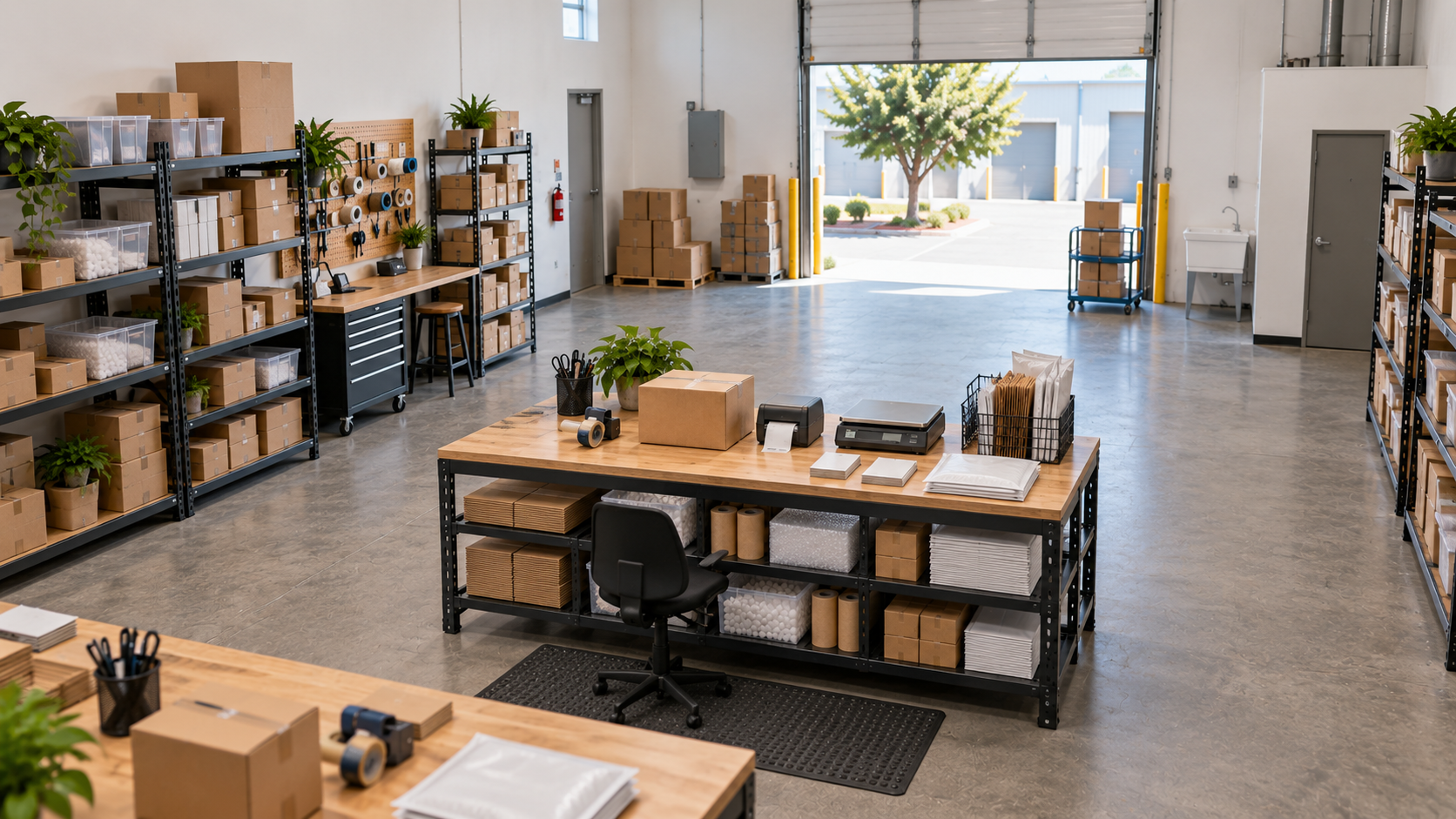
Put your packing station between storage and shipping
It’s easy to put the packing table wherever you have open space. Instead, think about how orders move through the bay. Ideally, inventory should move from storage to the packing station and then straight to the shipping area.
3. Keep Frequently Used Supplies Within Reach
Once the station is in the right spot, organize it around what you use most. You don’t need every shipping supply on the table. Keep the items you reach for on nearly every order close by so whoever is packing isn’t constantly bending, turning, or walking away from the station.
Keep the supplies you use most within reach
The supplies you use on nearly every order should be the easiest to grab. Less frequently used items can sit farther away.
Label printer
Scale
Safety cutter
Your two most common mailer sizes
Branded inserts and thank you cards
Void fill you use daily
Backup tape and labels
Seasonal or promotional packaging
Odd sizes you ship a few times a month
OSHA’s packaging and shipping ergonomics guidance follows the same basic idea: frequently used items should be easy to reach without excessive bending, twisting, or stretching.
4. Leave Enough Room to Pack
More storage on the packing table isn’t always better. You still need enough open space to actually pack an order.
Keep the center of the station clear and arrange the printer, tape, bins, and other supplies around that workspace. A good rule of thumb is to make sure there’s enough room for the largest package you ship regularly. If your products vary in size, test the setup with one of your bigger orders. You should be able to build the box, pack the order, weigh it, and add the shipping label without having to move everything to another table.
If you’re constantly carrying a package from one surface to another just to finish it, the setup probably needs to be simplified.
5. Keep Best Sellers Close to the Packing Area
Not every product needs to be stored in the easiest spot to reach. Items you pick every day should be closer to the packing station than products you only ship a few times a month. That’s the basic idea behind inventory slotting.
Keep enough of your fast-moving inventory nearby to fill orders, then restock it from reserve as needed. That way, bulk inventory doesn’t take up the shelving that’s most useful for everyday picking.
Where to Store Different Types of Inventory
Keep the products you pick most often closest to the packing station. Less frequently used inventory can sit farther away.
| Inventory type | Where it goes | Why |
|---|---|---|
| Fast movers | Closest shelving to the packing table, at waist height | Picked daily, so every saved step compounds |
| Regular sellers | Secondary shelving along the same wall | Still frequent, but not worth the prime spot |
| Slow or seasonal | Back wall or upper shelves | A longer walk a few times a month costs you nothing |
| Reserve stock | Overflow area, replenished into active picking | Bulk shouldn’t sit in the best picking spot just because there’s a lot of it |
6. Keep Finished Orders Separate From Orders in Progress
Packing gets messy quickly when orders in different stages are all sharing the same space. Give each stage its own spot: orders waiting to be packed, orders currently in progress, and finished orders that are ready to ship. You can use totes, carts, or designated sections of the table. The exact system matters less than using it consistently.
Once an order is packed and labeled, move it out of the work area and into outbound staging. That keeps finished orders from piling up around the packing station and getting in the way of the next batch.
7. Give Returns Their Own Place
Returns shouldn’t go straight back into active inventory. They need a separate area where they can be checked before being restocked, repackaged, or written off.
Plan for returns before they start piling up
When nearly one in five online purchases may be returned, it helps to have a designated place for them. Returned products may need to be inspected, cleaned, repackaged, or removed from inventory before they can be sold again.
For a smaller operation, one labeled shelving section away from active picking inventory may be enough. The important thing is keeping returned items separate until someone has had a chance to review them.
8. Try Batch Picking as Order Volume Grows
When you’re only shipping a few orders, picking them one at a time works fine. As order volume increases, though, you may find yourself walking back to the same shelf over and over for the same products.
Batch picking can cut down on some of that extra walking. Instead of picking one order at a time, you collect items for several orders in one trip through your inventory, then sort them at the packing station.
For example, if twelve orders include the same bestselling product, you can pull twelve units at once instead of returning to the shelf twelve separate times. You don’t need a complicated system to try it. A cart and a few labeled totes may be enough to see whether it makes your process faster.
9. Leave Room for Packaging Supplies
Inventory usually gets most of the attention when you’re planning warehouse space, but packaging supplies can take up more room than you expect.
Boxes, mailers, bubble wrap, kraft paper, tape, inserts, labels, and seasonal packaging all need dedicated storage. Keep the supplies you use every day near the packing station, and store bulk quantities elsewhere so they don’t crowd the work area.
It also helps to organize boxes and mailers by size instead of stacking everything together. That way, you’re not moving half the pile every time you need something from the bottom.
Packaging volume often increases before your busiest selling periods, too. Building an inventory overflow plan ahead of peak season can help you decide where extra products, boxes, and supplies will go before the space starts feeling crowded.
10. Keep Finished Orders Near the Roll Up Door
Once an order is packed and ready to ship, move it out of the packing area and into a dedicated staging space near the roll up door. That keeps finished boxes out of the way and makes pickup easier.
If you’re shipping a higher volume of orders, you can organize the staging area by carrier, pickup time, or local pickup versus parcel delivery. For a smaller operation, it doesn’t need to be complicated. The goal is simply to give finished orders a place to wait without blocking the packing station or the path used for receiving.
A Simple Small Warehouse Packing Station Layout
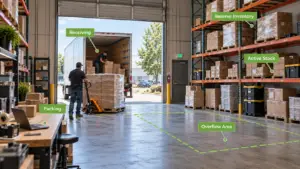
For a growing ecommerce business, a practical setup might look something like this. The exact layout will depend on the size and shape of your space, but the goal is to keep inventory, packing, and shipping moving in a clear direction.
A Practical Layout for a Small Warehouse Bay
A simple setup that keeps storage, packing, receiving, and shipping organized in one space.
Every bay is a little different, so use this as a guide for how the workflow should move through the space rather than an exact floor plan.
Get Your Space Ready Before the Black Friday Rush
Peak season puts a lot more pressure on a fulfillment setup. Inventory arrives earlier, packaging supplies take up more room, daily order volume increases, and finished orders start stacking up faster.
A setup that works fine during a normal week can become cramped quickly once holiday volume picks up. The weeks leading up to Black Friday are a good time to figure out whether your current space can handle the increase or whether you need more room before things get busy.
Five questions to answer before the holiday rush
If several of those answers involve moving inventory, boxes, or equipment just to make room, your current space may be reaching its limit.
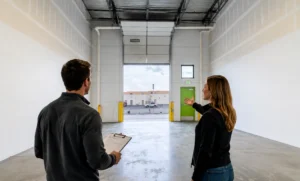
If you’re starting to look for a larger space, use a warehouse tour checklist to make sure the next space actually works for your inventory, shelving, packing station, and shipping workflow.
For a growing ecommerce business, a private warehouse can provide room to separate storage, picking, packing, and outbound staging instead of trying to fit everything into the same work area. With Black Friday approaching, moving into a larger space now also gives you time to get organized before order volume picks up.
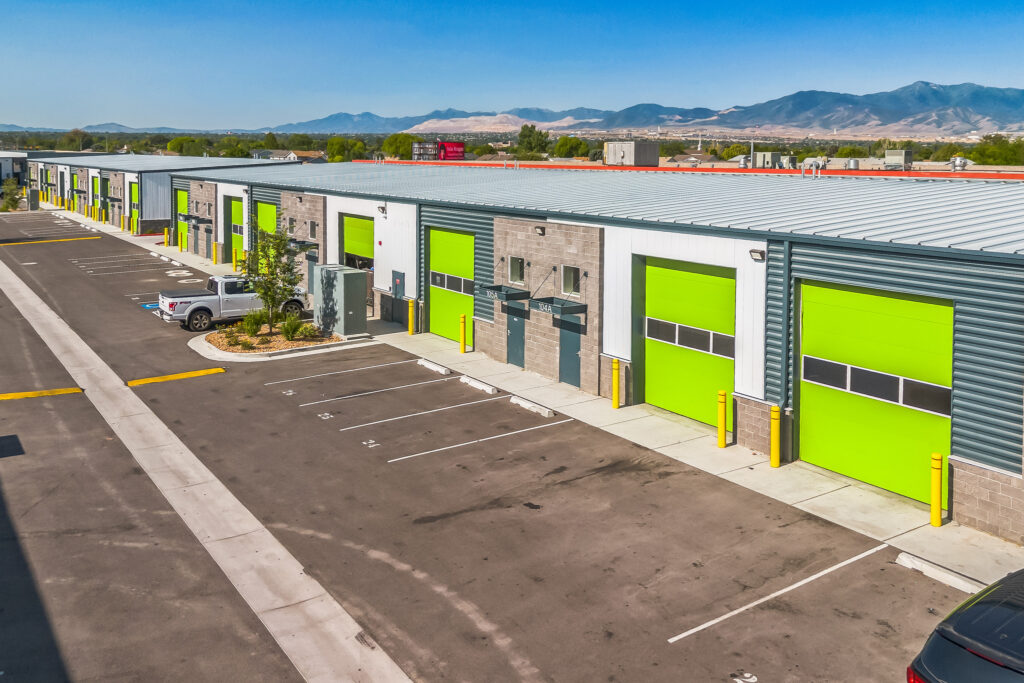
WorkBay offers private warehouse bays with flexible month to month leasing, so you can add the space you need for peak season without committing to a long industrial lease. If you’re looking for room to store inventory, pack orders, and manage shipping in one place, learn more about our warehouse space for fulfillment operations or browse WorkBay locations to see what’s available near you.
Get More Space Before Peak Season
Give your business room for inventory, packing, and shipping before the holiday rush. WorkBay offers private warehouse space with flexible month to month leasing.
BOOK A TOURFeatures and amenities vary by park.