
Peak season can put a lot of pressure on a space that works perfectly fine the rest of the year.
Once seasonal inventory starts coming in, things can get crowded fast. Pallets end up in the wrong places, extra boxes get stacked wherever there’s room, returns get mixed in with regular inventory, and your team spends more time moving things around just to get to what they need.
That doesn’t always mean you need a bigger warehouse. Sometimes you just need a better inventory overflow plan.
- How much extra inventory you expect to have
- Where that inventory will go
- When you’ll know it’s time to use overflow space
Here’s how to build your inventory overflow plan:
1. Plan for Your Busiest Weeks, Not an Average Month
Start by looking at your busiest time of year, not what a normal month looks like. Review sales, orders, purchasing records, and inventory from the same period last year. Then adjust for anything that’s different this year, like stronger sales, confirmed orders, upcoming promotions, or new products.
The U.S. Small Business Administration also recommends using last year’s orders as a starting point when planning inventory for a busy season.
For each major product or material category, estimate:
- How much you expect to need during peak season
- How much you normally keep on hand
- How much extra seasonal inventory you’ll need
- How long it takes suppliers to restock you
- Whether multiple orders could arrive around the same time
And don’t just count the products you plan to sell. Boxes, tape, shipping supplies, job materials, displays, and raw materials all take up room too. Think about everything that will be in the space during your busiest weeks.
It’s Not Just the Inventory
Most businesses plan for the products they expect to sell, but that’s only part of what takes up room. Packaging, extra pallets, job materials, returns, and seasonal displays all need space too.
- Boxes, mailers, tape, and packing supplies
- Materials being held for upcoming jobs
- Returns waiting to be sorted or processed
2. Decide Which Inventory Actually Needs Overflow Space
Not all inventory needs to be kept in the same place. Some items need to stay close because your team uses them every day. Others can be moved farther back or into overflow space until you need them.
For an ecommerce business, best sellers and shipping supplies should stay near the packing area, while extra cases can be stored in reserve. Contractors can take the same approach with tools and materials. Keep the fittings, hardware, and supplies you use all the time nearby, and move bulk orders or materials for future jobs out of the main work area.
The point is to keep your most-used inventory easy to reach without letting extra stock take over the space.
Active inventory
Items your team uses every day. Keep these close to picking, packing, or your main work area.
Reserve inventory
Extra stock you bought ahead of demand. This is usually the best inventory to move into overflow space until you need it.
Off season stock
Items you still need to keep, but don’t need regular access to during peak season. These can be stored farther away so they aren’t taking up space you need for current inventory.
3. Know When Your Space Starts Working Against You
A warehouse can still have room for more inventory even when the space is already getting harder to work in. If adding another pallet means blocking the roll up door, taking over the packing area, or moving boxes around every morning just to get started, you’re probably out of usable space.
You also need to leave room for the work that happens around the inventory, including:
- Receiving and checking deliveries
- Picking, packing, and staging orders
- Returns and damaged inventory
- Carts, equipment, and space for your team to move around
- Loading, unloading, and production work
Our warehouse sizing guide makes the same point from the other direction: size around workflow and seasonal spikes, not around what’s sitting on the shelf today.
If another large delivery showed up tomorrow, where would it go without stopping normal work?
If you can’t answer that in one sentence, you’re at your operational limit. That’s the number that matters, not the square footage on the lease.
4. Decide When You’ll Need Overflow Space
Don’t wait until a delivery shows up and you realize you have nowhere to put it. Decide ahead of time what will tell you it’s time to use overflow space.
That point will be different for every business. Maybe it’s when reserve shelving is full, when incoming inventory starts taking over your staging area, or when you can no longer receive a delivery without moving other stock first. The important part is knowing what your limit is before you hit it.
5. Factor in Supplier Lead Times
Peak season planning isn’t just about how much you expect to sell. You also need to think about how long it takes to replace inventory once it starts moving.
Something you can restock locally in a day or two doesn’t need the same backup inventory as a product that takes several weeks to arrive.
Before the busy season starts, check with your main suppliers and make sure you know:
- How long orders usually take to arrive
- Whether lead times get longer during your busy season
- Whether minimum order quantities force you to buy more than you normally would
- Which products would be the hardest to replace quickly
- Whether a delayed shipment could hold up customer orders or scheduled jobs
You don’t need extra inventory of everything. Focus on the items that would cause the biggest problem if you ran out, and avoid buying more just because you have room to store it.
Lead time demand = average daily demand × supplier lead time
How much inventory you’re likely to use while you’re waiting for the next order to arrive.
Reorder point = lead time demand + safety stock
This is the inventory level that tells you it’s time to place another order.
Let’s say you sell 40 units a day during peak season and it takes your supplier 12 days to deliver a new order. That means you’ll need about 480 units to cover the time you’re waiting. If you also want to keep 200 units of safety stock on hand, your reorder point would be 680 units.
From there, you can estimate how much space those 680 units will take up and make sure you have enough room before peak inventory starts arriving.
6. Decide Where the Extra Inventory Will Go
If you know you’re going to need more space, figure out where that inventory will go before it starts arriving. Waiting until the last minute usually means taking whatever space is available, even if it isn’t a good fit.
The best option depends on how you’ll use the inventory. If it’s just going to sit for a few months, a basic storage unit may be enough. But if you need to receive deliveries, restock active inventory, load work trucks, or stage materials for upcoming jobs, you’ll want space that’s easier to access and work out of.
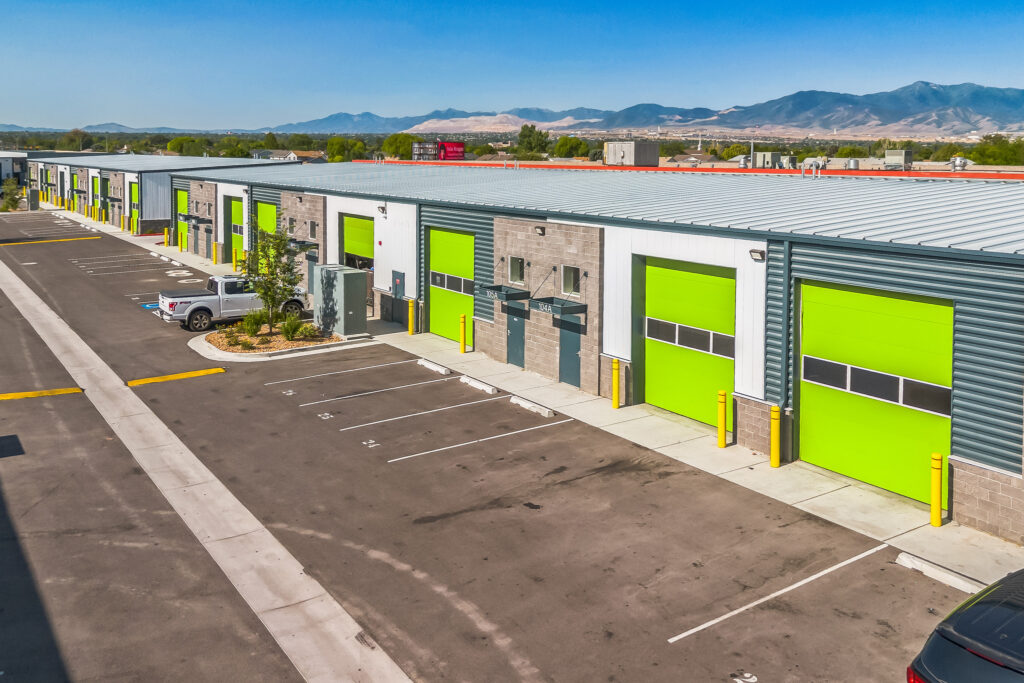
That’s where a flex warehouse or small business bay can make more sense. It gives you extra room for inventory without separating it completely from the rest of your operation.
| Overflow option | Good for | Where it breaks down |
|---|---|---|
| Reorganizing what you have | Vertical space you haven’t used and slow stock you can consolidate | Buys you one season at most if volume is still climbing |
| Self storage unit | Stock that sits untouched until the season ends | Limited hours, no delivery receiving, and no room to work |
| Third party warehouse | High volume ecommerce that wants fulfillment handled | You give up hands on control and minimums can be steep |
| Flex warehouse bay | Receiving, staging, loading, and packing next to the inventory | More space than you need if the stock truly never gets touched |
7. Keep Receiving, Reserve, and Active Inventory Separate
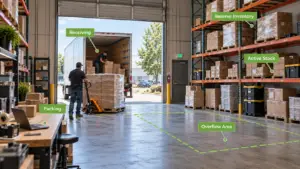
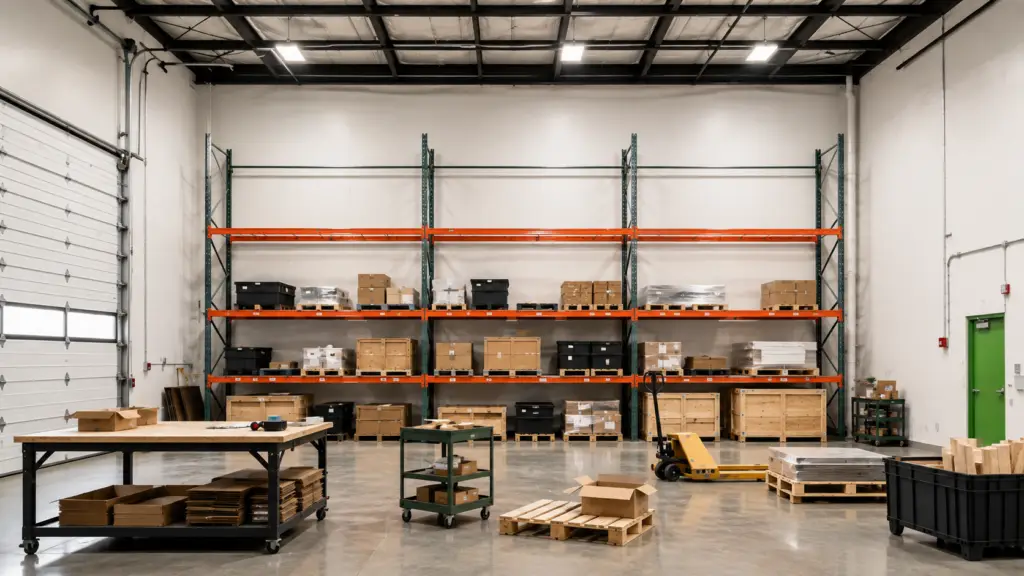
Things get much easier to manage when every delivery has a clear place to go. Instead of putting new inventory wherever there’s room, divide the space into separate areas for receiving, reserve stock, and the inventory your team uses every day.
This becomes especially important during peak season, when inventory can increase quickly. Keeping bulk stock out of your main picking and packing area helps your team keep working without having to constantly move things around.
New deliveries come here first so they can be counted, checked, and entered into your inventory system before anything gets put away.
Keep extra seasonal inventory here until you need it. Label it clearly so your team can find backup stock quickly.
This is the inventory your team is using right now for picking, packing, jobs, or shipping. Refill it from reserve stock as needed so bulk inventory doesn’t take over the work area.
8. Plan for the Inventory to Leave, Too
Before peak season starts, decide what you’ll do with any inventory that’s still sitting around once demand slows down. Can unopened stock be returned? Will seasonal items be discounted? Can some inventory move back into your main space, or does it make sense to hold it for next year?
Extra inventory takes up both space and cash, so it’s worth paying attention to what sells through and what doesn’t.
After the season ends, look back at what actually happened:
- What sold faster than expected?
- What did you order too much of?
- How much overflow space did you end up using?
- When did you start needing that extra space?
Keep those notes for next year. They’ll give you a much better starting point when it’s time to plan again.
Peak Season Inventory Checklist
Run this before inventory starts arriving. Check items off as you go.
Overflow plan checklist
Stuck on the last phase? Book a tour and walk a bay before your first delivery lands.
Plan Before the Extra Inventory Shows Up
Inventory overflow is much easier to deal with before your busy season starts. Use the time you have now to estimate how much extra inventory you’ll be carrying, make sure your current space can still function well, and decide where the overflow will go.
If your seasonal inventory has outgrown the garage, storage unit, or current shop, a small flex warehouse can give you room to receive deliveries, organize stock, and keep things moving during the busy season without taking on more space than you need year-round.
Get your overflow space before peak season
WorkBay offers private, flexible warehouse spaces built for growing small businesses. With drive up access and roll up doors, your overflow stays connected to the rest of the operation instead of sitting somewhere your team never goes.
Features vary by park and availability.