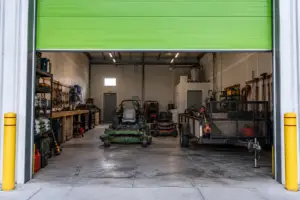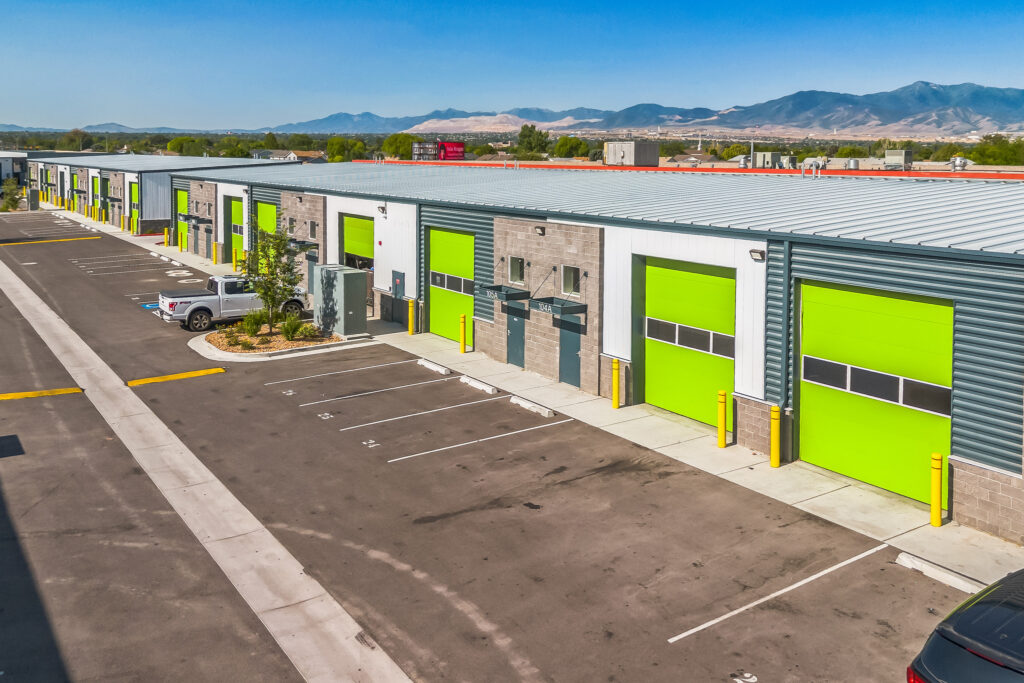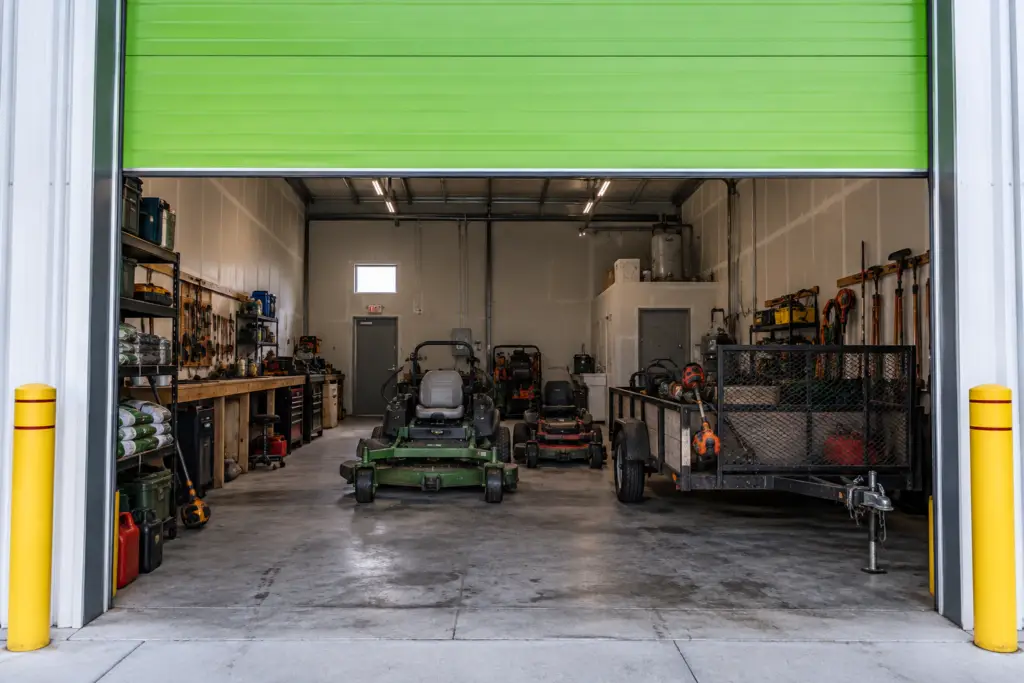
The last mowing job of the year doesn’t mean your equipment stops costing you money.
Mowers, trimmers, blowers, and trailers can sit for weeks or months before the schedule fills back up. How you prep and store all of it over the off season has a lot to do with how fast the business gets moving again in spring.
Good landscaping equipment winter storage takes more than an open corner of the garage. It means prepping engines the right way, locking down the trailer, and setting up your spring startup before the calendar fills. When the first full week of spring jobs shows up, your equipment should be ready to work.
How should landscapers store equipment over winter?
Clean every machine, prep each engine the way its operator’s manual says, and fix worn parts while the schedule is slow. Store equipment somewhere dry, pull batteries where the manufacturer recommends it, and get trailers and expensive gear out of the driveway and behind a locked door. Then test everything before the first spring job, not on the way to it.
- Clean and inspect
- Follow each manual
- Fix it now
- Store it dry and locked
- Test before spring
Get Your Equipment Ready Before Winter Storage
One of the easiest mistakes is finishing the last job of the season, backing the mower into storage, and leaving it exactly the way it came off the trailer. Wet grass, mud, and leaves can stay packed around decks, engines, and wheels for months.
Before putting your equipment away for the winter, take some time to clean it up. Remove grass and debris from the mower deck, engine, and wheels, and check for any visible damage. If something needs to be repaired or replaced, make a note of it now rather than waiting until spring.
Winter is also a good time to catch up on maintenance you’ve been putting off during the busy season. Penn State Extension recommends using the slower months to take care of routine maintenance and repairs so equipment is ready when work picks up again. Check for worn belts, dull blades, broken guards, and anything else that could cause problems next season.
Prep Every Engine for Winter Storage
Before storing your mowers for the winter, you’ll also need to take care of the engines. How you prepare them depends on the equipment and the manufacturer’s recommendations, especially when it comes to fuel.
For example, Briggs & Stratton recommends adding a fuel stabilizer to fresh gas and running the engine for a few minutes to circulate it through the fuel system. Husqvarna, on the other hand, recommends draining the fuel tank for certain gas mower models before putting them into storage.
Check your equipment’s owner’s manual before deciding which approach to take.
Check the Manufacturer’s Recommendations
Not all mowers have the same winter storage requirements. Here’s how Briggs & Stratton and Husqvarna differ when it comes to preparing fuel for storage.
Briggs & Stratton
Add a Fuel Stabilizer
Add a fuel stabilizer to fresh gasoline, then run the engine for a few minutes to make sure the treated fuel circulates through the fuel system.
Husqvarna
Drain the Fuel Tank
For certain gas mower models, Husqvarna recommends emptying the fuel tank before storing the mower for winter.
According to Briggs & Stratton, gasoline can start to break down in as little as 30 days. Leaving untreated fuel in your mower over the winter can lead to clogged carburetors and problems starting the engine in spring.
Before storing your equipment: Check the owner’s manual for each mower to make sure you’re following the manufacturer’s recommendations.
Every mower, trimmer, and blower has its own maintenance requirements, so check the owner’s manual before putting your equipment away for the winter. This includes recommendations for oil changes, filters, and battery storage. For example, Briggs & Stratton recommends changing the oil while the engine is still warm. For equipment with batteries, the company recommends removing them and storing them in a cool, dry place.
If you’re storing equipment in an unheated warehouse or garage, you’ll also need to consider freezing temperatures. Batteries and equipment containing water may need extra protection from the cold. Check the manufacturer’s storage recommendations to make sure your equipment is protected throughout the winter.
Take Care of Repairs You’ve Been Putting Off
During the busy landscaping season, it’s easy to put off minor repairs. Maybe a mower tire keeps losing air, the deck has started vibrating, or the trailer lights aren’t working properly. When you’re booked with jobs, it’s tempting to keep using the equipment and deal with the problem later.
Winter is a good time to catch up on those repairs without taking equipment out of service during your busiest months. Go through each machine and make a list of anything that needs attention. Schedule larger repairs early and order replacement parts like belts and blades before the spring rush. It’s also a good opportunity to take care of routine maintenance, including lubrication and checking for worn parts.
Taking care of these issues during the off-season can save you from unexpected breakdowns and delays when landscaping season starts again.
Don’t Leave Your Equipment in the Trailer All Winter
During the landscaping season, it’s common to keep mowers, trimmers, blowers, and other equipment loaded in the trailer. When you’re heading out to jobs every morning, it makes sense to leave everything packed and ready to go.
But leaving your trailer parked in the driveway all winter can put your equipment at risk of theft. Trailers can be broken into, and if they’re not properly secured, someone could hitch one up and drive away with everything inside.
There are several ways to protect your equipment during the off-season. In our guide to construction tool theft prevention, we cover practical security measures like using coupler or wheel locks, keeping an inventory of equipment and serial numbers, and moving valuable tools indoors whenever possible. Combining these precautions can provide better protection than relying on a single lock.
It’s also worth considering how visible your equipment is when it’s stored at home. A trailer parked in the same driveway for months can attract unwanted attention, especially if people can see what’s inside when you’re loading or unloading it.
If you have thousands of dollars invested in landscaping equipment, finding a secure place to store it during the off-season can help protect your investment and keep your business ready for spring.
Where your equipment spends the winter
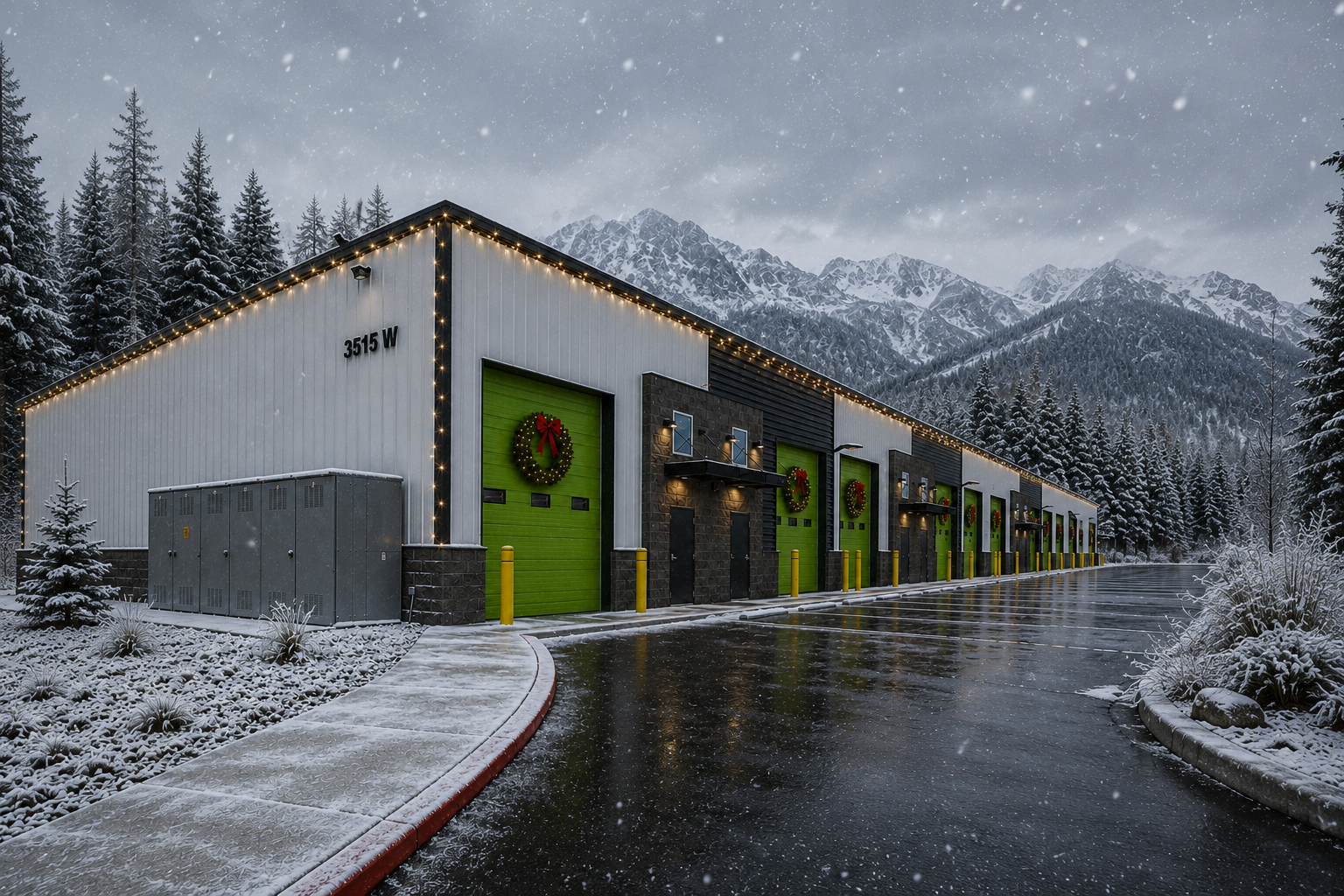
The same trailer and mowers, parked two different ways for three or four months.
| Over the winter | Driveway and home garage | Private warehouse bay |
|---|---|---|
| Who can see the equipment | Anyone driving by while the trailer’s open | Nobody once the roll up door is down |
| What stands between a thief and the gear | A trailer lock and maybe a garage door | Your own lock, plus cameras and gated access at most parks |
| Where maintenance happens | Wherever there’s room between the cars | On open floor right next to the machines |
| The first spring load out | Garage to trailer, one machine at a time | Back the trailer to the door and load |
Security features and unit sizes vary by park. Ask about yours when you book a tour.
Organize Your Equipment for an Easier Start in Spring
How you organize your equipment during winter storage can make a big difference when landscaping season starts again. Rather than putting everything wherever it fits, take some time to organize your space so it’s easy to find and access what you need.
Keep the equipment you use most often near the front, and separate anything that still needs repairs from machines that are ready to go. Store spare blades, filters, trimmer line, and other supplies on shelves so they’re easy to find. It’s also a good idea to keep an inventory of your more expensive equipment, including model numbers, serial numbers, and photos.
Make sure you leave enough room to inspect equipment and perform routine maintenance without having to move everything out of the way. If your trailer was difficult to keep organized during the busy season, now is also a good time to rearrange it so your crew can access tools and equipment more easily.
A little organization during the off-season can save you time and frustration when you’re ready to get back to work in the spring.
Spring Startup Checklist for Landscaping Equipment
A few weeks before landscaping season starts, take some time to inspect and test your equipment. Use this checklist to make sure everything is working properly so you can take care of any problems before your schedule fills up.
Spring startup checklist
0 of 12 ready
Machines
Trailer
Business
Check items off as you go.
Test your equipment before heading out to your first job of the season.
When You Run Out of Room in Your Garage and Driveway
If you're running a small landscaping business with one mower, a few tools, and a trailer, storing everything at home might work just fine. But as your business grows, finding enough space for all your equipment can become a challenge.
You might add another mower, a second trailer, or equipment like aerators and spreaders. Before long, you're also trying to find room for backpack blowers, supplies, shelving, and work trucks. Eventually, the garage fills up, and equipment starts taking over the driveway.
Not only does this make it harder to keep everything organized and maintain your equipment, but it also leaves expensive tools and machinery more visible to people passing by.
Your Dedicated Space
Keep Your Equipment in One Place
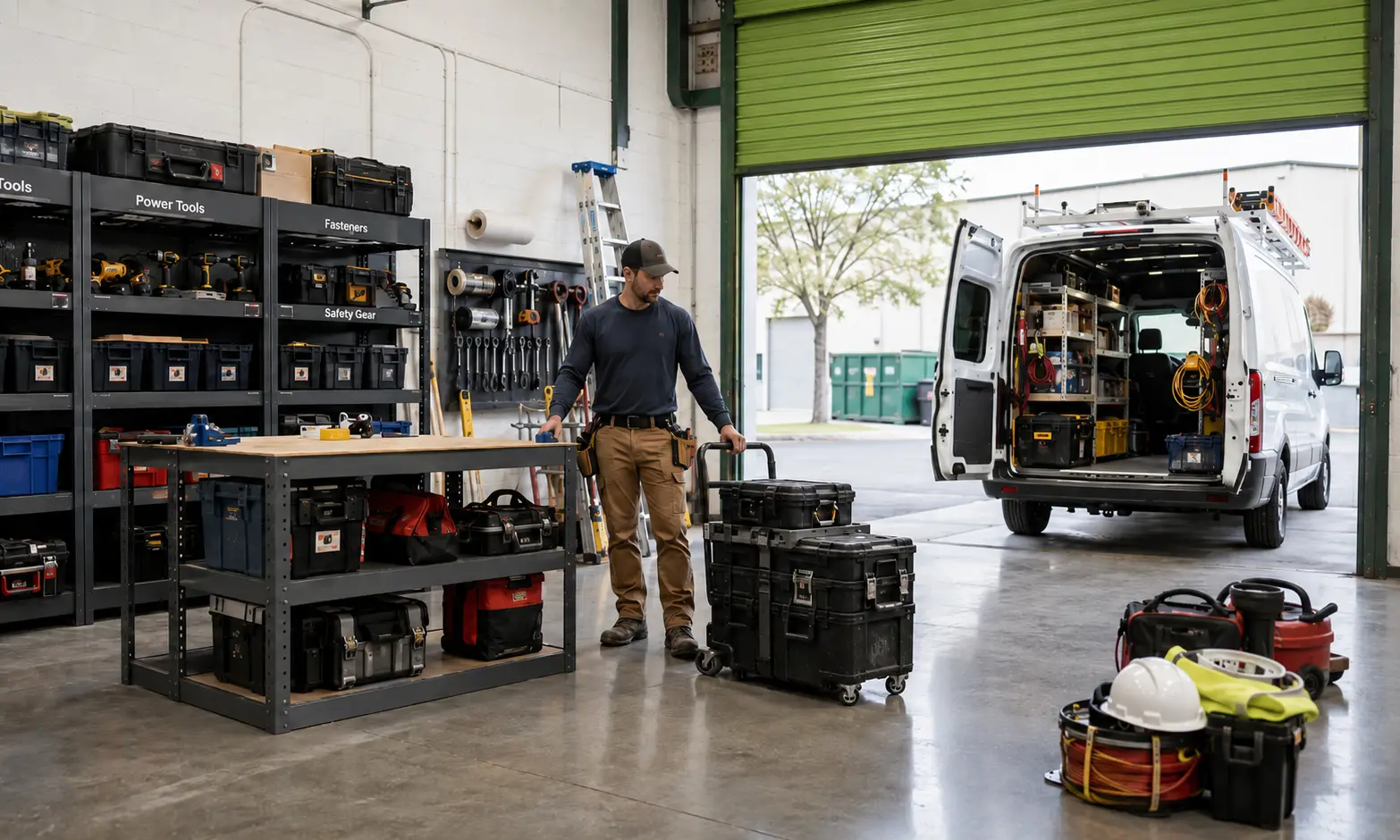
Renting a small warehouse gives you a place to store your landscaping equipment without taking up space at home. Depending on the size of the unit, you can store mowers, trailers, tools, and supplies together, with room to inspect equipment and take care of maintenance before the busy season starts.
WorkBay offers private bays for contractors and trades, with drive up access, roll up doors, 24/7 access, and security cameras among other additional amenities across its parks.
**Exact amenities vary by park and unit.
Landscapers along the Wasatch Front can explore WorkBay warehouse locations in Utah. If you're working around Fort Worth and Arlington, see WorkBay locations across Dallas Fort Worth.
Get Your Landscaping Equipment Ready for Next Season
The slower winter months are a good opportunity to catch up on equipment maintenance, make necessary repairs, and get everything organized before landscaping season starts again.
Taking care of these things now can save you time and money in the spring. Instead of dealing with equipment breakdowns, missing tools, or last-minute repairs, you can start the season knowing your equipment is ready to go.
If your landscaping business has outgrown your garage or you're running out of room to store equipment at home, renting a small warehouse can give you the extra space you need to keep everything organized and protected during the off-season and throughout the year.
Need More Room for Your Landscaping Equipment?
Find a WorkBay location near you and schedule a tour to see how a private warehouse can give you more space to store your mowers, trailers, tools, and supplies.
Landscaping Equipment Winter Storage FAQs
How do you store landscaping equipment for winter?
Clean it, service it, and store it somewhere dry and locked. Prep each engine the way its operator's manual says, pull batteries where the manufacturer recommends it, and fix worn parts before spring. Trailers and expensive equipment are safer behind a locked door than parked in the driveway for months.
Should I drain the gas from my mower before winter?
It depends on the mower. Briggs & Stratton recommends stabilized fuel for many of its engines, while Husqvarna tells owners of some gas mowers to empty the tank. Check the operator's manual for each machine and follow that, since the right answer isn't the same across a whole fleet.
Can I store my landscaping trailer in a WorkBay unit?
Yes, in many cases. Plenty of contractors pull a truck or trailer straight into their bay, but whether yours fits depends on the trailer and the unit size. Book a tour and bring your trailer's measurements so the team can point you to the right space.
Where should I store a mower battery over winter?
Somewhere cool and dry. Briggs & Stratton recommends disconnecting and removing the battery on equipped units and keeping it away from heat sources like water heaters and gas cans. Your manufacturer may add charging or temperature guidance, so check the manual before you pull it.
When should landscapers start spring equipment prep?
A few weeks before the first full week of jobs. That leaves time to start every engine, check tires and trailer lights, and restock parts before customers are waiting. Anything that needs a shop visit should get booked first, since repair shops fill up as the season gets closer.