

Is your guest room stacked floor-to-ceiling with inventory? Is your dining table permanently covered in shipping labels and poly mailers? If so, congratulations—you’re not failing. You’re growing.
Most ecommerce businesses start at home. But growth brings a new challenge: your business needs more space, better systems, and fewer bottlenecks. The right storage solution can free up your time, protect your inventory, and unlock your next phase of growth.
In this guide, you’ll learn:
- The real pros and cons of each storage option (from home to warehouses)
- When it’s time to move out of your house—and where to go next
- How to choose the right space for your business (without overcommitting)
- A simple checklist to help you decide your next step
When Storing Inventory at Home Stops Working
Running your online storefront from home is often the smartest way to start. It’s low-cost, flexible, and fast. But eventually, the cracks show.
Signs you’ve outgrown home storage:
- You spend 1–2+ hours a day packing orders
- Inventory has taken over a bedroom, garage, or hallway
- You avoid promotions because you can’t handle a spike in orders
- Your home no longer feels like a home
The biggest cost isn’t just clutter—it’s lost time and limited growth. When fulfillment consumes your days, product development, marketing, and customer experience suffer.
If this sounds familiar, it’s time to explore smarter storage options.
Option 1: Self-Storage for Ecommerce (A Simple First Step)
A self-storage unit is often the first move for growing e-commerce brands. It solves one immediate problem: storage. Getting inventory out of your home or garage can free up space to focus on more important things like marketing, fulfillment, and growth.
That said, self-storage is rarely a long-term solution. In most cases, you cannot legally operate a business from a storage unit. Many facilities and local zoning regulations prohibit working on-site, packing and shipping orders, or conducting daily business activities. That’s why WorkBay exists: small warehouse spaces that actually function for your business, giving you the room, flexibility, and legality to scale.
While these spaces are designed for storage, not as active work environments, they can be a helpful first step—but may limit how efficiently (and compliantly) you run your business as it grows.
When a self-storage unit makes sense:
- You need inventory out of your house
- Your order volume is still manageable
- You want the lowest monthly cost possible
How this setup usually works:
- Bulk inventory lives in the storage unit
- A small “packing station” stays at home
- You restock as needed
Pros:
- Affordable monthly pricing
- Quick to set up
- No long-term contracts
Cons:
- Often not legal for business operations
- You still pack and ship everything
- Extra trips eat into your time
- Not designed for daily business operations
Bottom line: Self-storage is a temporary bridge—not a long-term solution.
Option 2: Renting a Small Warehouse For Your Online Business (More Control, More Room)
If you want to keep fulfillment in-house but need a real workspace, a small warehouse unit can be the perfect middle ground.
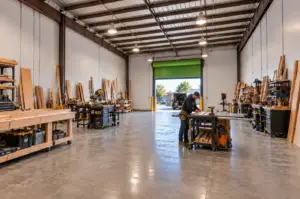
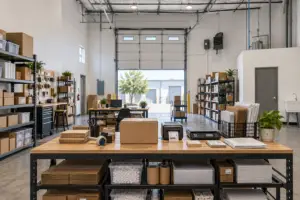
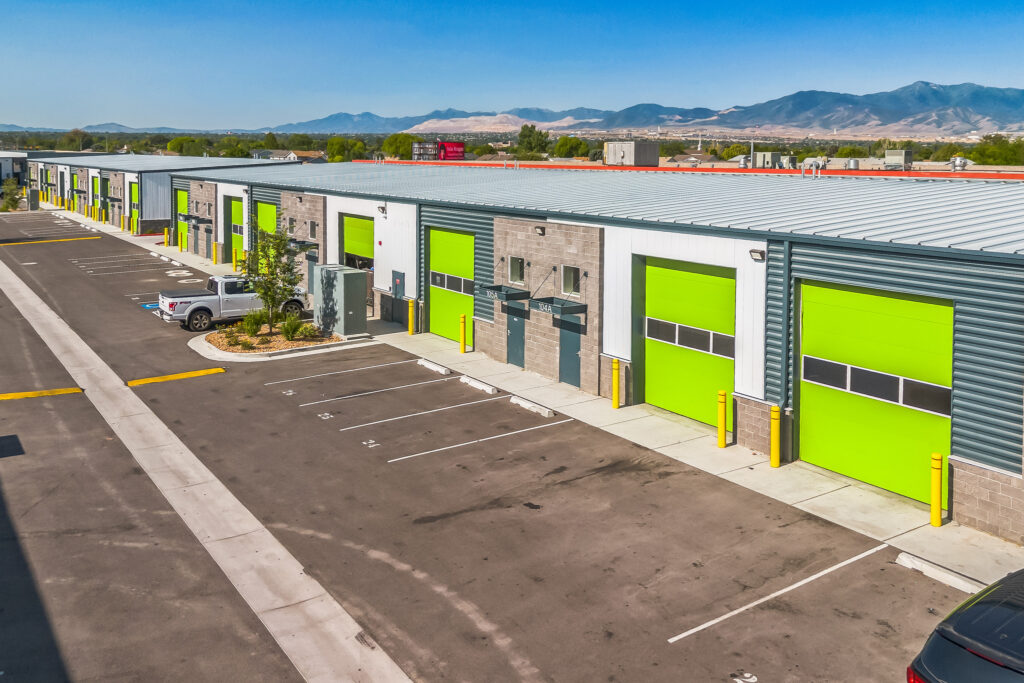
This is where solutions like WorkBay come in. WorkBay rents small, flexible warehouse spaces designed specifically for entrepreneurs—not massive corporations. You get room to store inventory, pack orders efficiently, and separate work from home without committing to more space than you need.

Ideal for businesses that:
- Want hands-on control over inventory
- Need space for packing, light production, or assembly
- Are scaling steadily but not ready for a 3PL
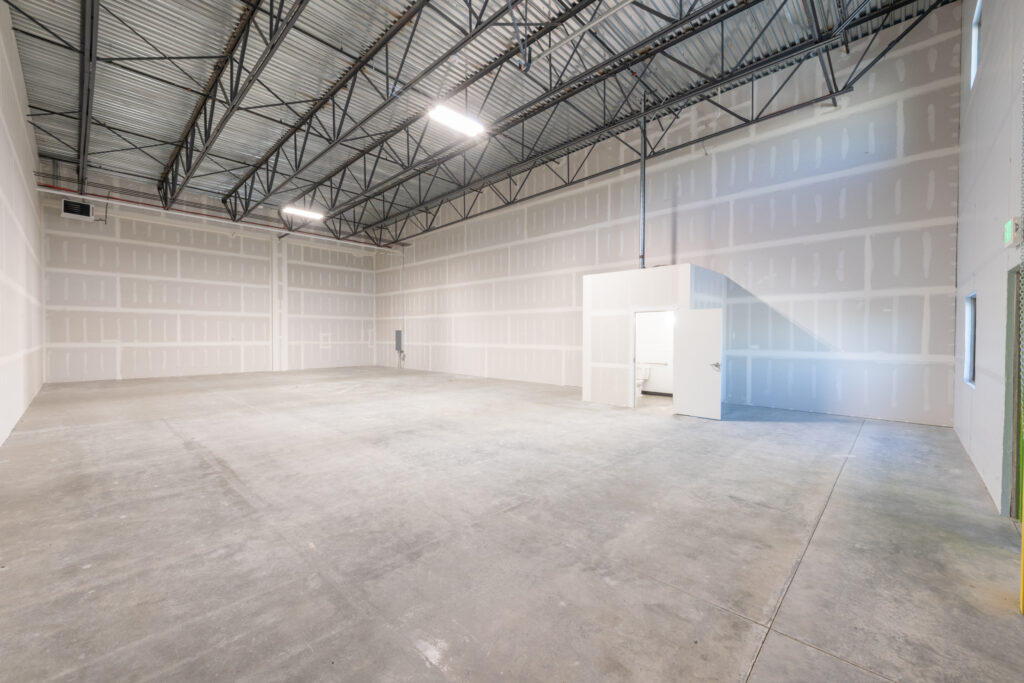
Benefits of a small warehouse at WorkBay:
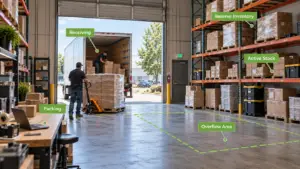
- Organized, move-in ready space for packing, storage, and day-to-day operations
- Room to grow—expand your workflow without outgrowing your setup
- Clear boundaries between work and home—keep your business professional and your life separate
- Flex warehouse space that adapts to your business needs as you scale
- Secure, professional environment designed to protect your inventory and equipment
Unlike self-storage, warehouse spaces are built for daily operations—loading, shipping, organizing, and scaling.
Option 3: Outsourcing to a 3PL (Hands-Off Fulfillment)
If your biggest problem is time, not space, outsourcing fulfillment may be the smartest move.
A Third-Party Logistics (3PL) provider stores your inventory and handles all picking, packing, and shipping.
How 3PL fulfillment works:
- You send inventory to the fulfillment center
- Orders sync automatically from your online store
- The 3PL picks, packs, and ships each order
- Tracking updates are sent to your customers
Pros:
- Massive time savings
- Professional, fast shipping
- Easy to scale during busy seasons
Cons:
- Less hands-on control
- Per-order fees reduce margins
- Less flexible for custom packing or local pickup
This option is best for high-volume sellers who want to focus entirely on growth.
Option 4: Dropshipping or On-Demand Warehousing
If flexibility is your top priority, consider alternative models.
Dropshipping
- You don’t store inventory at all
- Suppliers ship directly to customers
Pros: No storage costs, low risk
Cons: Lower margins, limited control
On-Demand Warehousing
- Pay-as-you-go storage and fulfillment
- No long-term contracts
Great for seasonal businesses or unpredictable sales cycles.
How to Choose the Right Space for Your Business
This decision doesn’t have to be overwhelming. Focus on fit, not size.
Practical criteria to evaluate:
- Order volume: How many orders per week/month?
- Workflow needs: Storage only, or packing + production?
- Growth plans: Will this space work 12–24 months from now?
- Access: Can you easily receive shipments and send orders?
- Flexibility: Can you scale up or down without penalties?
Common mistakes to avoid:
- Renting too much space “just in case”
- Locking into long-term leases too early
- Choosing storage that isn’t zoned or designed for business use
- Underestimating how much organization affects speed and stress
For many entrepreneurs, a small, move-in-ready warehouse—like those offered by WorkBay—hits the sweet spot between home chaos and corporate-scale fulfillment.
Quick Decision Checklist
Use this to choose your next move:
- Inventory no longer fits at home
- Packing orders eats up hours each day
- You need a dedicated workspace
- You want room to grow without overcommitting
- You’re ready to operate like a real business
If you checked more than two, it’s time to upgrade your storage strategy.
Common Questions About Ecommerce Storage
Usually not. Most self storage leases and zoning rules allow storage only, so packing, shipping, and running daily operations on site typically violate your agreement, which is why growing ecommerce sellers move into a small warehouse they can legally operate from.
The best storage option depends on your bottleneck. Self storage is cheapest for overflow inventory but you can’t legally operate from it. A 3PL removes fulfillment work for high volume sellers but cuts into margin. For most growing ecommerce businesses that want to store inventory and pack and ship in one place, a small private warehouse is the best fit, giving you room to work, scale, and operate legally.
An ecommerce business should move into a warehouse when fulfillment takes over your home and your day: hours spent packing, inventory filling a room or garage, and order spikes you can’t handle. If two or more apply, a small warehouse gives you space to store, pack, and ship in one place while you scale.
It depends on whether you only need to store or you need to work. Self storage suits short term overflow inventory but usually bars packing, shipping, and operating on site. Once fulfillment is part of your routine, a small warehouse makes more sense, since it’s built to store inventory and run your business legally in one place.
Final Thoughts: Make Space for Growth
Every successful online retail business reaches this moment. Choosing the right storage option isn’t about spending more—it’s about working smarter.
Whether that means a short-term storage unit, outsourcing fulfillment, or moving into a small warehouse, the right space gives you back time, clarity, and momentum.
WorkBay helps entrepreneurs do exactly that—by offering flexible, small warehouse spaces built for growing businesses. If you’re ready to move out of your house and into a space that supports real growth, this might be your next step.
👉 Explore flexible warehouse options and make room for what’s next.