

Summer business prep is easier when your workspace is ready before peak season hits. For contractors, tradespeople, service businesses, and small operators, summer can compress everything: more client calls, more exterior work, hotter jobsites, tighter delivery windows, and more trips between the bay, supplier, and jobsite.
A well set up WorkBay unit helps turn that pressure into momentum. It gives your crew a predictable place to load, stage, fix, label, restock, and reset, so the busy season does not run your business for you.
This guide walks through a practical small business summer checklist:
- Audit your bay
- Organize your layout
- Stock the right inventory
- Service your equipment
- Tighten the admin systems that keep work moving
The goal is a bay that helps you say yes to the right jobs without wasting time, losing tools, or starting every morning already behind.
Why Summer Is Peak Season for Small Businesses
Summer is not busy by accident. Warmer weather opens exterior project windows, homeowners and property managers move repairs onto the calendar, and longer days can make it possible to fit more work into each week. Home improvement demand often concentrates in the spring to summer window. For trades and service businesses, that seasonal momentum can become a wave of bid requests, material pickups, emergency calls, and “can you get here this week?” conversations.
But peak season also adds strain. OSHA identifies outdoor construction, roofing, landscaping, and warehousing among industries where workers have experienced heat related illnesses. That means summer contractor prep is not only about winning work. It is also about building a work rhythm that protects people, reduces mistakes, and keeps the business steady when the schedule gets hot.
That is where the bay matters. Staffing, cash flow, and marketing all matter, but the physical workspace is where the day starts. If the bay is cluttered, every job launches slowly. If materials are buried, your best tech becomes a search party. If the loading area is blocked, the crew spends the morning moving yesterday’s mess before they can start today’s work.
What Needs to Change?
Before buying more shelves or ordering more material, walk your bay as if you were a new hire seeing it for the first time. What is obvious? What is confusing? What would slow you down at 6:30 a.m. when the truck needs to roll? Open cabinets, pull bins forward, check tool cases, look behind stacked material, and compare what is in the space to what your summer jobs actually require.
Sort everything into five categories:
- Keep and use now — anything used weekly during summer
- Store for later — seasonal or specialty items
- Repair — broken but worth fixing
- Return or recycle — vendor returns, scrap, recycling
- Reorder — running low, needs restock
Anything used weekly during summer should earn easy access space. Anything used rarely should move higher, deeper, or off the main path. Anything broken should leave the “maybe” pile and move to a clear repair or retire decision.
Then note your bottlenecks. Do crews trip over material waiting to be loaded? Are returns mixed in with new inventory? Are expensive tools stored wherever they landed after the last job? Are small parts scattered across multiple unlabeled bins? These are system problems, and a bay audit turns them into fixable items. Take photos of the current setup, mark up rough zones, and redesign the bay around how work actually moves. As you redesign, it helps to know what makes a bay trade ready so your audit lines up with the features your work actually depends on.
Organize Your Layout for Maximum Efficiency
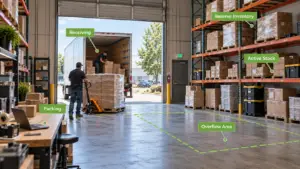
Good contractor workspace organization starts with flow. Think of your bay in four movements: load in, store, stage, and load out. When those movements overlap too much, the space feels smaller than it is. When they are separated, even a compact bay can operate like a small industrial space with a clear purpose.
Load In
Receiving area near the door for new material, deliveries, and supplier drops. Keep clear of staging.
Store
Shelving and bin storage for inventory. Heavy material low, fast moving items at waist height.
Stage
Tomorrow’s jobs prepped and labeled. No returns, no broken tools, no personal items.
Load Out
Clear lane to the truck. Staged kits roll out fast in the morning without rework.
Keep fast moving items near the front and at waist to shoulder height. Place heavy materials low. Put seasonal, specialty, or rarely used items higher or farther back. Keep one clear staging zone for tomorrow’s jobs, and make it sacred: no random returns, no personal items, no broken tools. If something is in the staging zone, it should be ready to go.
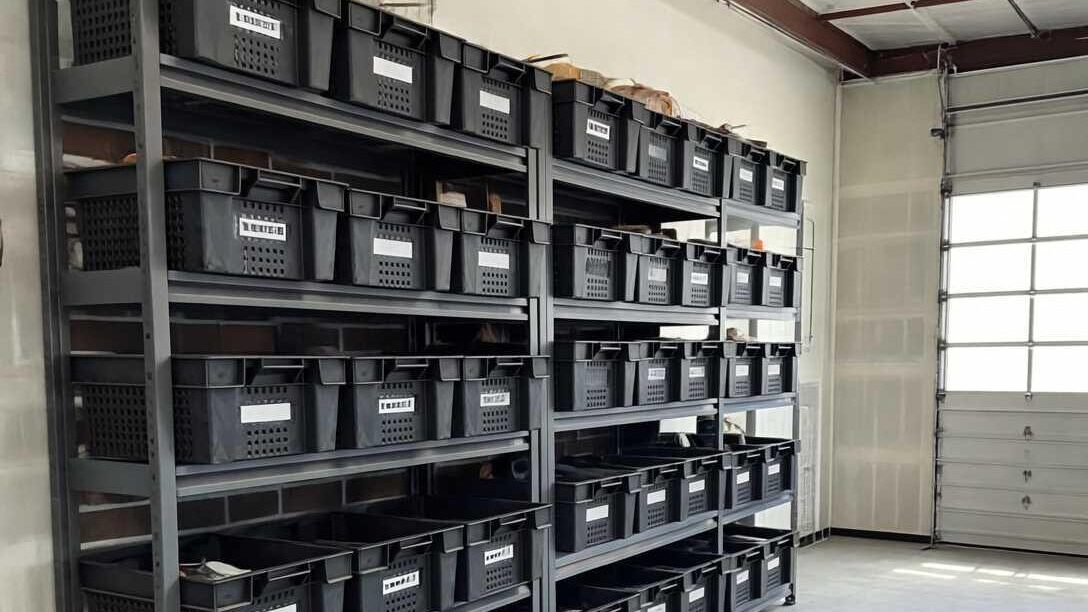
Use labels that a tired person can read quickly. “Electrical” is better than no label, but “GFCI / plates / wire nuts” is better than “Electrical.” Color coded bins, job type shelves, and simple floor tape can help crews reset the space without a manager hovering.
Safety and efficiency also overlap. OSHA’s warehousing guidance highlights hazards such as material handling, slip and trip risks, forklifts, ergonomics, and being struck by materials handling equipment. Even if your WorkBay unit is not a large warehouse, the same lesson applies: clear aisles, stable storage, sensible lifting zones, and predictable traffic patterns help protect people and speed up work. WorkBay amenities like onsite manager, security cameras, and maintained property back that up so you can focus on the layout inside the bay.
Stock Up: Inventory and Supply Management Before the Rush
Inventory prep for peak season is a balancing act. Too little stock creates emergency supplier runs. Too much stock ties up cash, crowds the bay, and makes it harder to find the items you actually need. The best approach is to stock for speed, not for panic.
Look at last summer’s invoices, job notes, and supplier runs. Identify your top recurring materials, the items that caused delays, and the small parts that sent someone across town at the worst possible time. Create three categories:
- Must have daily items — labeled bins with reorder points
- Predictable weekly items — dedicated shelf space
- Specialty items — tied to job folders or staging areas
Set minimum and maximum levels for high turn supplies. A simple reorder line inside a bin can work: when stock drops below the line, reorder. For items with longer lead times, build in a larger buffer. For bulky or expensive items, be realistic. The goal is not to turn your bay into a supply house. The goal is to prevent avoidable delays.
Job kits can make a huge difference. A landscaping crew might stage irrigation repair kits, PPE, marking paint, and fasteners. An electrical contractor might stage device boxes, connectors, labels, and testing gear. The kit depends on the trade, but the principle is the same: group what leaves together, so the crew does not rebuild the same package every morning.
Finally, create a returns and damaged material zone. Peak season gets expensive when “I think we have it” turns into three half open boxes, one missing fitting, and no one sure what belongs to which client. Separating new stock, client owned materials, returns, and damaged goods keeps the bay cleaner and the books clearer.
Equipment Check: Maintenance Before Peak Demand
Tools fail at the least convenient time. Before the summer rush, schedule a maintenance day and treat it like a billable investment. Inspect power tools, cords, blades, batteries, chargers, ladders, compressors, sprayers, meters, hoses, straps, PPE, and vehicle kits. OSHA notes that hand and power tools are used across nearly every industry and can cause severe injuries when used or maintained improperly, so maintenance is both a productivity issue and a safety issue.
Tag equipment in three groups: ready, repair, and retire. Ready tools go back into labeled homes. Repair items get a due date and an owner. Retired items leave the bay, because broken tools that stay in circulation waste time and create risk. Keep maintenance records simple but visible: date checked, issue found, action taken, and next check.
OSHA says heat related illness is preventable, but thousands of workers become sick from occupational heat exposure each year. Many outdoor fatalities happen in the first few days of working in warm environments because the body needs time to acclimatize. Stock cool drinking water, plan rest breaks that increase as heat stress rises, and build cool or shaded recovery spots into the day.
Build those practices into the bay routine. Stock water and electrolyte options. Keep cooling towels, sunscreen, first aid supplies, and spare PPE where crews can grab them. Add a morning check: weather, crew condition, job intensity, and planned breaks. A summer ready bay is stocked with tools, but it is also stocked with habits that help people finish strong.
Admin Prep: Scheduling, Staffing, and Client Workflows
A clean bay will not save a messy calendar. Peak season business tips should include the back office, even when the back office is a laptop on a folding table. Before demand spikes, tighten the systems that move work from request to invoice.
Start with scheduling rules. Decide which jobs qualify as urgent, how far out you will book, when deposits are required, and how you will handle weather delays. Create message templates for estimates, confirmations, arrival windows, delay notices, and post job follow ups. The faster you communicate, the fewer calls interrupt the workday.
Next, prepare staffing workflows. If seasonal help joins the team, create a one page bay orientation: where tools live, how staging works, what labels mean, where PPE is stored, how to report damaged equipment, and what the end of day reset should look like. New helpers should not need to guess their way through your system.
Finally, clean up your paperwork. Job folders, purchase records, receipts, photos, warranties, and signed approvals are easier to organize before the rush than after. Good records help businesses monitor progress, prepare financial statements, track deductible expenses, and support reported tax items. In practical terms, good records also reduce the end of week scramble when invoices need to go out and everyone is tired.
This is the heart of summer operations planning: make the next right action obvious. When a call comes in, the intake form is ready. When a job is approved, the materials list is ready. When the crew returns, the reset checklist is ready. When the invoice goes out, the supporting notes and photos are ready.
Your Summer Ready Bay Checklist
Print, post, and work through it before the season hits.
- ✓Walk the bay and remove anything that does not support summer work
- ✓Sort tools and materials into keep, store, repair, return, and reorder categories
- ✓Create clear zones for inventory, tools, staging, returns, and admin
- ✓Move high turn supplies to easy access shelves near the front
- ✓Store heavy materials low and keep aisles clear
- ✓Label bins with specific item names, not broad categories
- ✓Set reorder points for daily use supplies
- ✓Build job kits for your most common summer work
- ✓Create a separate area for damaged goods and returns
- ✓Inspect tools, cords, batteries, ladders, PPE, and vehicle kits
- ✓Tag equipment as ready, repair, or retire
- ✓Stock water, electrolytes, sunscreen, cooling towels, and first aid supplies
- ✓Post the daily load out and end of day reset checklist
- ✓Update client message templates, scheduling rules, and estimate workflows
- ✓Review your space needs before the season is already overloaded
Need More Space for Peak Season?
Sometimes the best bay setup tips reveal a bigger truth: the business has outgrown the space. If materials are double stacked, crews wait for each other to load, inventory lives in vehicles, or you are turning down work because the operation feels maxed out, the issue may not be discipline. It may be capacity. Compare your situation in our breakdown of contractor bay vs self storage to see which space type actually fits the work.
More space is not just “extra storage.” The right business space prep checklist treats space as a production tool. Space can reduce wasted trips, keep expensive tools accessible, make inventory easier to count, and give crews a calmer start to the day. For growing businesses, micro warehouse space can serve as a practical bridge between a garage, a storage unit, and a full size warehouse commitment. See available units near you to find the right fit before peak season hits.
Set the Bay Once, Save Time All Season
Summer can be a stressful season, but it can also be the season when your business proves what it is capable of. The difference often comes down to preparation. A clean layout, accurate inventory, maintained equipment, and clear admin workflows do more than make the bay look better. They create confidence.
When the phone rings, you know what you can handle. When the crew arrives, the job is staged. When a tool breaks, the backup plan is clear. When demand spikes, the bay holds the operation steady.
That is the real purpose of summer business prep. It turns your WorkBay unit into more than a place to put things. It becomes the place where your business gets ready, gets organized, and gets moving, day after day, job after job, all season long.