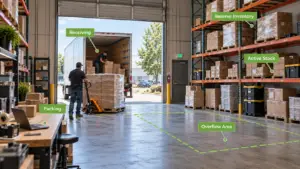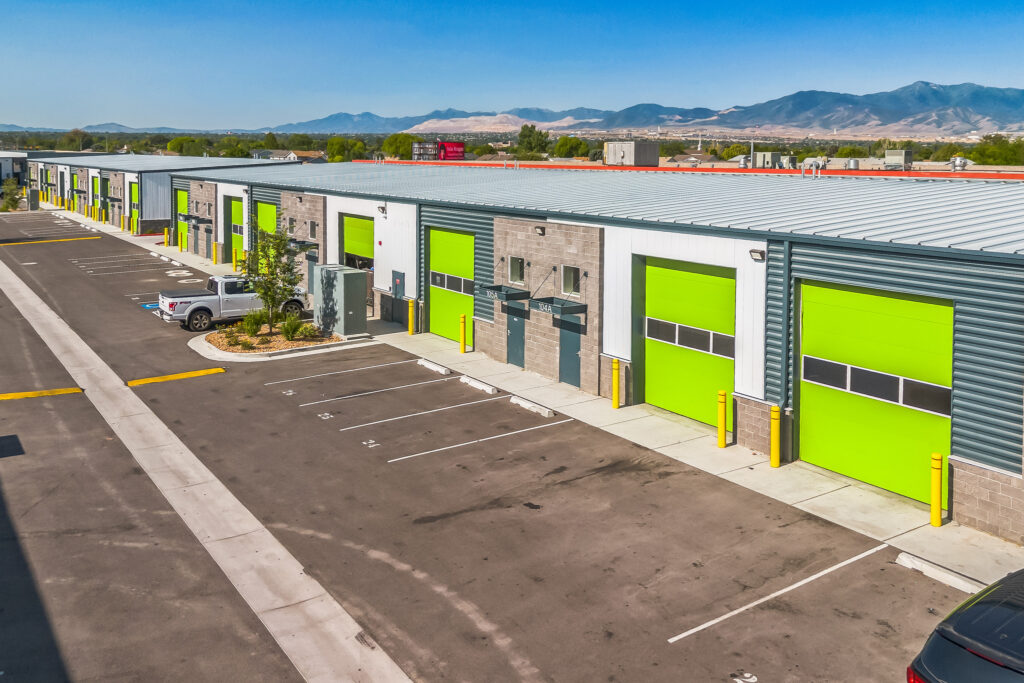

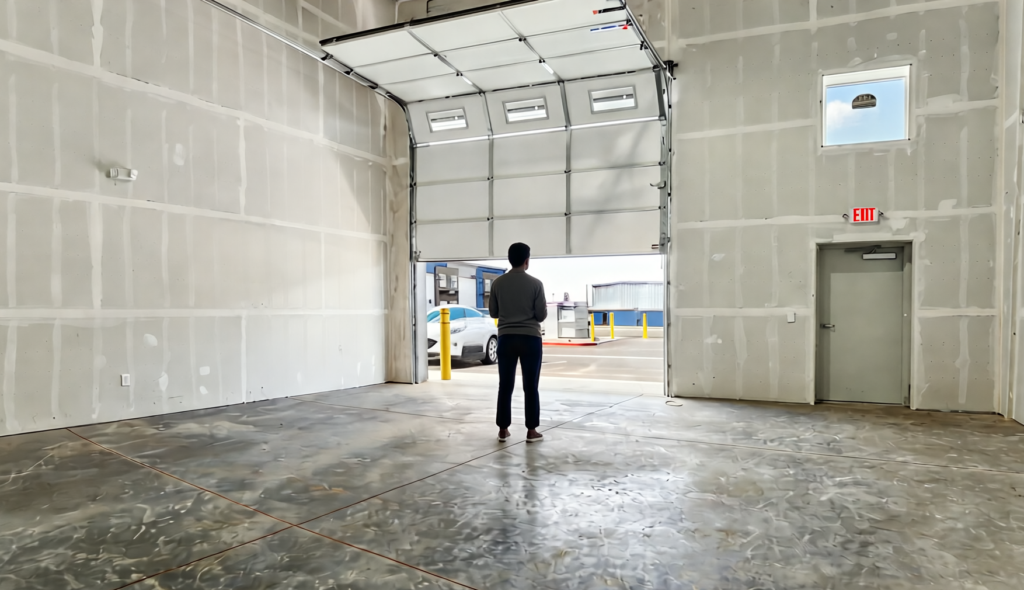
Committing to a long term warehouse lease can feel like too much too soon when your business is still figuring out how much space it actually needs.
A month to month warehouse rental is not a workaround. In today’s flex and small bay market, short term warehouse rental options are a real operating model for businesses that need room without locking in a multi-year commitment. This guide breaks down what to consider before you sign anything.
Can You Rent a Warehouse Month to Month?
Yes. Many warehouse providers, including modern flex industrial facilities, offer month to month warehouse rentals that let businesses lease space without a long term commitment.
- Lease terms typically run 30 days at a time with 30 days’ notice to vacate
- Space can usually be scaled up or down as business needs change
- Available for units ranging from 500 to 2,500+ sq ft depending on the provider
What Is a Month to Month Warehouse Rental?
A month to month warehouse rental is a lease structure that renews on a monthly basis instead of locking you into a fixed term. In flex warehouse space, that usually means a rolling lease with a standard notice period to vacate, often around 30 to 60 days.
Traditional industrial leases usually run three to five years or longer. Month to month space flips that trade off: you pay slightly more per month in exchange for the ability to scale, relocate, or exit without long term exposure. If you are still comparing active workspace to passive storage, see our storage vs. warehouse guide.
Pros and Cons at a Glance
Advantages
Scale Without Penalty
Take more space when volume rises and less when it cools, without untangling a multi-year obligation. Your warehouse matches your business stage instead of a forecast from 18 months ago.
Lower Commitment Risk
Signing a five year industrial lease is a bet your operating model will hold years from now. Month to month keeps that bet small. Reassess often. Pivot if needed.
Faster Move In
Flex units are built to be usable immediately, with lighting, electrical, and loading already in place. No lengthy buildout negotiation.
Built for Uncertain Growth
A Shopify seller can outgrow their layout in a few strong quarters. Flexible leasing turns space into an adjustable input, not a fixed burden.
Trade Offs
Higher Per Month Cost
Month to month leases typically cost more per square foot than longer term leases. That premium is not hidden. It is the direct price of flexibility.
Availability Is Not Guaranteed
Month to month units do not always sit open in every size, especially in tighter markets. Small bay space is in high demand right now.
When Month to Month Makes Sense
The common thread is uncertainty. Month to month works best when your need for space is real, but your future footprint is not fully settled. If you are still deciding when to rent a warehouse, here are the use cases where flexible terms deliver the most value.
E-Commerce Sellers
Order volume climbing but unpredictable? Let your footprint track actual pick and pack volume instead of a spreadsheet forecast.
Contractors and Trades
Moving from one truck to three often means needing more room next quarter. Flexible terms let you move when tools and staging expand.
Seasonal Businesses
A rolling lease matches your space cost to your actual busy season and steps back down when inventory normalizes.
New Market Testing
Real operating base, time to test demand, and a cleaner exit if the market does not justify a permanent footprint.
Startups and Early Stage
If you do not know what footprint you need in six months, locking in long term is the higher risk move.
If your business is growing or your space needs are uncertain, month to month leasing is typically the lower risk structure. WorkBay offers flexible warehouse units with no long term commitment, built for exactly these kinds of operations.
When a Long Term Lease Might Make Sense
A long term lease is a rational choice when your operation is stable, volume is predictable, and you can size the space with confidence for three to five years. Established manufacturers, larger distribution users, and businesses with fixed geographic requirements often benefit from the lower rent and concessions that longer commitments unlock. The question is not whether long term leases are bad. It is whether your certainty is high enough to justify the commitment.
Month to Month vs. Traditional Lease
| Feature | Month to Month Rental | Traditional Lease |
|---|---|---|
| Commitment | ✓ 30 day rolling term | Typically 1 to 5 years |
| Flexibility | ✓ High — vacate with standard notice | Low — early exit depends on lease terms |
| Cost Per Month | Slightly higher per sq ft | Lower per sq ft for similar space |
| Scalability | ✓ Easy — upgrade or downsize as needed | Limited — renegotiation often required |
| Move In Speed | ✓ Fast — often immediate or within days | Slower — negotiation and buildout can add time |
| Balance Sheet Risk | ✓ Lower — less long term lease exposure | Higher — multi-year lease exposure |
| Best For | Growing, seasonal, or uncertain operations | Stable, predictable, larger scale operations |
How to Choose the Right Option
Quick Self Assessment
If you answer yes to two or more of these, month to month is probably the lower risk structure.
- Is your business in a growth phase where space needs are likely to change in the next 6 to 12 months?
- Do you have meaningful uncertainty about order volume, crew size, or operational footprint?
- Would an early exit penalty on a long term lease create real financial risk?
- Do you need to be operational quickly, without a lengthy negotiation or buildout period?
- Are you testing a new market, product line, or operating model that may require you to pivot?
Answer no across the board and your operation is large scale, stable, and predictable? A traditional lease may offer better economics.
Flexible Warehouse Space for Growing Businesses
WorkBay provides private flex warehouse units from 500 to 2,500 sq ft across Texas, Arizona, Utah, and Florida. These units are built for real operations, not passive storage.
24/7 Drive-Up Access
100-Amp Electrical Service
Commercial Zoning
Move-In-Ready Layouts
The flexibility is the product. For a business in growth mode or operating under uncertainty, month to month leasing turns a fixed multi-year commitment into a manageable monthly decision you can revisit as your business changes.
Frequently Asked Questions
Q Can you rent warehouse space short term?
Yes. Short term and month to month warehouse rentals are common in flex industrial and small bay facilities designed for growing businesses. WorkBay offers short term options as part of its core model.
Q Is month to month warehouse space common?
Yes, particularly in the small bay and flex industrial segment. Smaller, more flexible industrial space is in active demand and commonly leased on shorter terms, while conventional warehouse leases remain more likely to run for multiple years.
Q Who should use flexible warehouse space?
Flexible warehouse space is the right fit for businesses with variable or growing space needs, including e-commerce sellers, contractors adding crew, seasonal businesses with inventory spikes, and early-stage operators who are not yet certain what footprint they need.
Q Can I upgrade my warehouse space later?
Yes. Moving to a larger unit is far simpler than trying to amend or escape a traditional multi-year lease. In practice, that means giving standard notice on your current unit and signing a new agreement for the larger one.