
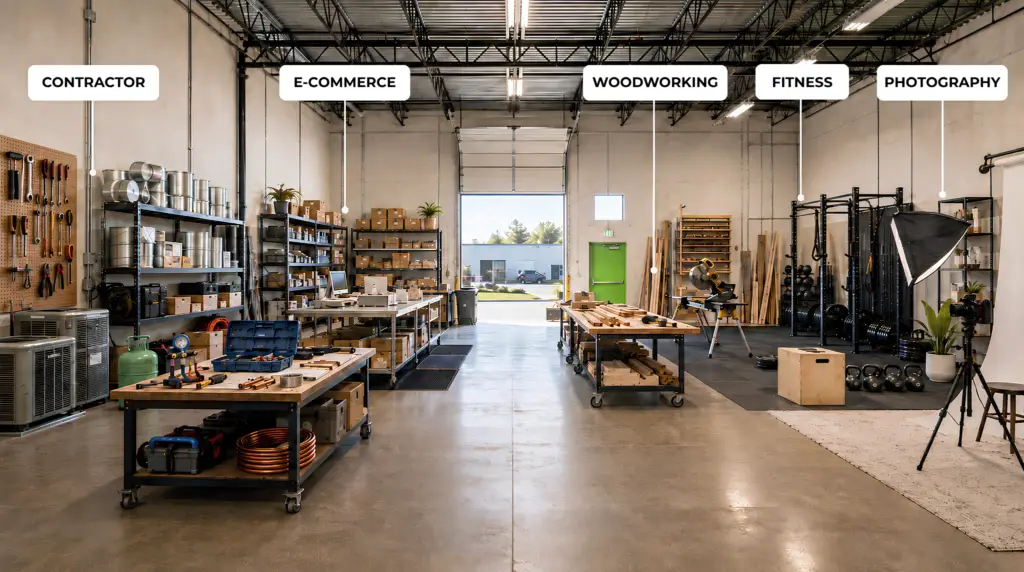
Say the word warehouse and most people picture forklifts, loading docks, and a few thousand pallets under one roof.
That’s one kind of warehouse. It isn’t the kind most small businesses need.
What a growing business usually needs is room for inventory, tools, equipment, production, or shipping without signing for a giant industrial building. That’s what flex warehouse space is for. It puts warehouse, workspace, and sometimes a small office or showroom area into one adaptable space, so you can actually work there instead of only storing things.
So who uses flex warehouse space? More kinds of businesses than you’d guess. Here are 12, and what they actually do inside the space.
Who uses flex warehouse space?
Contractors and trades, online sellers, subscription box and fulfillment operations, woodworkers, small batch manufacturers, florists, photographers and content creators, IT and hardware businesses, trainers and wellness studios, resale and antique dealers, local distributors, and mobile service crews. If a business needs to store things and do things in the same place, it’s a candidate.
HVAC, Plumbing, Electrical, and Other Trades
For a contractor, the space becomes home base. An HVAC company can keep replacement parts organized, stage equipment for the next morning’s installs, and give every tech one place to start and end the day. Plumbers, electricians, and welders run into the same set of needs.
Without a base, the business gets spread across a garage, three trucks, and a storage unit you have to drive to. A bay pulls those pieces back into one professional location. Warehouse space for contractors and trades is built for exactly that kind of hands on work.
Online Sellers and Ecommerce Brands
An online store can start anywhere. A spare bedroom holds inventory, the dining table becomes the packing station, and boxes creep down the hallway. Then orders grow.
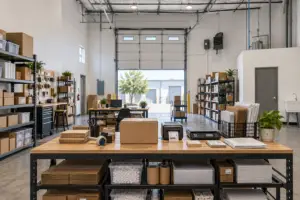
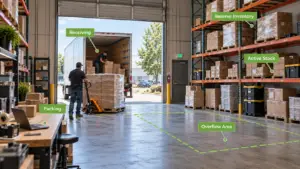
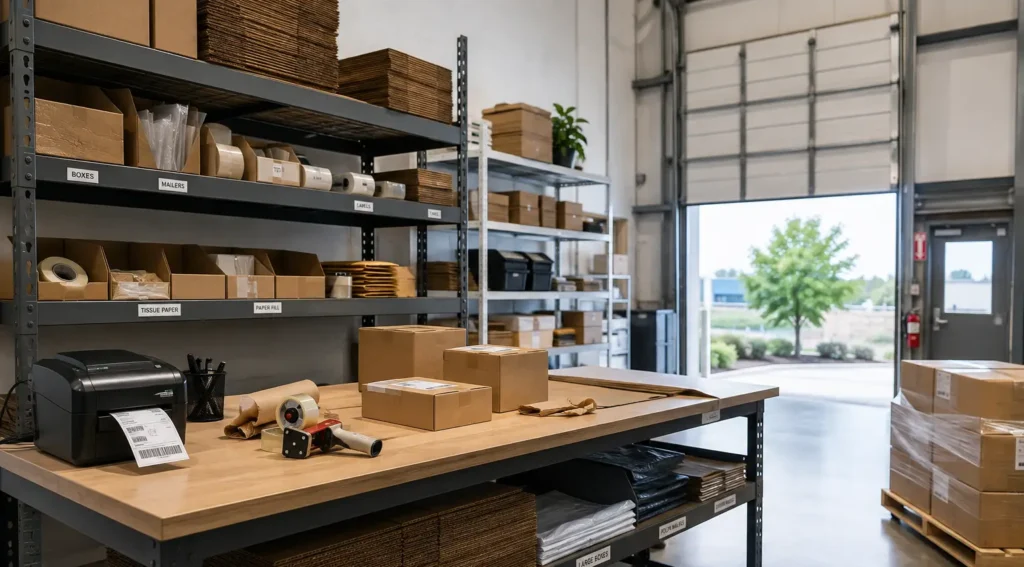
Flex space gives you room for a real fulfillment flow: receiving, organizing SKUs, picking, packing, and handling returns without moving everything twice. Keeping it in house also means you keep direct control over inventory instead of handing it to a third party. See how online retailers use WorkBay space.
Subscription Box and Small Fulfillment Operations
Subscription boxes look simple on the doorstep. Behind that, someone receives dozens of products, sorts them, assembles hundreds of boxes, prints labels, and stages finished orders for pickup.
That workflow needs usable floor area more than it needs impressive square footage. A small bay holds separate areas for inventory, assembly, packing, and outbound orders with no distribution center required. The same setup works for a small fulfillment company running orders for a few local brands.
Woodworkers and Custom Furniture Makers
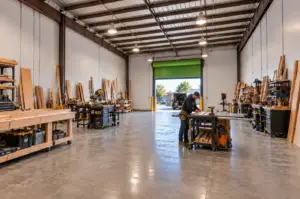
Woodworking needs what a crowded garage can’t give you: room for lumber, tools, benches, projects in progress, and finished pieces waiting on pickup. One bay holds all of it. A furniture maker might run materials along one wall, keep equipment and assembly in the middle, and stage finished work near the door.
This already happens at WorkBay. Joe Tiki Customs brings raw wood, tools, and finished art together in one Florida space.
Fabricators and Small Batch Manufacturers
You don’t need a 50,000 square foot factory to manufacture something. Plenty of small shops turn out custom parts, prototypes, signage, and limited runs with a handful of people.
What they need is a space that handles equipment and workflow at the same time: workstations, raw material, machines, assembly, and finished goods, with enough slack left for the operation to change. WorkBay’s skilled manufacturing spaces are set up around woodworking, metal fabrication, equipment repair, and prototype work.
Florists and Floral Designers
A florist doesn’t always need a storefront. Wedding and event designers need something more practical: room for buckets, vessels, arches, worktables, and a clean path for loading vans.
That makes floral design one of the more unexpected flex warehouse business ideas. Instead of paying for retail frontage, you build the back of house operation where the work actually happens. How much room you need depends on the setup, especially if refrigeration is part of it. Here’s how florists use WorkBay for storage and studio space.
Photographers, Videographers, and Content Creators
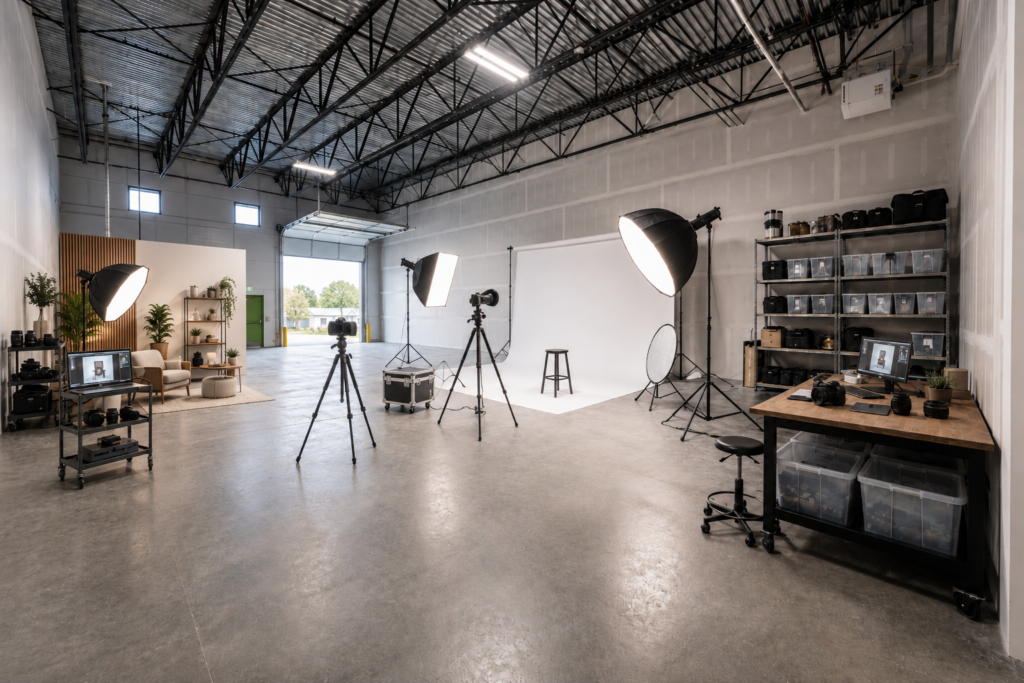
A bay doesn’t have to look like a warehouse once you’re finished with it. An open space becomes a studio: backdrops up, lighting set where you marked it, and a product shooting area that doesn’t get folded and hauled home at the end of the day.
That matters most for creators who’ve outgrown filming in a bedroom or renting studio time by the hour. John Mosley, known as The Popular Nobody, is one example of a creative running his own business out of WorkBay space.
IT, Hardware, and Digital Service Businesses
Some tech businesses need more than laptops. Picture an IT contractor staging hardware for a large installation, a repair shop with shelves of equipment, or a digitization company working through physical archives.
All three need secure storage plus a place to actually work on the gear. WorkBay counts hardware repair, archive digitization, and network installation among the digital service work that runs from these spaces.
Trainers and Sports Training Businesses
Some fitness businesses need open floor more than they need a retail gym. Boxing coaches, strength trainers, and specialized wellness practices can set a bay up around their own equipment and client flow, as long as the property’s permitted use allows it.
Boxing Roots is a real example. Owner Alex spent more than 22 years teaching boxing before moving into a dedicated space at WorkBay. Most parks can support open training floor or private treatment areas, though it depends on the park and the intended use.
Antique, Vintage, and Resale Businesses
Resale has a tricky space problem. Inventory is the business, and inventory takes room. A dealer needs somewhere to receive pieces, clean or restore them, photograph them, and stage online orders.
One space can hold all of that, and it looks different depending on who’s doing it. Austyn Marie Design uses its bay as both a curated showroom and a fulfillment center, while Fife Antiques found right sized space to turn a long planned shop into a real operation.
Local Distributors and Inventory Businesses
Not everyone moving product is an online brand. Local distributors, parts suppliers, and wholesalers take goods in bulk, then push smaller quantities out across their market.
For them, a bay works as a staging point. Inventory comes in, shelving keeps it findable, orders get pulled, and vans load at the door. WorkBay’s warehouse and transportation spaces are set up around product storage, delivery staging, and dispatch.
Mobile Service Businesses
Sometimes the work never happens inside the space at all. The space just makes everything outside it easier. Pressure washing crews, installers, and cleaning companies use a bay as an operating base, so tools stay organized, supplies get stocked ahead of time, and vehicles load the night before.
These owners aren’t asking whether customers can visit. They’re asking whether the space gets the crew on the road faster.
What Do These Businesses Have in Common?
A woodworker, an online seller, a boxing coach, and an HVAC company do completely different work. Their space problems look almost identical.
Every one of them needs somewhere to store things and do things. That second half is the part most options miss.
| Option | What you get | Where it runs out |
|---|---|---|
| Self storage | Cheap room for belongings | Most facilities don’t allow you to work inside, and power and access hours are limited |
| Office or coworking | Desks, meeting rooms, a business address | No loading, no inventory, nowhere to put equipment |
| Traditional warehouse | Industrial scale and dock height loading | Multi year lease and far more space than a small operation needs |
| Flex warehouse bay | Storage plus a place to work, loading, and your own private door | Not intended for climate controlled or heavy industrial uses |
Flex space fills that gap. It makes sense when the work calls for some mix of inventory storage, equipment, loading, production, packing, and a professional address, without an industrial building attached. If the category itself is new to you, start with what micro warehouse space is and how small businesses use it.
How Much Flex Warehouse Space Does a Small Business Need?
Size depends less on your industry than on what happens inside. An online seller with tall racking uses a space very differently than a contractor storing bulky equipment. A one person fab shop cares about clearance around machines, while a florist cares about open table surface. Map the workflow before you shop for square footage.
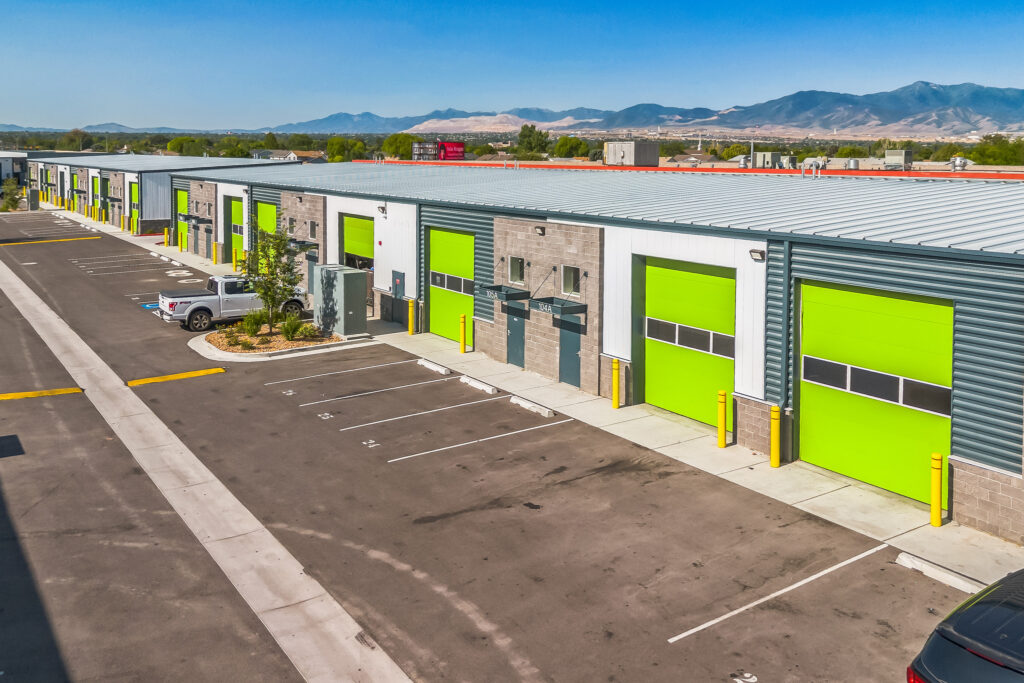
WorkBay’s small warehouse spaces run roughly 500 to 2,500 square feet, which gives a smaller operator an alternative to leasing far more industrial space than the work requires. For a closer look at sizing by business type, read what size warehouse do I need for my business.
Ready to find warehouse space for your business?
You don’t have to run a warehouse business to need a warehouse. You might run a contracting company that needs tomorrow’s jobs staged and ready, or sell products online and want your dining room back.
The better question is whether your current space is making the work harder. If inventory is taking over the house, tools are scattered across three locations, or you’re turning down jobs because there’s nowhere to handle them, dedicated space is probably the next step. There’s a fuller list of signals in when it’s time to rent a warehouse.
WorkBay rents private, move in ready flex warehouse space to small businesses, contractors, and makers, with locations across Utah, Arizona, Texas, and Florida.
See what your business could do with its own space
Find a WorkBay location near you and book a tour, and bring your list of questions about how the space would need to work.
Find a Location Book a Tour