
Search Houston home based business zoning and you hit something odd right away: Houston doesn’t have citywide zoning.
If you’re a plumber, electrician, HVAC tech, landscaper, or remodeler running a business out of the house, that sounds like a green light.
It isn’t quite that simple. The city’s planning department says Houston’s development codes govern things like subdivision, setbacks, parking and access, and don’t address land use the way a traditional zoning ordinance does. What that doesn’t mean is anything goes. Deed restrictions can prohibit business activity on your specific lot, and the city still regulates parking, noise, building safety and hazardous materials no matter what the map says.
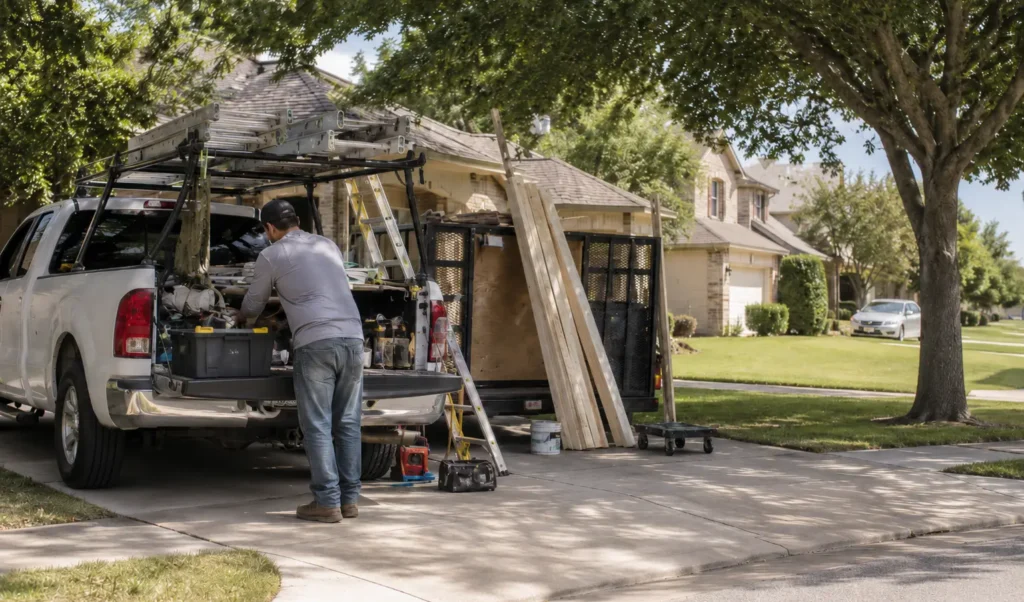
That gap is where contractors get caught. A laptop at the kitchen table and one truck in the driveway is one thing. It’s a different situation when a crew meets at the curb every morning, a trailer sits out front for a week, materials stack up beside the garage, and a compressor fires up at seven.
Here’s what Houston actually allows, where home based trades businesses run into trouble, and how to tell when the work has outgrown the house.
Can you run a contractor business from your home in Houston?
Usually yes, up to a point. Houston has no citywide zoning ordinance, so there’s no zoning map that automatically bans a contractor business at a residential address.
What can stop you is everything else: recorded deed restrictions, HOA rules, commercial vehicle and trailer parking limits, the citywide noise ordinance, fire code permits for fuels and gases, and building permit requirements. Texas also protects a qualifying “no impact home based business,” but that protection ends the moment your operation adds street parking, visible activity, extra traffic, or noise.
Houston Doesn’t Have Traditional Zoning
Start with the misconception, because almost every contractor gets this part half right.
Houston has no citywide comprehensive zoning ordinance. The Planning and Development Department is direct about it: the city’s codes address how property gets subdivided and developed, not what use a property is put to. There’s no zoning map labeling your house residential and shutting down a contractor business on that basis alone.
That makes Houston different from Fort Worth and most other Texas cities, where a home occupation ordinance sets the rules.
Your address still has limits. They just come from somewhere else.
Deed restrictions can matter more than zoning
Houston leans on private deed restrictions to keep neighborhoods residential.
The city says deed restrictions can legally prohibit someone from operating certain businesses, or any business, out of a home. They’re recorded against the property and they bind future owners, not just whoever signed them.
So two contractors four blocks apart can get completely different answers. One property has nothing on record about business use. The other sits in a subdivision that bans commercial activity, outside storage, trailers, and signs.
Houston’s lack of zoning doesn’t override your deed restrictions or HOA rules. Before you assume you’re clear, pull the restrictions recorded for your specific address.
Houston has no zoning. Here’s what that does and doesn’t mean.
The city regulates how land gets developed, not what use it’s put to. Everything in the right column applies anyway.
- No zoning map designation to apply for or escape
- No use based prohibition on a business simply because it’s commercial
- No home occupation permit tied to a zoning district
- Mixed residential and commercial uses can legally sit side by side
- Recorded deed restrictions and HOA rules on your specific lot
- Commercial vehicle, large vehicle and trailer parking limits
- The citywide noise ordinance, including vibration
- Fire code permits for fuels, gases, welding and spraying
- Building permits and inspections for any build out
Texas Protects Low Impact Home Businesses
There’s a second layer, and it’s newer than most contractors realize.
Texas added protections for home based businesses in 2025. Under House Bill 2464, now Local Government Code Section 229.902, a city generally can’t prohibit a qualifying “no impact home based business” or make you get a license, permit, or rezoning just because the business runs out of a residence. It took effect immediately on June 12, 2025.
The phrase “no impact” is carrying a lot of weight there. To qualify, the business has to stay within the property’s municipal occupancy limit for employees and customers on site, avoid generating on street parking or a real increase in neighborhood traffic, keep its activities out of view from the street, and stay quiet enough not to violate the city noise ordinance.
The same law leaves municipal authority over building and fire codes, traffic, hazardous waste, pollution and noise fully intact. It also says the protections don’t stop an HOA or a deed restriction from being enforced.
For a contractor, that’s a useful line to measure yourself against.
Same trade, same tools. Two very different neighborhood footprints.
The house is a home with an office in it
- Estimates and invoicing happen at a desk inside
- Tools fit in the garage with the door closed
- You leave for job sites alone in the morning
- No regular supplier deliveries or customer visits
- From the street, nothing looks different from the neighbors
The house is doing a warehouse’s job
- Employees meet at the house before jobs
- Several work trucks come and go every morning
- A trailer lives on the street
- Materials get staged outside where you can see them
- Suppliers deliver equipment and inventory on a schedule
- Saws, compressors and grinders make the garage sound like a shop
Houston may never call the second column a zoning violation. It doesn’t have to. That setup creates exactly the parking, traffic, noise, fire and private restriction problems that make a residence a bad place to run a trades business.
Where Houston Contractors Slip Into Compliance Problems
Trucks and trailers
No commercial or large vehicles on a public street from 2:00 a.m. to 6:00 a.m. Trailers cap out at two hours. Magnetic signage alone makes a truck commercial.
Noise and shop work
The noise ordinance covers the whole city, and unreasonable vibration counts as evidence of a disturbance. Saws, compressors and grinders are the usual triggers.
Fuels and hazardous products
Compressed gases, LP gas, combustible liquids, hot work and spraying can each require a Houston Fire Department permit depending on quantity and use.
Building changes
Service upgrades, structural work, ventilation and fire safety changes still need permits and inspections. State law keeps those codes in force.
1. Work trucks and trailers
Parking is the clearest contractor specific limit in Houston, and it’s stricter than most people expect.
ParkHouston prohibits parking commercial and large vehicles on a public street between 2:00 a.m. and 6:00 a.m. Large vehicles can’t park on a residential street at all except during active loading and unloading, and trailers or large vehicles are capped at two hours on a public street. The city’s posted definition of a commercial vehicle covers any vehicle carrying one or more magnetic signs or decals, so a branded pickup counts even though it’s nothing like a semi.
One truck in your own driveway is usually manageable. A branded truck at the curb overnight, a utility trailer sitting out for days, or three vehicles staging before the crew rolls out is a different story. And even when you’re inside the city’s rules, your deed restrictions may be tighter about commercial vehicles and trailers on the property.
2. Noise and shop work
Houston’s noise ordinance applies citywide, and it doesn’t care that the saw belongs to a business.
Chapter 30 violations can be cited, and the city treats unreasonable vibration or resonance as evidence of a sound disturbance, not just decibels at the property line. That matters if you’re running saws, compressors, grinders, generators, or doing fabrication and vehicle work where neighbors can hear it.
The real question isn’t whether you’re allowed to own the tool. It’s whether running it turns the property into a workshop instead of a house. Cordless tools in a closed garage barely register. A grinder going for two hours on a Saturday is a different category.
3. Materials, fuel, gas, and hazardous products
Contractors handle things most home businesses never touch.
Solvents, compressed gases, LP gas, combustible liquids, welding, roofing kettles and spray equipment can all trigger Houston Fire Department permit requirements depending on the material, the quantity, and how it’s used. The department maintains permits covering compressed gases, flammable and combustible liquids, hazardous materials, hot work, LP gas, and spraying and dipping operations.
Not every home based contractor crosses those thresholds. But it’s a good reminder that “Houston has no zoning” and “I can run any kind of shop out of my garage” aren’t the same sentence.
4. Building changes and commercial operations
Running a business from home doesn’t switch off the building and fire codes on the property, and Texas law specifically preserves the city’s power to enforce them.
Once the operation needs a service upgrade, structural changes, commercial equipment, specialty ventilation, or fire safety work, you’ve moved past the question of whether you can take business calls at home. The building just isn’t the right building anymore.
Growth Is Usually What Changes the Answer
How a home based trades business grows into a problem
Most contractors don’t cross a line on purpose. The footprint just keeps expanding one truck at a time.
Laptop and one truck
A few shelves of tools in the garage. Nobody outside the house notices.
Inventory and a trailer
Materials pile up, a trailer shows up, and supplier deliveries get routine.
Employees and a second truck
Someone starts meeting you at the house, then the fleet grows to two.
The driveway is a loading zone
Materials stay outside, equipment runs in the garage, and the street absorbs business traffic every morning.
Stages 1 and 2 usually fit a house. By stage 4, the property is doing a job it was never built for.
Nothing about the business went wrong. The property just stopped being a reasonable place to run it. Texas’s no impact standard names the same shift: traffic, on street parking, visible activity, extra people, and noise are the factors that separate a protected home business from an operation with a real neighborhood footprint.
What’s Actually at Stake
Compliance is only part of the risk. Insurance is the part that costs real money.
The Texas Department of Insurance warns that a standard homeowners policy may not adequately cover business equipment or accidents involving employees and customers, and that unless the business is essentially you and a laptop, home coverage probably isn’t enough. If you’re storing thousands of dollars in tools and materials at the house, that’s worth a call to your agent before something happens, not after.
Then there’s the daily tax on your time. Every time you shuffle two vehicles to reach the trailer, text an employee about where to park, move a pallet so a neighbor stops complaining, or reroute a supplier delivery off a residential street, the house is charging you friction the business didn’t pay when it was smaller.
A Quick Test for Houston Contractors
Has your operation outgrown the house?
Check every statement that’s true on a normal work week. Nothing is saved or sent anywhere.
People and traffic
Trucks and trailers
Work and storage
Property restrictions
One box checked doesn't make your business illegal. Several checked is a strong signal your operating footprint has outgrown what a house handles well.
Why a Dedicated Contractor Bay Is the Cleaner Move
In Houston, moving out of the garage isn't about getting commercial zoning. There's no zoning designation to escape. It's about moving the parts of the business that cause residential problems into a property built for commercial work.
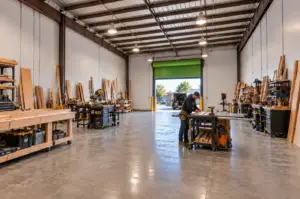
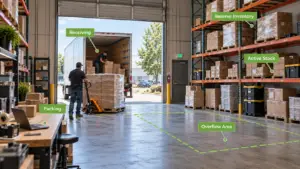
A dedicated bay gives trucks somewhere appropriate to arrive, gives employees a clear place to report, and gets materials and deliveries off your street. Tools and inventory stop competing with the family cars.
It also gives you something a house was never designed to provide: a repeatable operating base. The crew knows where everything lives instead of loading from three corners of the garage. Suppliers deliver to a commercial address instead of guessing whether a box truck can turn around on your cul de sac. When inventory grows, you're not reorganizing the driveway again. If you're still working out of a truck and a garage, our guide to organizing tools across the shop, truck, and job site is a good place to start.
WorkBay Contractor Space in Houston
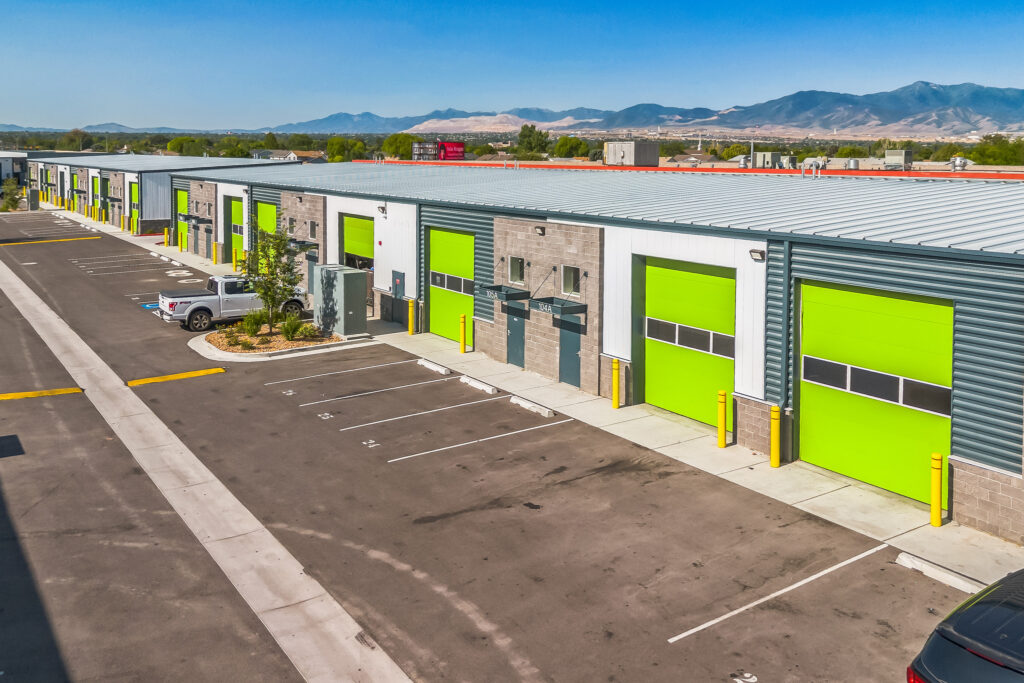
WorkBay has five Houston area locations with private commercial bays built for businesses that make, fix, build, store and move physical things.
WorkBay Houston locations
Five Houston area parks with private commercial bays, roll up doors and drive up loading.
Features and unit configurations vary by park. See all Houston locations.
Bays feature roll up doors, drive up loading, a professional business address, on site parking for work trucks and vans, and 24/7 access. Features and unit configurations vary by location, and you can compare amenities before you visit.
Your home may be where the business started. It doesn't have to keep absorbing every truck, employee, delivery and pallet as the company grows.
Get the trucks, the crew and the inventory off your street
Compare Houston bays and book a tour to see which one fits the way your business actually runs every morning.