
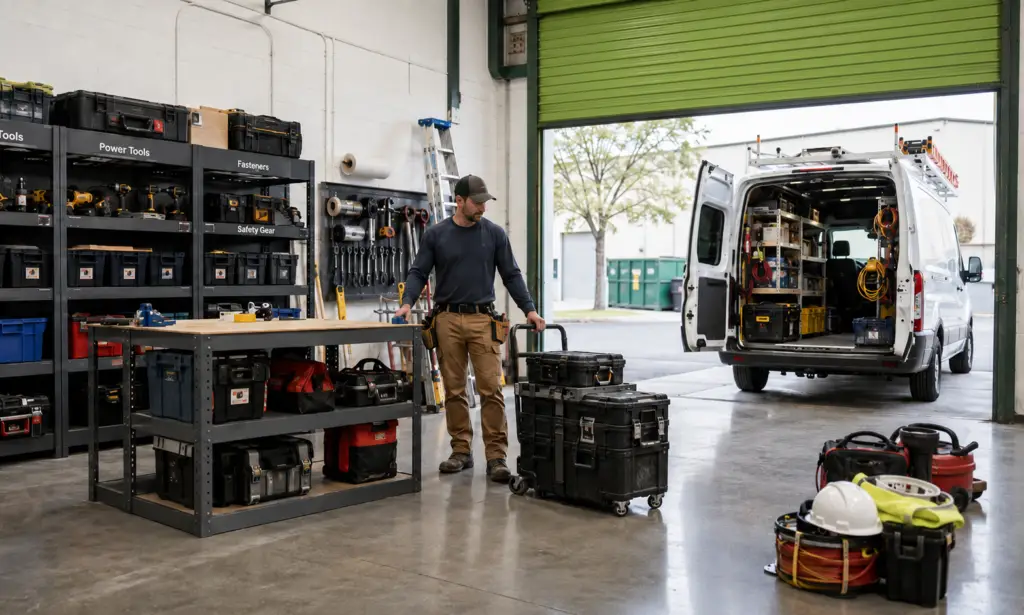
It’s 6:45 in the morning and you’re at the truck, digging through a bin for the impact driver you know you own. It’s not where you put it or it’s back in the garage where you left it after the last job. You’ve been standing here for five minutes searching for the right tools and you haven’t started working yet.
Or you pull up to the job site and the one tool you need is back at the house.
It’s not bad habits or bad luck. You don’t have one place the business operates from.
Why your tools are never where you need them
Your tools aren’t in one place. They’re split across the truck, the garage, and the job site. And keeping your tools spread across three locations is killing your productivity.
That’s why organizing systems fall apart. Bins, drawers, labeled racks: all of them assume the tools have a home base to return to. When there’s no fixed home base, every system breaks down the same way. Tools migrate toward wherever the last job left them, and within a week nobody knows where anything is.
Here’s what that looks like in practice. The morning loadout runs long because what you need is split across all three locations and you’re making fast decisions about what to grab. You get to the job site and something didn’t make it. The crew stands around while you work out what’s missing. End of the day, some things come back to the garage, some stay in the truck, some stay on-site because they’ll be needed tomorrow. Three weeks of that and the bin system is not keeping up.
The cost isn’t just the time spent hunting. It’s starting the day late because you spent 20 minutes looking for the right tools. The credibility hit when a customer shows up and work hasn’t started. The slow drain of tools that get left somewhere and don’t come back.
In our experience working with contractors, this problem almost never comes down to bad habits. It comes down to not having one fixed place where the tools actually live.
One job per location
Load for today, not forever
If a tool has no job on today’s site, it does not need to ride along. Specialty gear you pull twice a year lives in the shop.
Stage the next job before it starts
Separate tools from materials, then give the next job its own space so nothing lands wherever there is room.
Decide what leaves with you
What comes back, what stays, what gets secured. Run it as a practice, not a judgment call at the end of a long day.
Set up the truck for loadout, not storage
The truck’s job is to move the right tools to today’s job, not to store everything you own between jobs.
Treating the truck as permanent storage means it accumulates gear from project to project until it holds a little of everything and nothing in particular. Finding something specific requires moving a quarter of what’s in there. The morning loadout starts eating time you don’t have.
The alternative is to load for today’s work specifically. Before a project starts, think through what that job requires and build the load from there. You won’t bring everything you own, and you shouldn’t need to. If a tool has no job on today’s site, it doesn’t need to ride along. Tools that only come out for specialized work, the piece of equipment you need on two jobs a year, live in the shop, not the truck. Learning what doesn’t belong in the truck every day is as useful as knowing what does.
Give every core tool a fixed spot in the truck. Not “somewhere in the truck,” but a specific location: the impact driver goes here, the tape measure goes here, the level goes here. When core tools have fixed spots, you can confirm in ten seconds whether something is in the truck or not, instead of searching to find out.
The morning loadout goes faster when it happens the night before. At the end of the workday you know what tomorrow requires. Five minutes of setup then saves fifteen minutes of scrambling at 6:45 a.m.
Pull everything out at the end of each week and let the truck reset. Broken gear, loose hardware, materials from jobs that finished two weeks ago: clear it out so Monday’s load starts clean. When the truck resets to zero each week, you can confirm the tool list before you leave the shop instead of finding out something is missing when you’re already on-site.
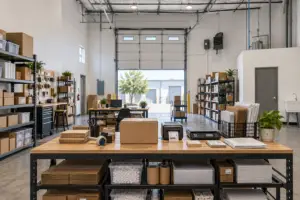
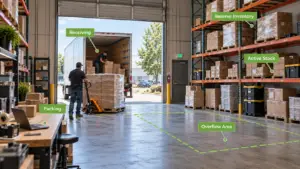
Turn the garage or shop into a staging area, not a dumping ground
The garage gets messier faster than the truck because it has more room. And more room fills up with more stuff.
The collision that happens in most contractor shops is this: the current job comes through the door. Tools go down wherever there’s space. Materials get stacked in the nearest open corner. By the time you’re halfway through the project, the garage has organized itself around that one job. When the next job starts, there’s nowhere for new materials to go without moving the old ones.
This is how staging gets skipped. The next job’s materials get dropped wherever there’s a gap instead of somewhere intentional. On the morning that job starts, you’re pulling from three different spots and loading into a truck that already has last job’s gear in it.
Two things help more than anything else:
1. Separating tools from materials
2. Giving the next job its own space before it starts
Tools and materials have different rhythms. Tools come back between every job; materials arrive in bulk and shrink as work progresses. When they share the same area without a clear line between them, your space becomes messy. Separating them, even roughly, means you know where each one belongs and reorganizing the shop stops taking time every week.
Set aside a dedicated area for the next job’s materials. When they arrive, they have a place to go instead of landing wherever there’s room. A section of shelving, a corner of the floor. The size matters less than having somewhere consistent to put it. When the job starts, the materials are already together instead of spread across the shop.
At the end of each project, spend twenty minutes resetting before moving on. Return tools to their section. Clear the staging area. Start the next job with a clean shop instead of one that’s still organized around the last one.
Stop letting the job site swallow your tools and materials
The job site is the one location in this three-way split that you don’t own. You didn’t organize it, and you can’t guarantee what happens to what gets left there.
The trap starts with one reasonable decision: leave a tool on-site overnight because you’ll need it in the morning. That decision becomes a habit. The habit becomes a system where the job site is where tools live between phases. Then a phase-two pull happens and the tool you expected to find isn’t there.
End-of-day discipline matters more here than any lock.
Before leaving a site, settle three things:
- What comes back with you
- What stays and why
- What gets secured if it stays
Running this as a consistent practice, not a judgment call every time, is what keeps tools from drifting to the site permanently.
Industry estimates put construction site theft at upward of a billion dollars a year, and less than a quarter of what’s taken is ever recovered. Most contractors already know a version of this from experience: what gets left on a job site without a plan doesn’t always make it back.
The tools you plan to need first thing tomorrow morning are the easiest to rationalize leaving. Bring them back anyway. The round trip takes fifteen minutes. Replacing what goes missing costs more than that, and the alternative is a site that’s slowly becoming your default storage location.
At the end of any phase where tools won’t be needed for a week or more, bring everything back. Job sites change between phases, and what you left in a logical spot may not be where you put it by the time you return.
When a better system stops being the answer
There’s a point where organizing isn’t the problem anymore. Capacity is.
The truck and the garage have a fixed total capacity between them. For many jobs and many stages of a contracting business, that’s enough. But there’s a threshold: the garage is simultaneously storing current-job materials, staging materials for the next job, and housing equipment that doesn’t fit in the truck. And it still needs to function as a working shop. That’s too many jobs for one space.
At that point, better bins don’t solve it. A bigger truck doesn’t give the garage more floor. The problem isn’t how you organize; it’s that the work has grown past what the home base can hold.
In our experience working with contractors, this is the moment the ceiling becomes visible. It’s not that habits got worse. The business grew. The work got bigger or more consistent. Now every job starts with a space negotiation before you can do the actual work.
If the garage still handles a project or two at a time, with materials not yet competing with tools for floor space, it’s the right home base for now. It usually stops working not gradually but all at once: the day you can’t load the truck without moving the next job’s materials, and can’t move the next job’s materials because there’s nowhere else to put them.
Keep the home base you have
- You are running a project or two at a time
- Materials are not competing with tools for floor space
- The truck loads without moving anything first
- A weekly reset still puts the shop back to neutral
Capacity is the problem now
- You cannot load the truck without moving next job materials
- There is nowhere else to put those materials
- The shop is storing, staging, and working all at once
- Every job starts with a space negotiation before real work
A dedicated space changes the math. When the tools, the equipment, and the staged materials have a real place to live, the truck goes back to being a staging vehicle and the garage goes back to being a garage. The morning loadout gets faster because what you need is actually where you put it.
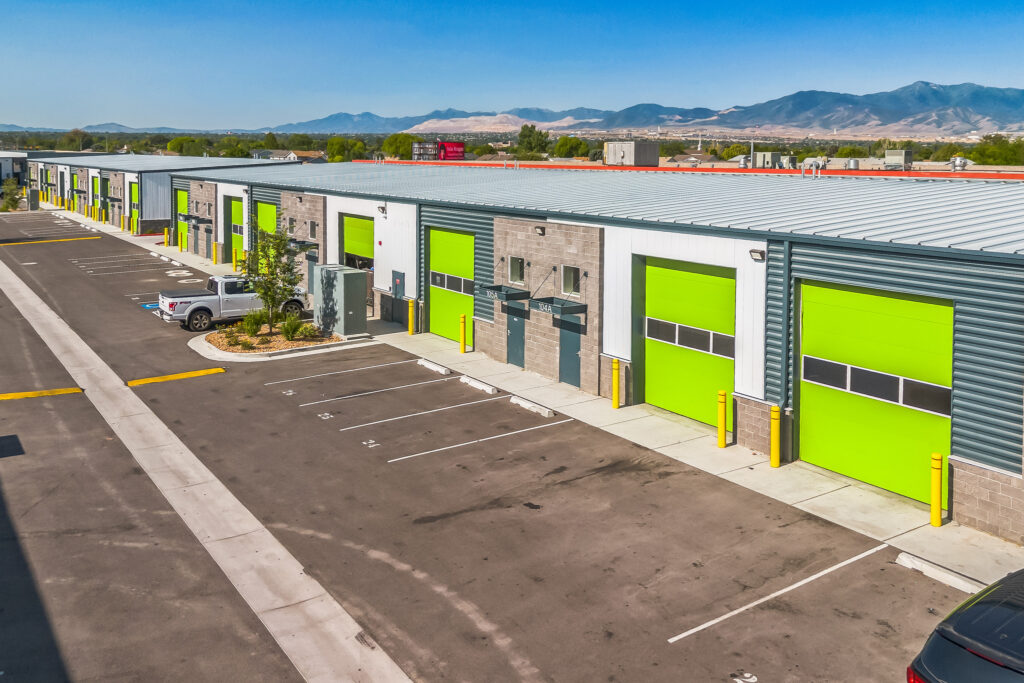
WorkBay operates small industrial spaces for contractors and trades businesses, built for doing the work, not just storing things. What fits and what’s available depends on the location and the specific work you do, so if you’re looking at a particular market, talk to the local team about your setup before committing to anything.
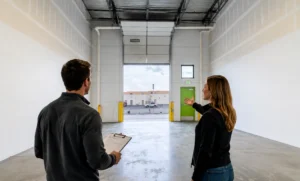
When you’re ready to think about size, walk through the space to ensure it matches your actual workflow. You can also run the numbers on how much space your tools and materials need before making any decisions.
If a WorkBay is near you, it’s worth a look: find a WorkBay near you
Give the tools one place to live
WorkBay operates small industrial spaces for contractors and trades businesses, built for doing the work instead of just storing things. What fits depends on the location and the work you do, so talk to the local team about your setup.