
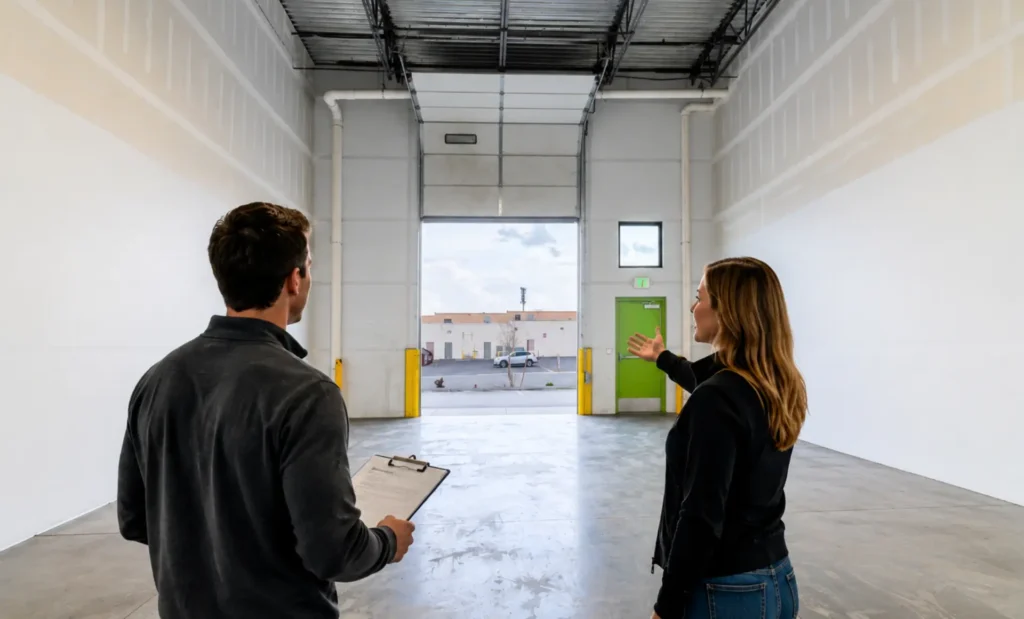
Photos and listings can help you narrow down your options, but they cannot tell you how a warehouse will work for your business day to day. A space may have enough square footage and still be difficult to use if the roll-up door is too small, the electrical service cannot support your equipment, or the layout leaves little room to load and unload.
During the tour, focus on how you would actually use the space. Bring measurements for your largest vehicle, trailer, equipment, racks, and workbench. Ask about anything you cannot confirm by looking, including power, access hours, permitted uses, and lease terms.
A flex warehouse tour should answer a few basic questions: Can you get your vehicles and equipment in and out easily? Does the space have enough height and power? Will the layout work once your shelving, inventory, and work areas are in place? Do the parking, access, security, and lease terms fit the way your business operates?
Start With How You Will Use the Space
Stand near the entrance and walk through a typical day in your head. Where will deliveries come in? Where will you store tools and materials? Where will your team work, and how will completed orders or loaded equipment leave the space?
A smaller unit with a good layout can be easier to use than a larger unit with an awkward door location, narrow walkways, or corners that are hard to reach. The total square footage matters, but so does how much of it you can use comfortably.
Bring a tape measure and rough dimensions for your largest racks, work vehicle, trailer, equipment, and bench. You do not need a finished floor plan. You only need enough information to confirm that the largest pieces will fit.
Check the Roll Up Door and Drive Up Access
Measure the width and height of the roll-up door instead of relying on a general description. Make sure your truck, trailer, equipment, and deliveries can clear the opening.
Then look at the approach to the unit. Can you pull straight up to the door? Is there enough room to turn a trailer around? Would parked vehicles make it difficult to load or unload? Inside the unit, check whether you can bring materials through the door without moving everything else first.
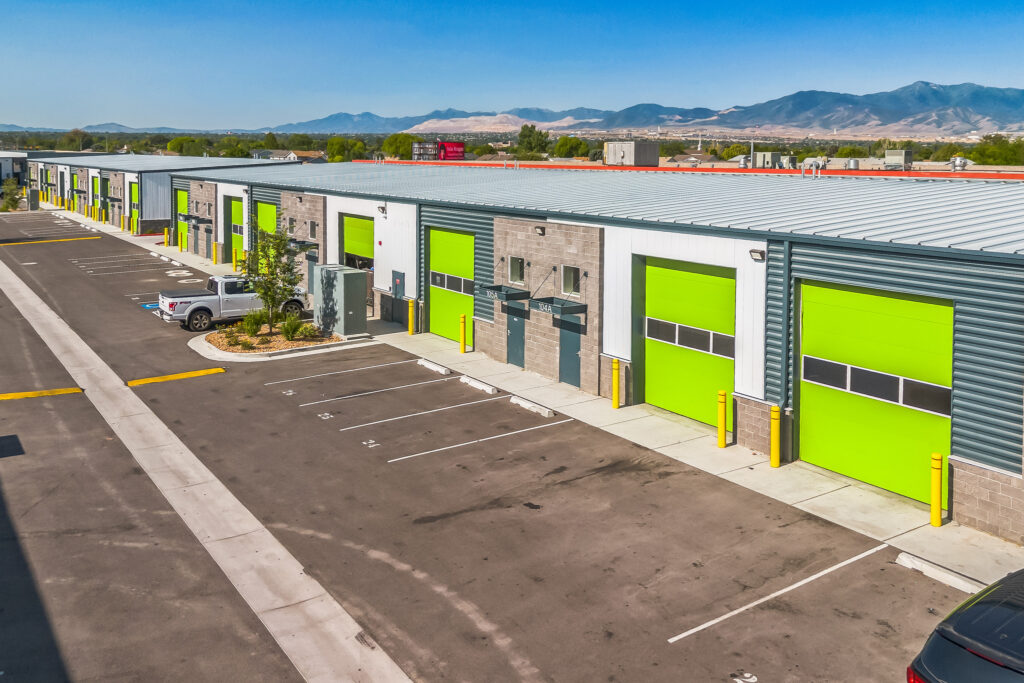
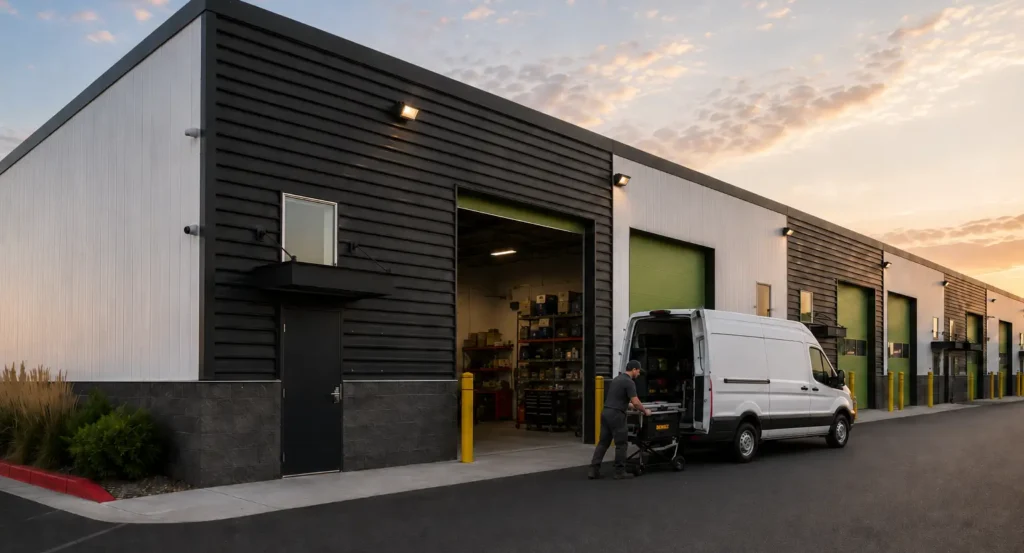
Most WorkBay spaces are designed with drive-up access and large roll-up doors, but door dimensions and loading areas vary by park. Confirm the measurements for the specific unit you are touring.
Confirm the Usable Ceiling Height
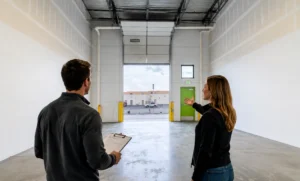
Ceiling height affects how much storage you can add above the floor. If you plan to install pallet racking, use a lift, or store tall materials, ask for the clear height in the unit.
Clear height is the unobstructed space between the floor and the lowest overhead object. Lights, beams, ductwork, sprinklers, and the roll-up door track can all reduce the usable height, so the highest point of the roof is not the measurement you need.
Ask: What is the clear height in this specific unit?
What’s the clear height in this specific space?
Clear height is what you can actually stack under. The roof peak is not, and lights, beams, ductwork, and the door track all take a cut before you get there.
Confirm the Electrical Capacity
The number of outlets does not tell you whether the unit can support your equipment. Make a list of what you expect to run, such as compressors, welders, chargers, shop tools, computers, or additional lighting.
Find the electrical panel during the tour and ask what service is available. If your equipment requires a specific voltage, amperage, or three-phase power, bring the specifications and have the setup confirmed before you sign.
Test the Layout Against a Normal Work Day
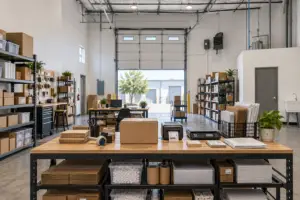
Picture the unit after your shelving, tables, equipment, and inventory are installed. An empty warehouse can feel much larger than it will once the business is moved in.
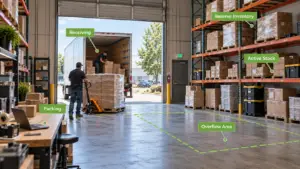
For an e-commerce business, the path might run from receiving to storage, then to packing and shipping. A contractor may need a clear path from the truck to tool and material storage, over to a workbench, and back to the truck. Walk through your own sequence during the tour.
Fulfillment
- 01Receiving
- 02Storage
- 03Work Area
- 04Packing
- 05Shipping
Contractor
- 01Truck
- 02Tool Storage
- 03Material Storage
- 04Workbench
- 05Truck
Walk your sequence on the tour. If any step forces you to move a cart, a pallet, or a vehicle first, that’s friction you’ll pay for every day.
Pay attention to aisle width and the space around doors, corners, and work areas. If you would have to move a pallet, cart, or vehicle every time you need something, the layout may become frustrating quickly.
Walk the Parking and Loading Area
Spend a few minutes outside the unit. Picture the property on a busy morning when your team is arriving and a delivery driver is trying to stop near the door. Confirm where employees and customers can park, where deliveries are allowed to wait, and whether a trailer can move through the property without blocking another tenant.
Check Lighting Climate and Utilities
Look at the lighting throughout the unit, including the areas farthest from the door. If you will be working inside for long periods, ask what heating, cooling, or ventilation is available and who is responsible for maintaining it.
Confirm whether the unit has the water, bathroom, sink, and internet access your business needs. These features vary by property, and adding them later may not be simple or permitted.
Ask About Security and Access Hours
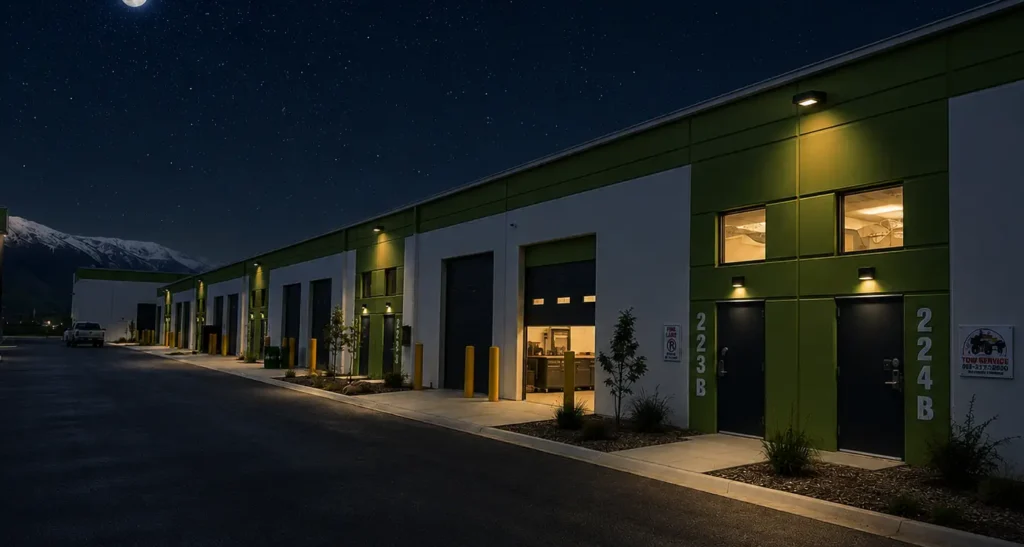
If you will store tools, inventory, or customer property, take time to see how the property is secured. Look at the gate, cameras, exterior lighting, and the lock on the unit. Ask how tenants and visitors enter the property and what happens if you need help after regular business hours.
Also confirm when you can access the unit. Many WorkBay parks offer 24/7 access, but amenities and access procedures vary by location. If your crews leave early, return late, or work weekends, make sure the schedule will not create a problem.
Make Sure Your Business Use Is Allowed
Explain what your business does inside the unit instead of giving only a job title or industry. For example: We store tools and materials, send two crews out each morning, occasionally cut materials inside, and bring a trailer back in the afternoon.
That description gives the property team enough information to check whether the activity is allowed. Flex warehouses can support many types of storage, workspace, and light industrial use, but permitted activities depend on the property and local requirements.
Ask About the Lease Before You Leave
A space can work well and still come with lease terms that do not fit your plans. Ask about the lease length, move-in date, notice requirements, utilities, maintenance responsibilities, deposits, and any additional fees. If you expect to grow, ask whether moving into a larger unit at the same property may be an option.
WorkBay offers month-to-month and longer lease arrangements depending on the location and agreement. Confirm the terms available for the unit you are considering.
Flex Warehouse Tour Checklist
Twenty things worth confirming before you sign. Every item changes from space to space.
Access and Loading
- The door opening clears my vehicle & equipment
- I can pull up close enough to load and unload
- There is room to maneuver a trailer
- Parking works for my team and my customers
Interior Space
- Clear height works for my racking
- Shelving, benches and packing areas fit
- Walkways will stay clear after move-in
- The layout follows my normal workflow
Utilities
- Electrical service supports my equipment
- Voltage, amperage, or three-phase power is confirmed
- Lighting is adequate throughout the unit
- Heating, cooling, or ventilation meets my needs
Security and Access
- Access hours match my schedule
- Property entry is controlled
- Cameras and exterior lighting cover the drive
- Delivery and package process is clear
Condition and Lease
- Floors, door, and fixtures are in good shape
- Repairs documented before move in
- My business activity is permitted
- Term, notice, and upsize options are clear
Before You Decide
Before you leave, ask whether you can picture your business working comfortably in the space. The right unit should make the basics easy: bringing vehicles in and out, storing equipment, receiving deliveries, and giving your team enough room to work.
No warehouse will be perfect in every detail. The goal of the tour is to understand which compromises are manageable and which ones would create problems every day.
Tour a WorkBay Near You
WorkBay offers private, move-in ready flex warehouse spaces for contractors, skilled trades, makers, e-commerce brands, and service businesses. Depending on the park, features may include high ceilings, large roll-up doors, drive-up access, 24/7 access, and professional property management.
You do not need to know commercial real estate terminology to evaluate a space. Bring your measurements, walk through a normal workday, and ask for clear answers about the details that matter to your business.